View of London Bridge — History & Facts
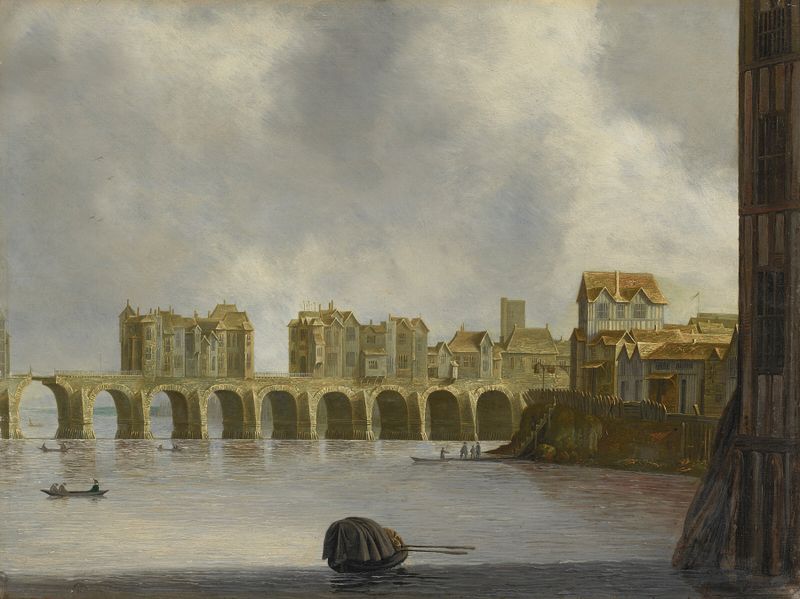
In the hands of a skilled artist, tumultuous landscapes can transform into a tapestry of serenity, inviting the viewer to see beyond the surface. Focus on the lower center of the canvas, where the tranquil waters cradle the reflection of London Bridge. Notice how the artist uses soft blues and greens to create a calming backdrop, contrasting with the fiery oranges and yellows that dance in the sky. The brushwork is deliberate yet fluid, inviting your eye to wander along the bridge’s arches, connecting the bustling activity of the city above with the gentle ripples below. Delve deeper into the painting, and you’ll find a delicate interplay between nature and urbanity, a reminder of humanity's resilience.
The clouds above, swirling with vibrant hues, evoke a sense of impending change, contrasting with the sturdy structure of the bridge, which symbolizes stability amid uncertainty. The careful balance of light and shadow enhances this dialogue, suggesting that beauty can emerge even within the chaos of life. De Jongh painted this work during a time when the art world was evolving rapidly, reflecting the shifting tides of impressionism in the late 19th century. Working in the Netherlands, he was part of a movement that sought to capture transient moments in time.
As artists began to explore new techniques and perspectives, the world around them transformed, and this painting stands as a quiet testament to both the vibrant life of London and the quiet transcendence found in its landscapes.