
View of rear buildings — History & Facts
A haze of muted light settles over a jumble of rooftops and pale facades, drawing the eye to the dense thicket of trees that forms a natural barrier between city and viewer. In View of rear buildings, Adolph von Menzel offers no grand monument or bustling scene, but instead a quiet, almost secret vantage—an urban backlot seen from the edge, where the geometry of the buildings is softened by the unruly growth below. The brushwork grows looser and darker in the foreground, suggesting tangled undergrowth and the shadowed uncertainty of things half-seen, while the upper half of the painting is all angles and sunlit planes.
The composition guides us upward, from earthy browns and greens to the pale, almost chalky walls, and finally to the faint silhouettes of distant spires dissolving into the sky. This is a cityscape without spectacle, where the ordinary becomes quietly absorbing. Painted in 1847, this work belongs to a moment when artists across Europe were turning their gaze to the overlooked corners of modern life. The rise of the city, with its backyards and workaday architecture, became a new subject for painters interested in the realities of contemporary existence.
Menzel, working in the German lands during a time of rapid urbanization, was among those who found beauty and complexity in the prosaic. Little is recorded about the specific history of this painting, now documented in the Anagoria collection, but its frank observation and unvarnished palette place it firmly in the spirit of mid-19th-century realism. Stand before it and let your eye wander—there is a story in every shadow, and a city waiting just beyond the trees.
More Artworks by Adolph von Menzel
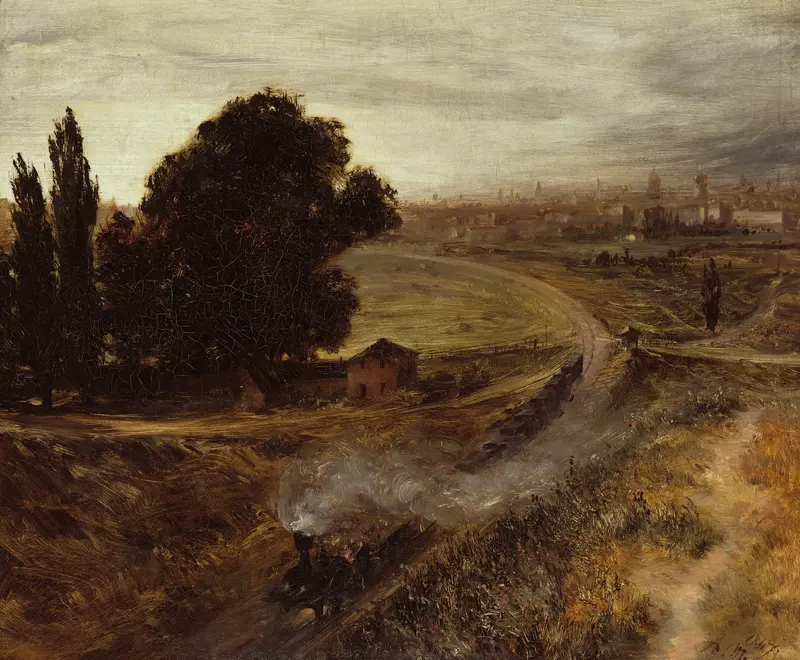
The Berlin-Potsdam Railway
Adolph von Menzel
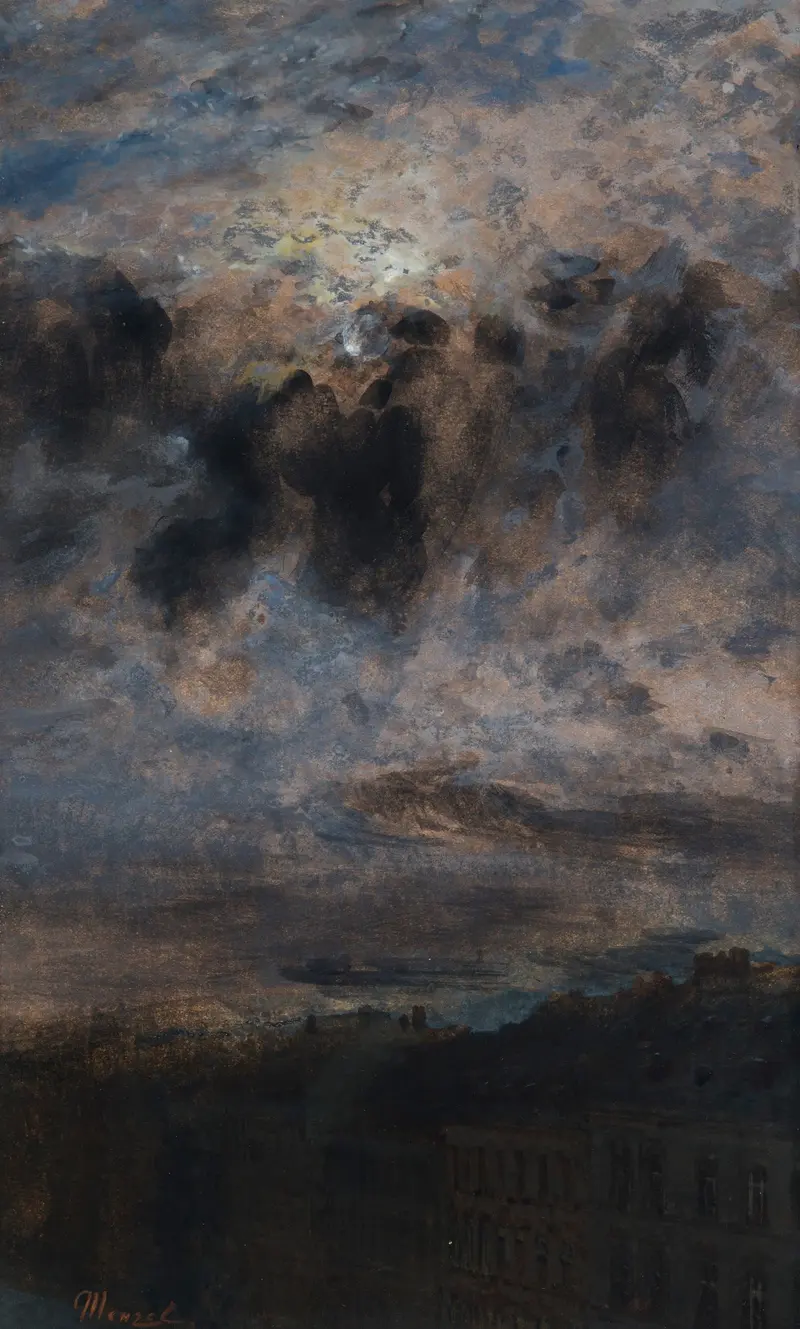
Mondschein über den Dächern von Berlin
Adolph von Menzel
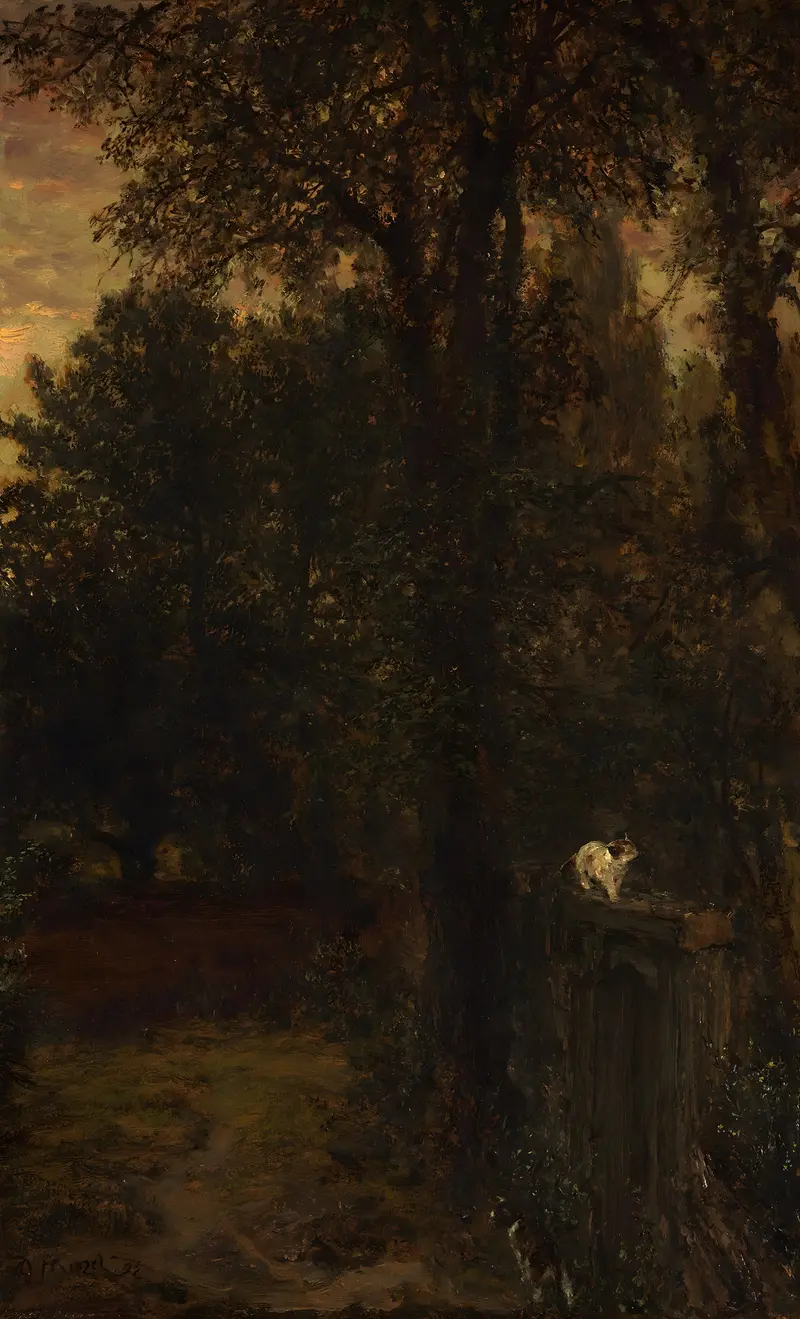
Landscape
Adolph von Menzel
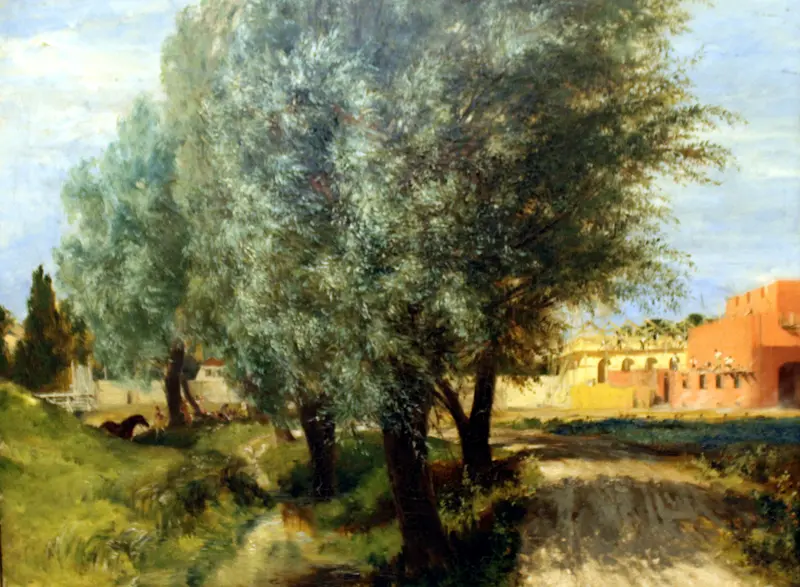
Building Site with Willows
Adolph von Menzel
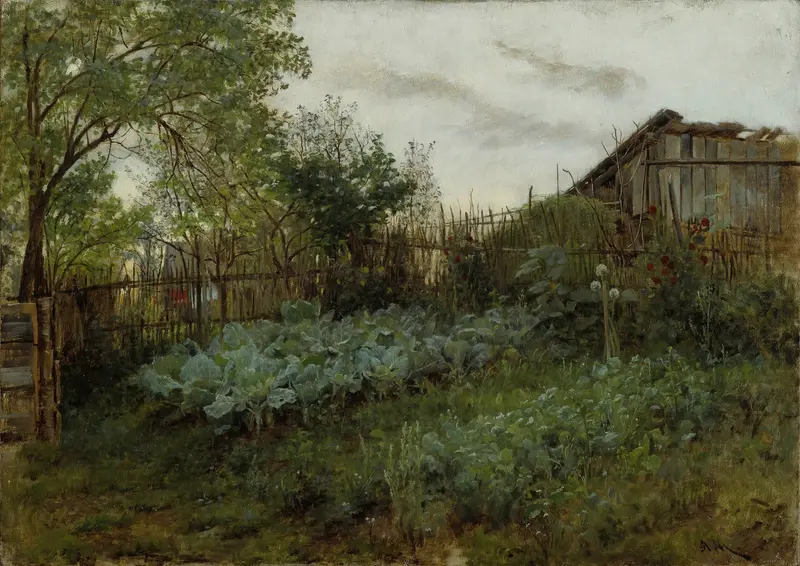
The Back Garden
Adolph von Menzel
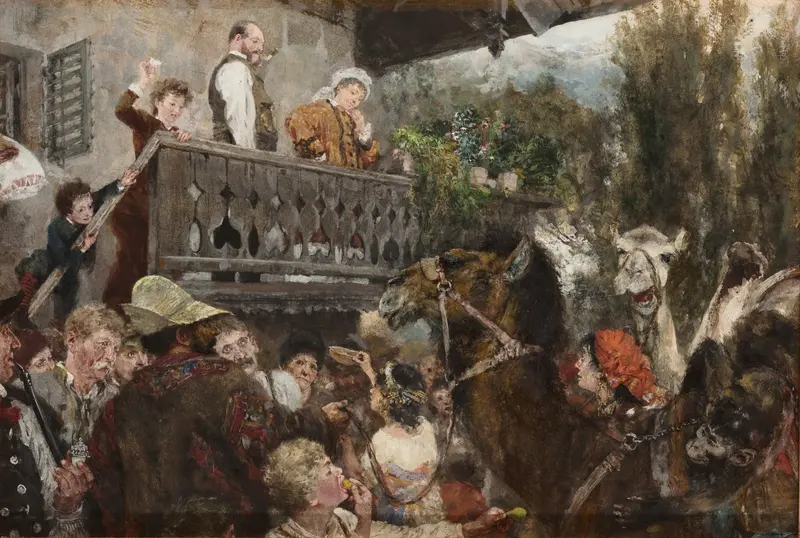
The wandering circus (Camel drivers in Partenkirchen)
Adolph von Menzel
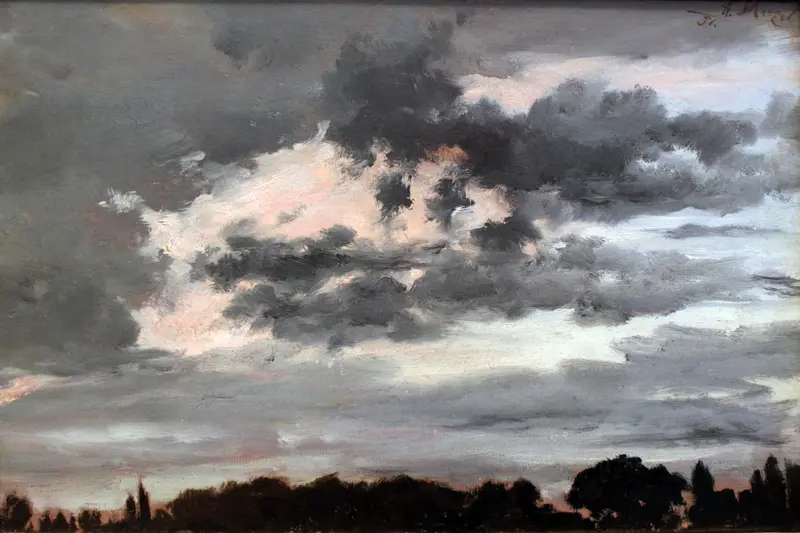
Cloud Study
Adolph von Menzel
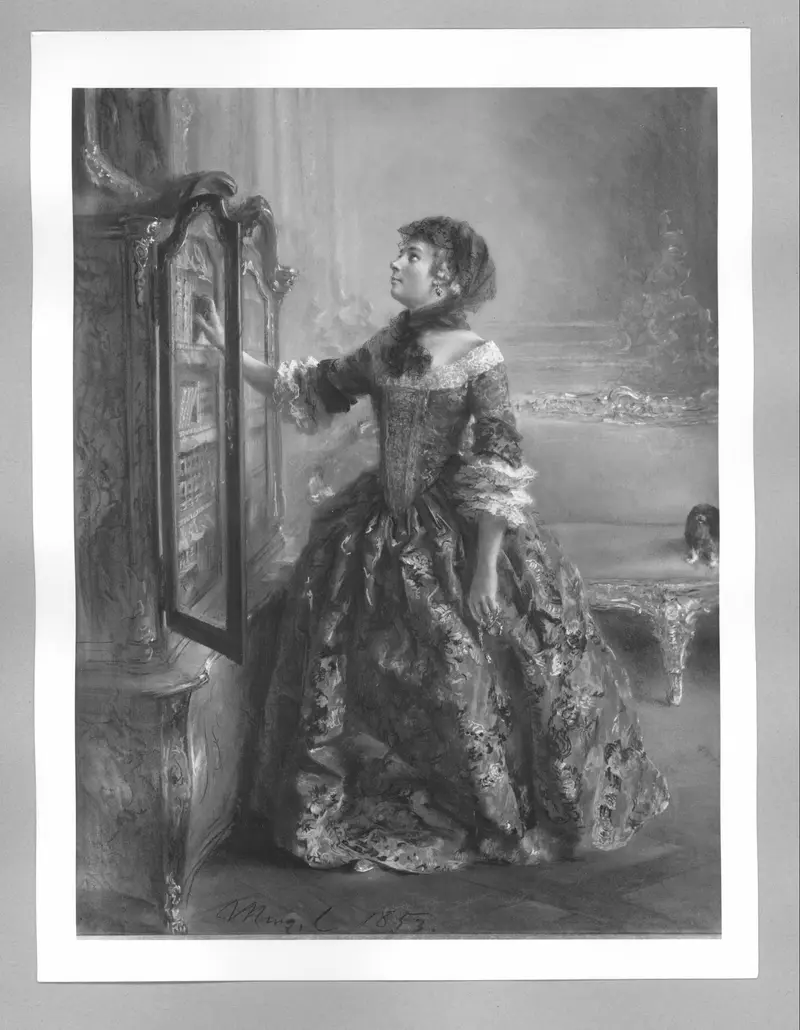
Adolf Friedrich Erdmann Menzel Dame in Rokoko Kostüm vor einem Bücherschrank (Prinzessin Amalie von Hohenzollern) 2320 Führermuseum
Adolph von Menzel
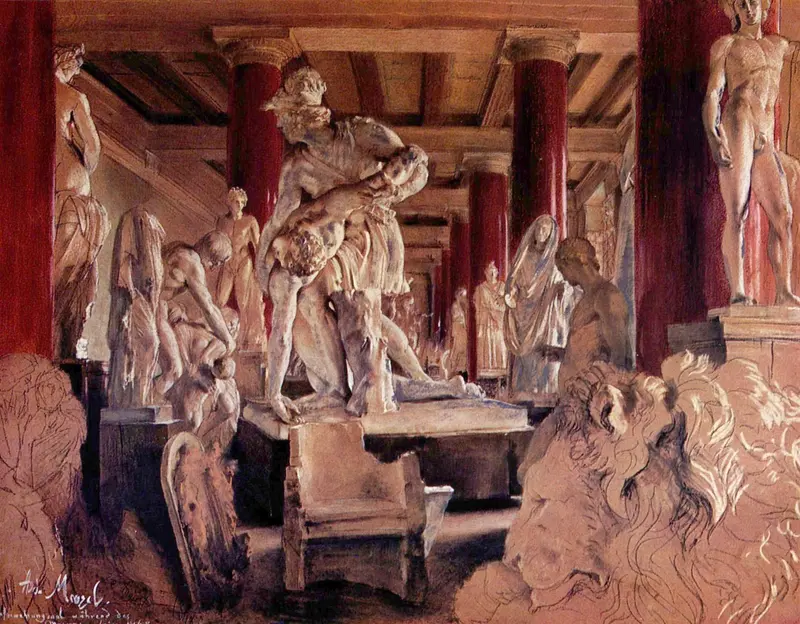
Aufbewahrungssaal während des Museumsumbaus Adolf Friedrich Erdmann von Menzel (Alte Nationalgalerie, Berlin)
Adolph von Menzel
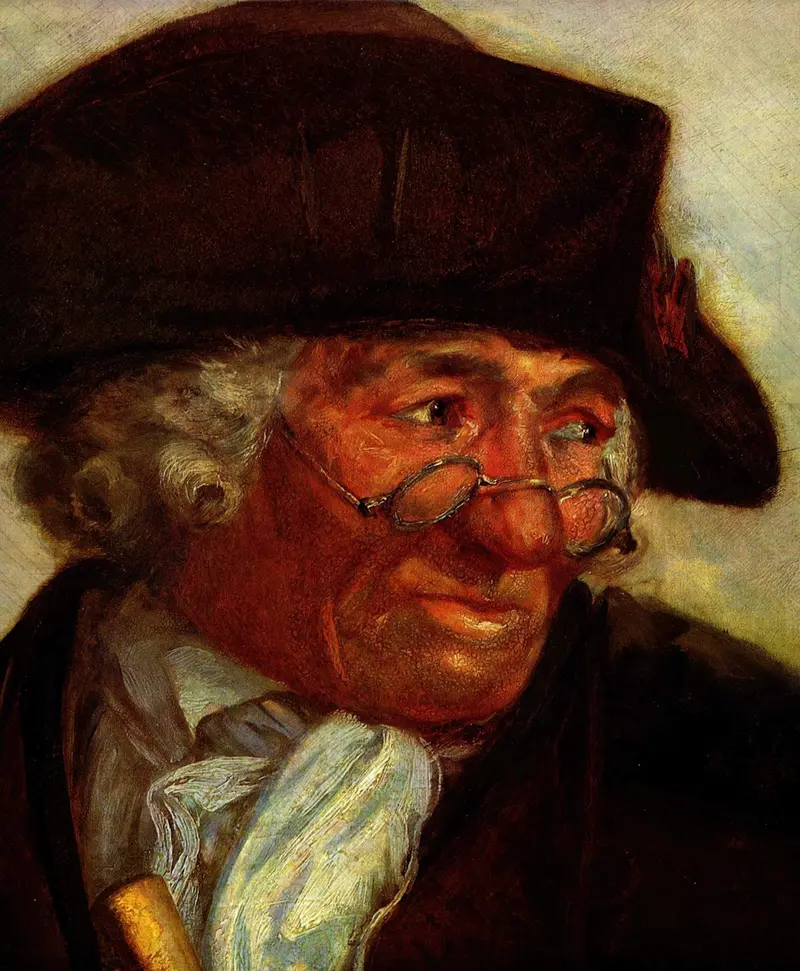
Chodowiecki on the Jannowitz Bridge
Adolph von Menzel
More Landscape Art

The Starry Night
Vincent van Gogh

View of Delft
Johannes Vermeer

Water Lilies
Claude Monet

The Grand Canal, Venice, looking north-west from the Ca' Corner to the Ca' Contarini degli Scrigni, with the campanile of Santa Maria della Carità
Canaletto

Windsor Castle
Canaletto

The Grand Canal looking North-East from the Palazzo Dolfin-Manin to the Rialto Bridge
Canaletto