
View of Schneeberg — History & Facts
A crisp geometry commands the eye in View of Schneeberg, where the mountain rises like a silent sentinel above a patchwork of fields and distant woods. August Heinrich, working in 1817, chooses not to dramatize the landscape but to let its quiet order speak for itself. The broad, clear sky dominates, its pale blues and gentle clouds stretching the horizon and giving the scene a sense of calm expanse.
Every brushstroke seems to weigh the balance between cultivated land and wild height, with the mountain’s pale slopes drawing the gaze upward, away from the everyday world below. The light is cool and even, suggesting a moment suspended between seasons, and the palette—restrained greens, ochres, and blues—invites the viewer to linger in the hush. Works like this emerged in a Europe newly enchanted by the landscape, as the early nineteenth century saw artists and collectors alike seeking out views of real places, not just as backgrounds for myth or history, but as subjects in their own right. The year 1817 places Heinrich’s painting at the dawn of this shift, when the mountain view became a symbol of both personal reflection and national pride.
While little is known about the journey of this specific painting before it entered the National Museum of Art, Architecture and Design, its presence there today speaks to the enduring appeal of such scenes. The painting asks us to look again at the quiet drama of land and sky—an invitation as fresh now as it was two centuries ago.
More Artworks by August Heinrich

Felsenschlucht im Uttewalder Grund in der Sächsischen Schweiz
August Heinrich
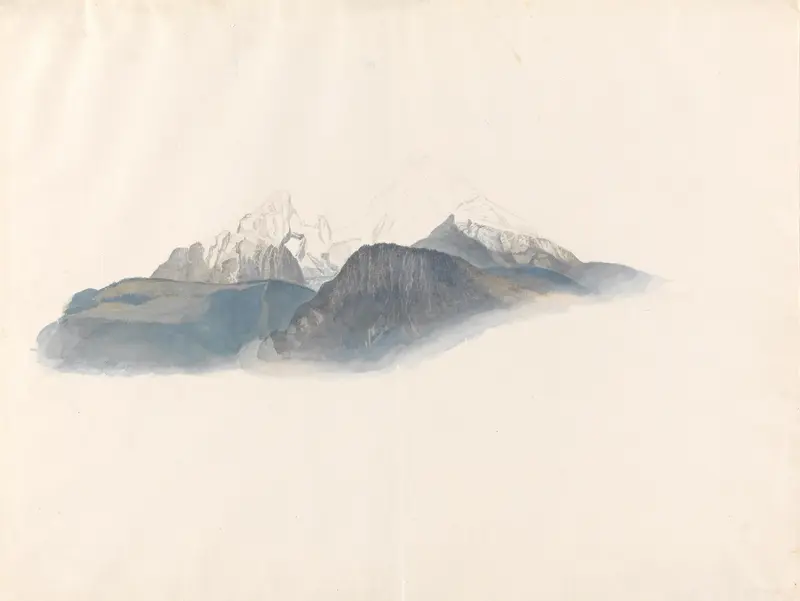
Der Watzmann
August Heinrich
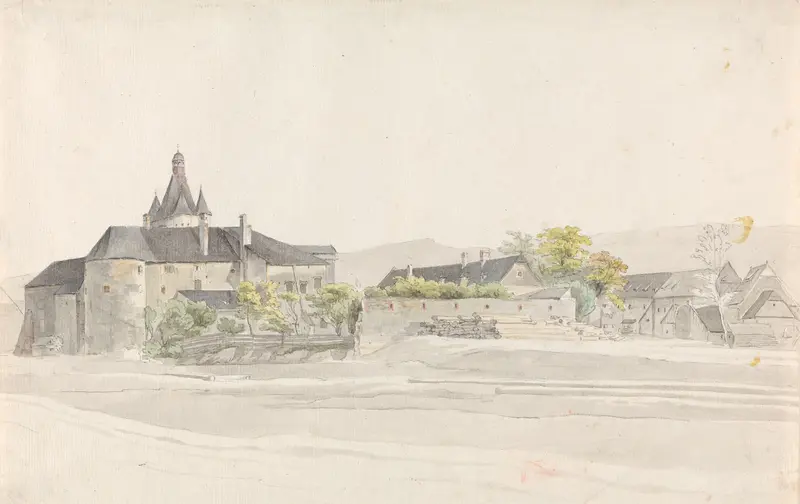
Reichenauer Schloss
August Heinrich
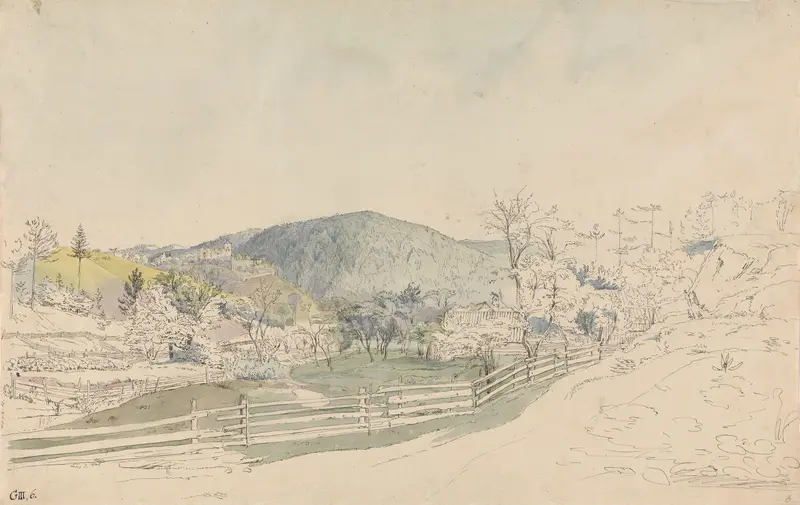
Utsikt mot borgruinen Gutenstein ved Wien
August Heinrich
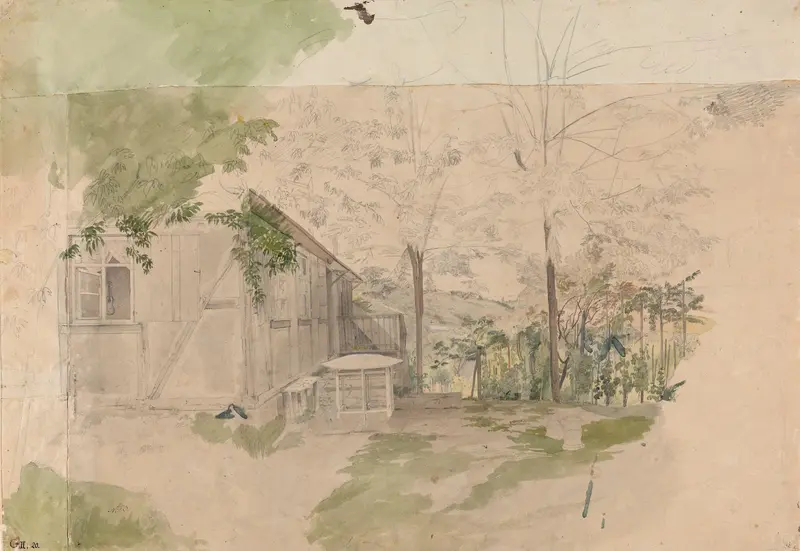
Hausecke mit Weinlaub und Weingarten
August Heinrich
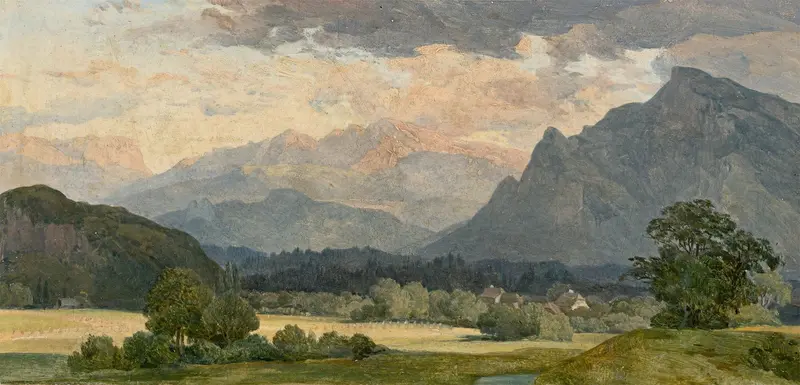
View of the Tennengebirge mountains near Salzburg
August Heinrich
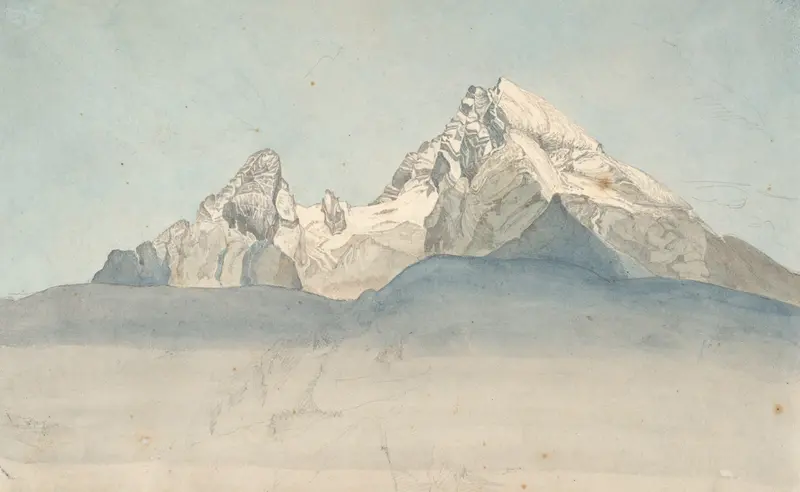
The Watzmann seen from the North-East, and Some Sketches of a Mountain
August Heinrich
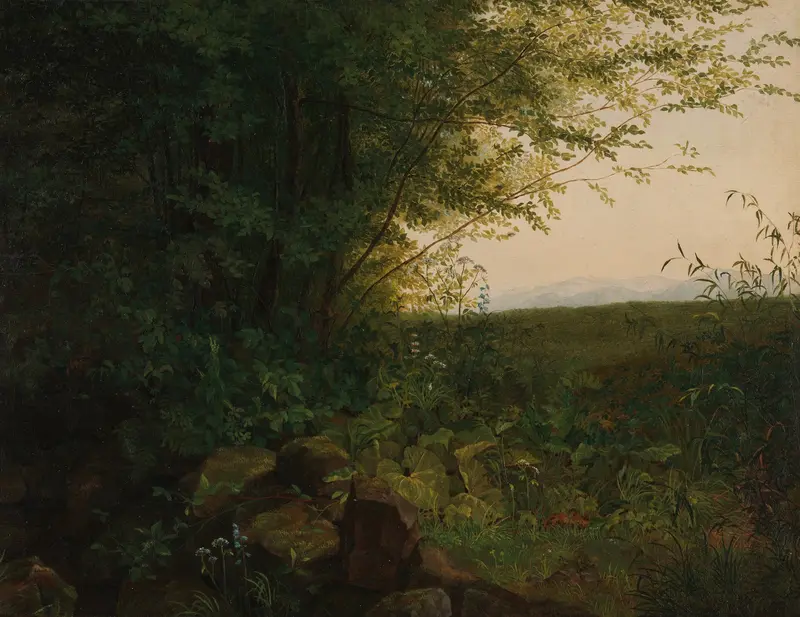
At the Edge of the Forest
August Heinrich
More Landscape Art

The Starry Night
Vincent van Gogh

View of Delft
Johannes Vermeer

Water Lilies
Claude Monet

The Grand Canal, Venice, looking north-west from the Ca' Corner to the Ca' Contarini degli Scrigni, with the campanile of Santa Maria della Carità
Canaletto

Windsor Castle
Canaletto

The Grand Canal looking North-East from the Palazzo Dolfin-Manin to the Rialto Bridge
Canaletto