
View of Venice — History & Facts
Can beauty exist without sorrow? Childe Hassam’s View of Venice beckons us to contemplate this tension within its luminous canvas, where vibrancy intertwines with a whisper of melancholy. Look to the foreground, where gentle waves lap against the sun-kissed stones, casting reflections that dance with the shifting light. The composition draws the eye toward the iconic architecture, with the delicate contours of the buildings rendered in soft pastel hues. Notice how the warm yellows and cool blues coexist, creating a harmonious balance that invites viewers to linger, while the brushstrokes reveal both precision and spontaneity—a hallmark of Impressionist technique. Yet, there’s a deeper narrative at play.
The serene surface belies the undercurrents of transience; each moment captured is fleeting, a reminder of time’s passage. The juxtaposition of the bustling gondolas against the stillness of the water hints at life’s contrasts, where joy and sorrow coexist. This tension reflects the artist’s own struggles, suggesting that beauty is enriched by the awareness of impermanence. Painted in 1883 during a pivotal period of his career in Paris, Hassam found himself inspired by the enchanting landscapes of Venice.
At a time when Impressionism was gaining momentum, he sought to convey the ethereal quality of light that danced on the water and the warmth of the city. This work showcases his evolution as an artist, embracing both the vibrancy of color and the emotive power of his surroundings, as he carved out his identity amid a flourishing art world.
More Artworks by Childe Hassam
Browse all →
Beach at Newport
Childe Hassam

Washington Arch, Spring
Childe Hassam

Thaxter’s Garden
Childe Hassam

New England Headlands
Childe Hassam

Rocks At Appledore, Morning
Childe Hassam
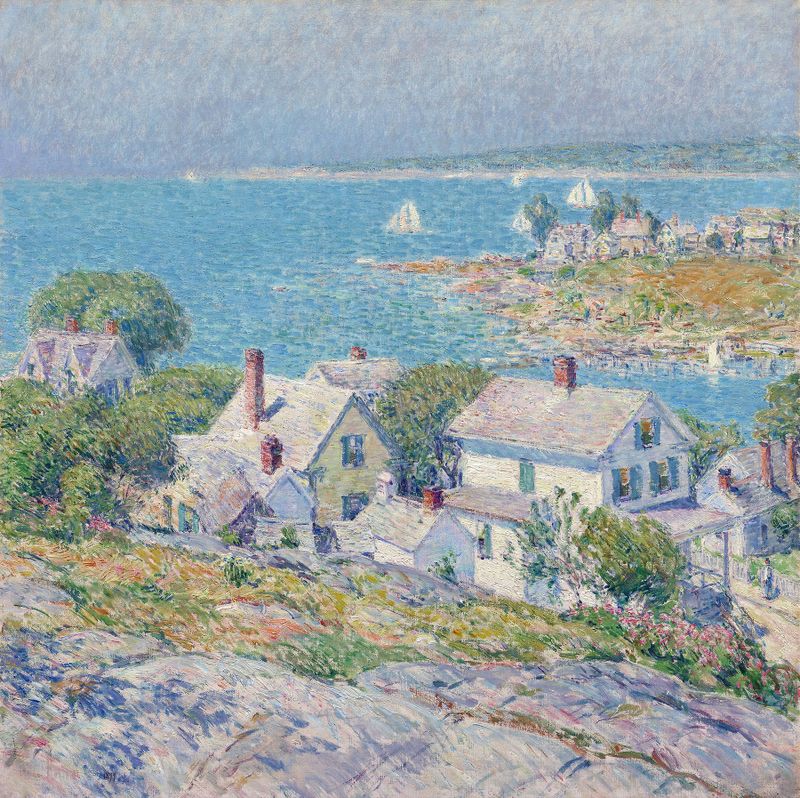
New England Headlands
Childe Hassam
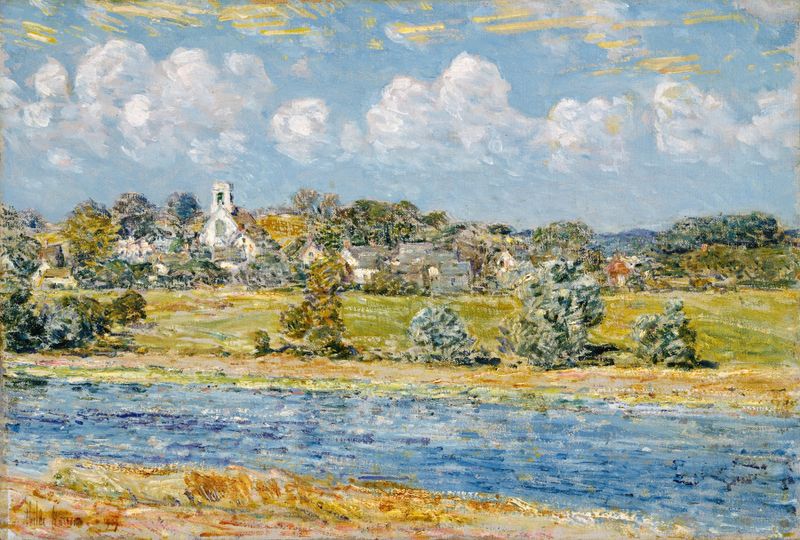
Landscape at Newfields, New Hampshire
Childe Hassam

Piazza di Spagna, Rome
Childe Hassam

The Harbor
Childe Hassam

Late Afternoon, New York, Winter
Childe Hassam





