Vignetten — History & Facts
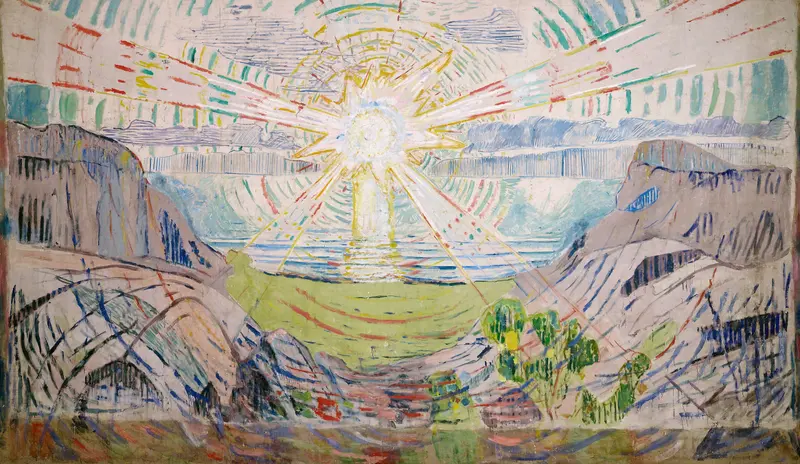
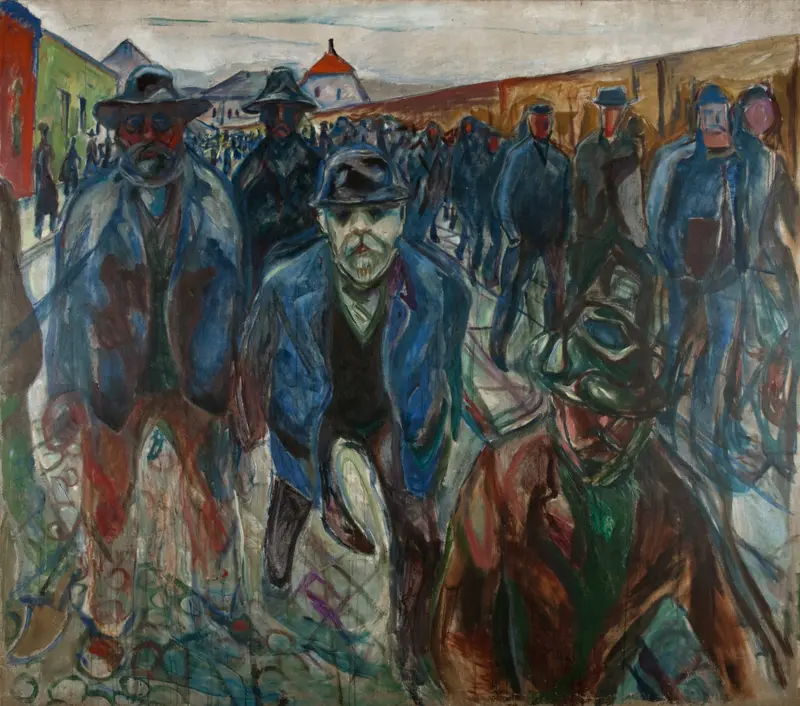
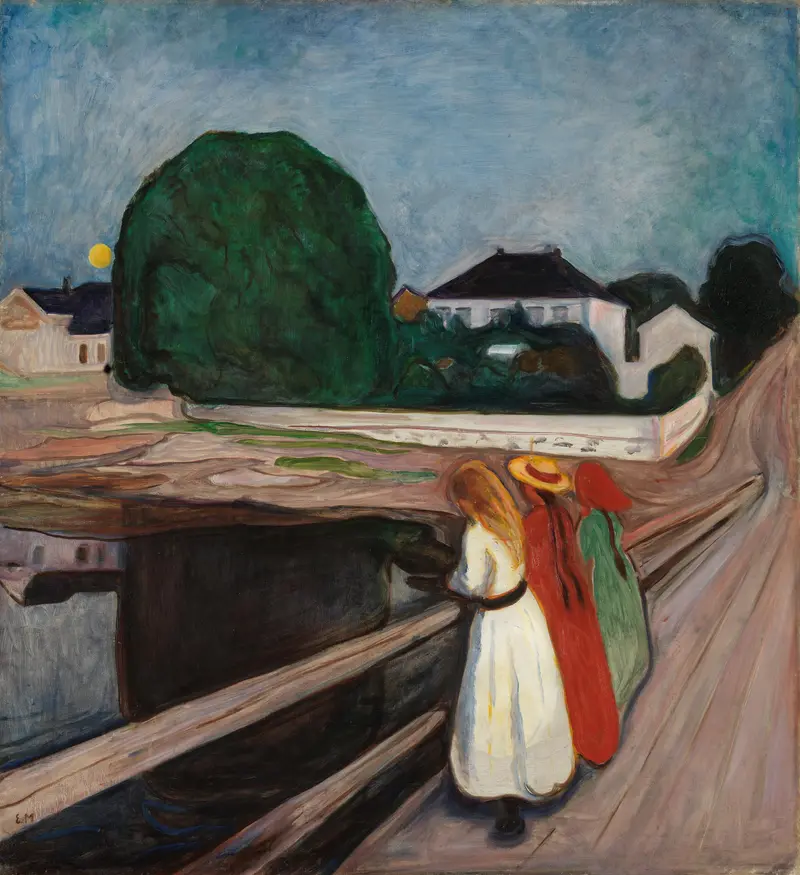
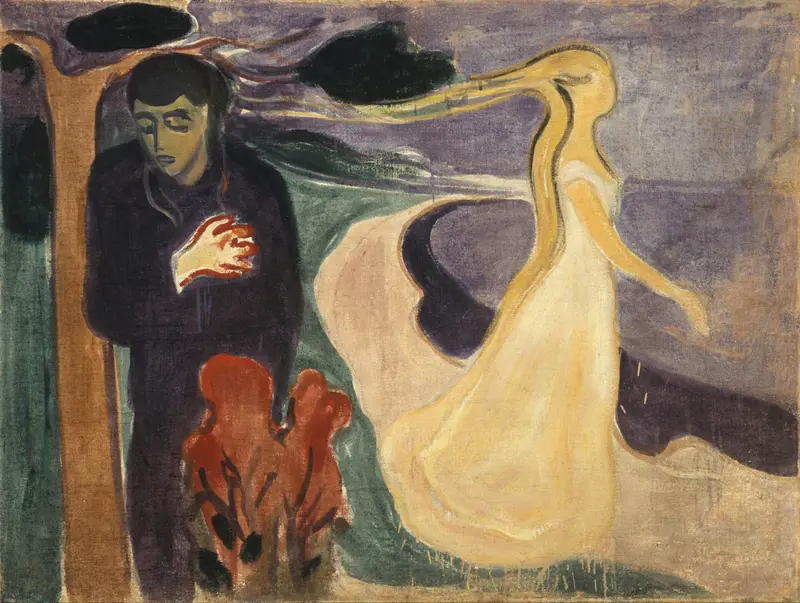
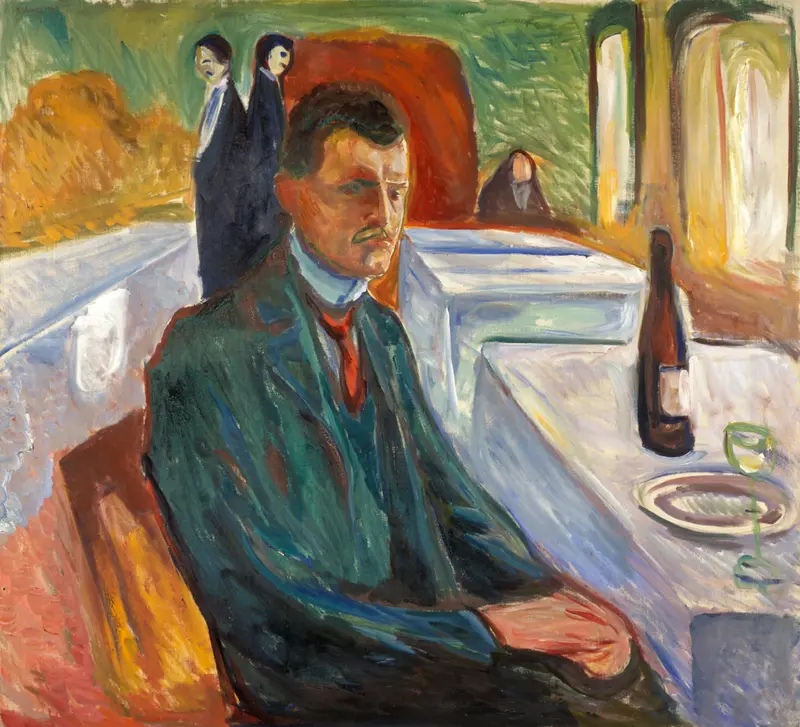
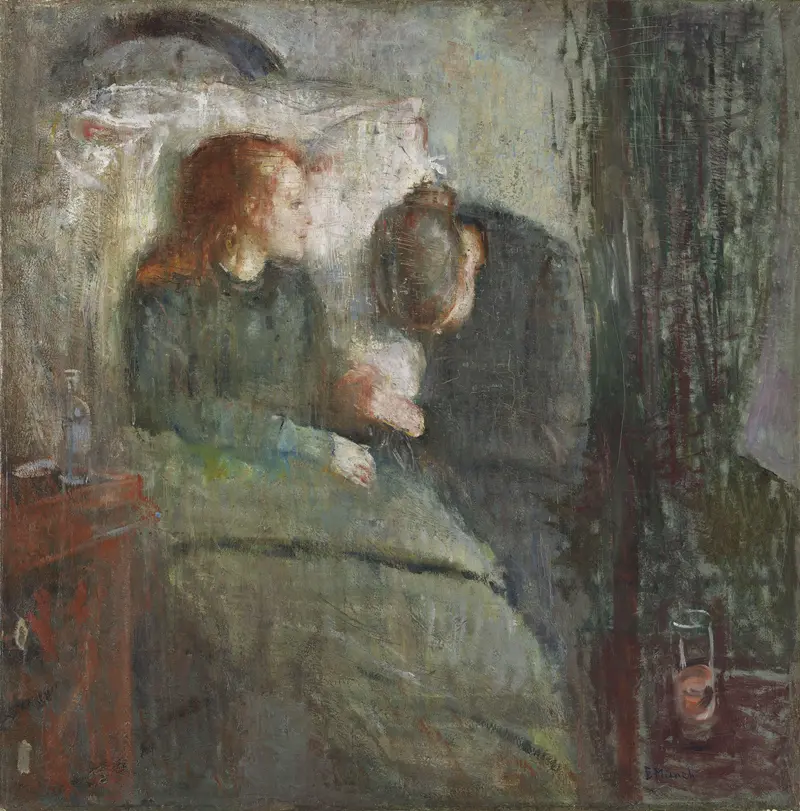
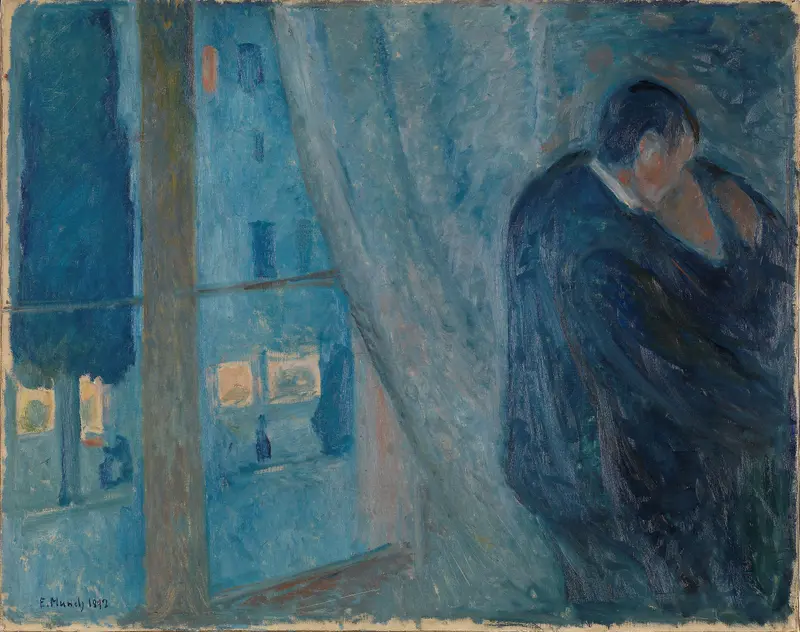
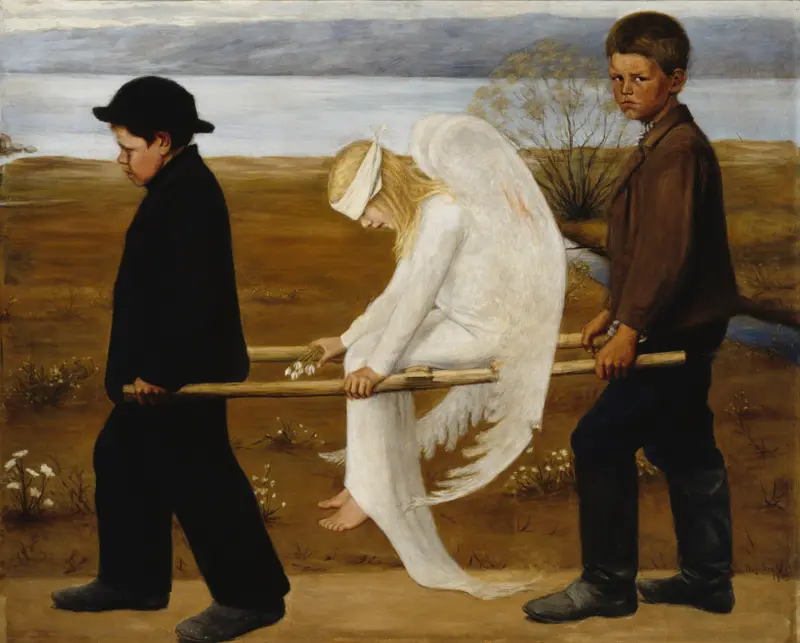
Vignetten, painted by Edvard Munch, showcases a dynamic interplay of colors, with bold reds, blues, and yellows dominating the canvas. The figures depicted are often distorted and expressive, conveying a sense of emotional turmoil. The setting appears abstract, allowing the viewer to focus on the emotional weight of the figures rather than a specific location.
This creates an atmosphere that is both unsettling and captivating. The painting is executed in oil on canvas, a medium that allows for rich texture and vibrant color application. Munch employs a loose brushwork technique, enhancing the emotional intensity of the piece. The dimensions of Vignetten are approximately 60 x 80 cm, making it a moderately sized work that invites close inspection.
The use of color and form is characteristic of Expressionism, a movement that Munch is often associated with. Edvard Munch, a Norwegian painter, is best known for his exploration of psychological themes and human emotion. Vignetten reflects his interest in the inner workings of the mind and the complexities of human relationships. An interesting fact about this work is that it was created during a period when Munch was deeply influenced by his own experiences of love, loss, and existential dread.
This personal connection adds layers of meaning to the painting, making it a significant piece in his oeuvre.