
Villagers by a frozen river — History & Facts
In the frozen stillness, fear lingers like a mist, wrapping around the villagers gathered by the river’s edge. Their faces tell stories of resilience amidst the bite of winter, yet the icy expanse reflects not just the landscape, but the weight of uncertainty they each bear. Look to the center of the canvas, where figures huddle together, their postures conveying a blend of camaraderie and concern. Notice the stark contrast between the deep blues of the river and the warm hues of their clothing, drawing your eye to their communal struggle.
The meticulous detailing of the ice’s texture and the soft, diffused light filtering through the overcast sky evoke a sense of both serenity and trepidation, a moment suspended in time. The painting captures a paradox; while the villagers are united in their activity, a subtle tension permeates their interactions. Just as the frozen river appears solid, it hints at hidden dangers beneath the surface. The viewer can sense a collective apprehension—the fear of the unknown—threatening to fracture their brief moment of solace.
The juxtaposition of warmth in their clothing against the chill of the environment emphasizes their vulnerability, suggesting that, while their bodies may be together, their minds are scattered with apprehensions. In 1849, the artist was immersed in a growing interest in Dutch realism, capturing the nuances of rural life. Living in the Netherlands during a period of political upheaval and economic struggle, Kruseman sought to reflect the emotional landscape of his time, blending naturalism with an intimate connection to everyday experiences. This work stands not only as a testament to his skill but as a mirror reflecting the unvoiced fears of a community weathering the harshness of life.
More Artworks by Frederik Marinus Kruseman
Browse all →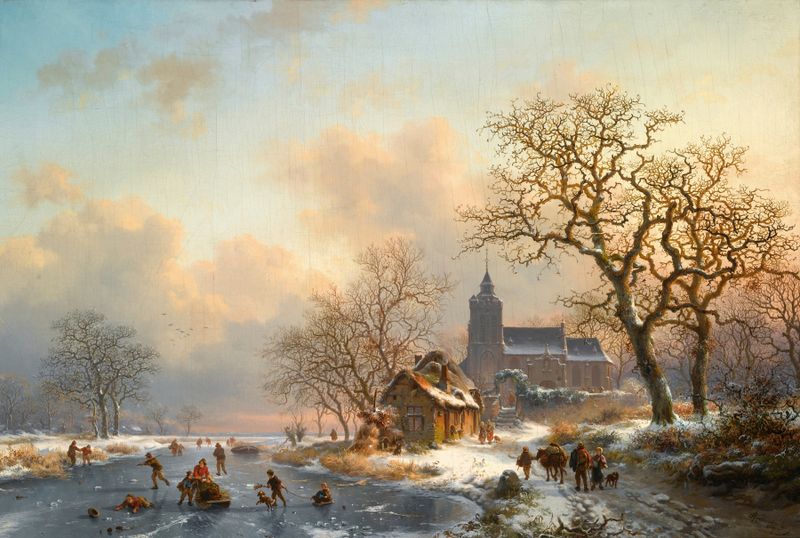
A Winter Landscape With Skaters On A Frozen River
Frederik Marinus Kruseman

Winter Landscape With Strollers And Skaters
Frederik Marinus Kruseman

Monk Meditating near a Ruin by Moonlight
Frederik Marinus Kruseman
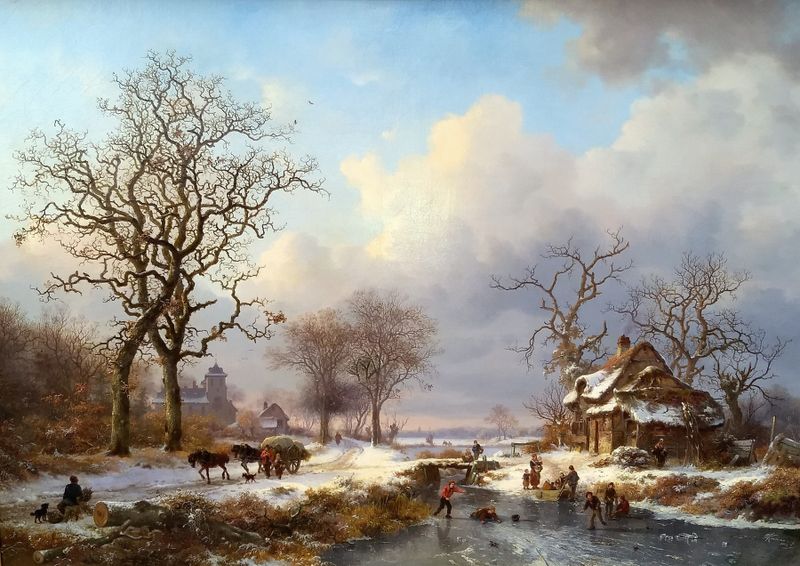
Dutch Winter Landscape with Skaters
Frederik Marinus Kruseman

Winter landscape with figures on a frozen river
Frederik Marinus Kruseman
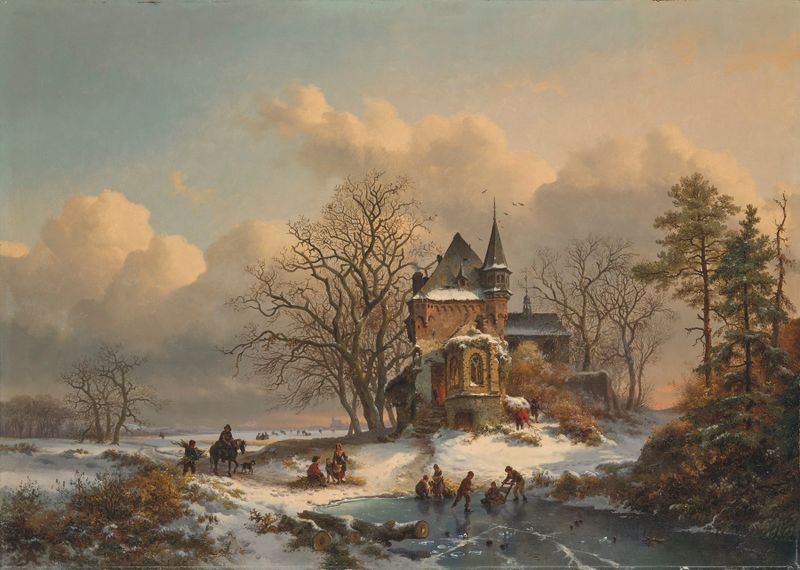
Winter landscape with skaters
Frederik Marinus Kruseman
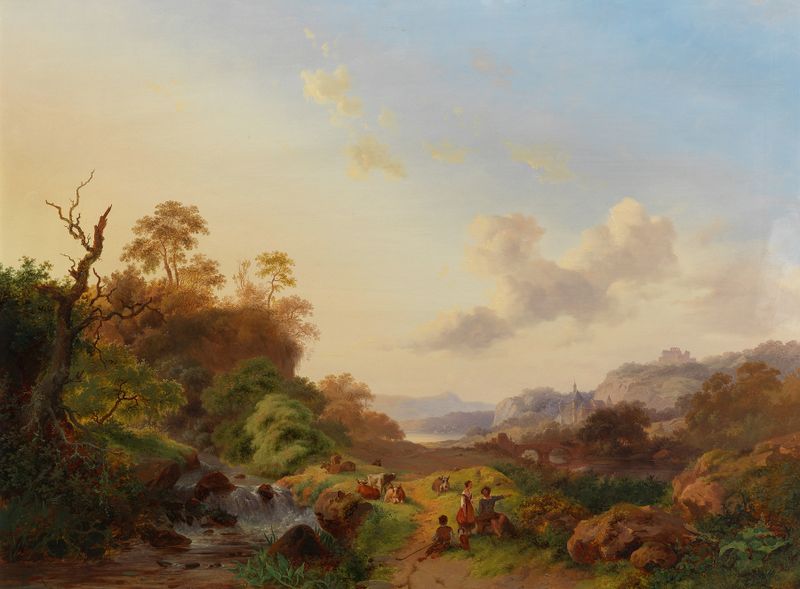
Summer landscape with figures and cattle near a waterfall
Frederik Marinus Kruseman
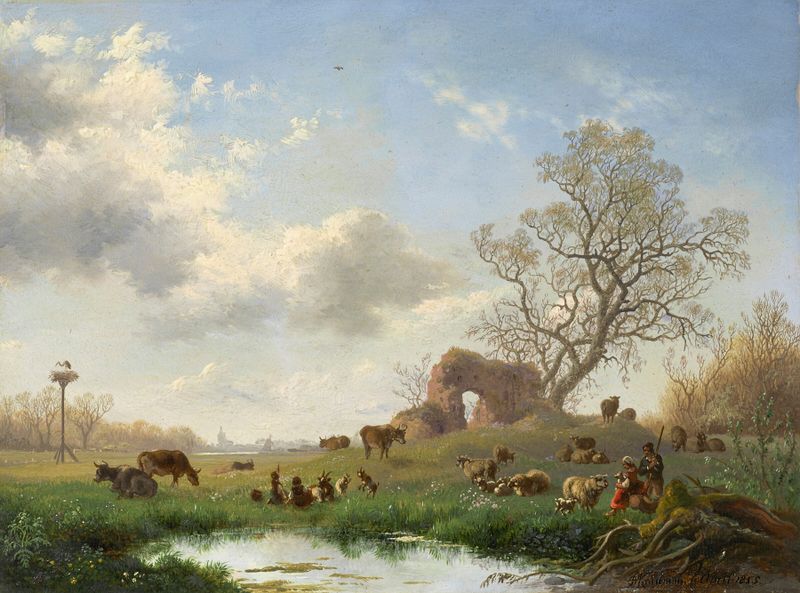
April
Frederik Marinus Kruseman
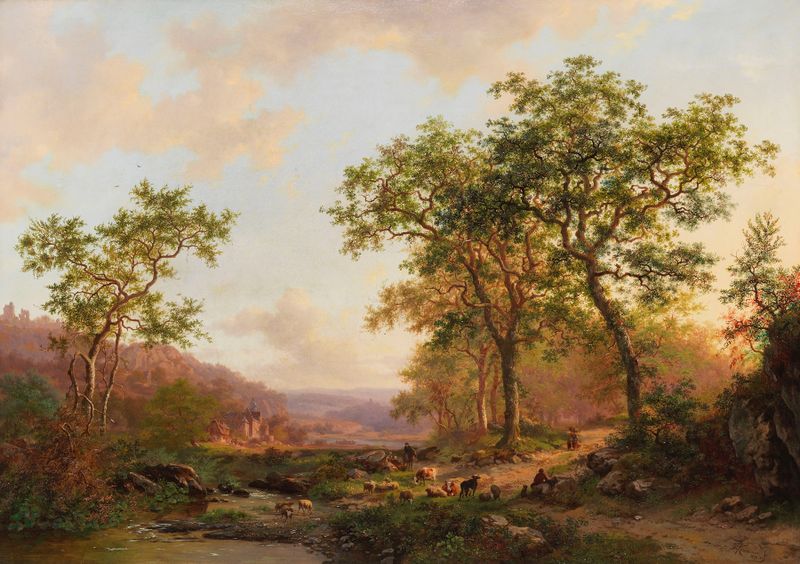
Weite Landschaft im Abendlicht
Frederik Marinus Kruseman
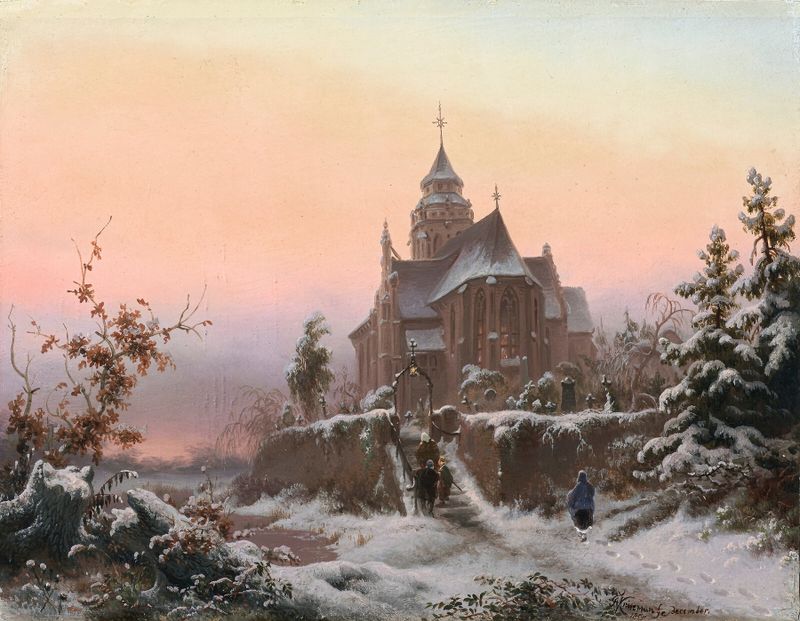
December
Frederik Marinus Kruseman





