
Visions of the Sea — History & Facts
A single figure, small against a sweep of sky, sits at the edge of land and water, gazing outward as if searching for something beyond the visible. The vastness of the clouds dominates the scene, their billowing forms echoing the restless movement of the sea below. The painter draws your eye upward and outward, away from the solitary presence in the foreground, until you are almost lost in the painted air.
The trees on the left stand as quiet witnesses, while the great cliff on the right hems in the scene, lending it a sense of shelter and enclosure. This is not a portrait of a person, but of a mood—one of longing, anticipation, or perhaps reflection—set in a landscape that feels both real and imagined. Painted around 1904, Visions of the Sea belongs to a moment when American artists were turning from strict realism toward something more personal and dreamlike. Arthur Bowen Davies was known for his poetic landscapes, often infusing them with a sense of mystery and inwardness.
Works like this, now in the collection of the Metropolitan Museum of Art, were not made as grand commissions but as explorations—records of an artist’s inner weather as much as the world outside. The early twentieth century saw a hunger for new ways of seeing, and Davies’s gentle, searching vision invites you to linger, to look again, and to wonder what lies just beyond the edge of the painted shore.
More Artworks by Arthur Bowen Davies

Mirror of Illusion
Arthur Bowen Davies
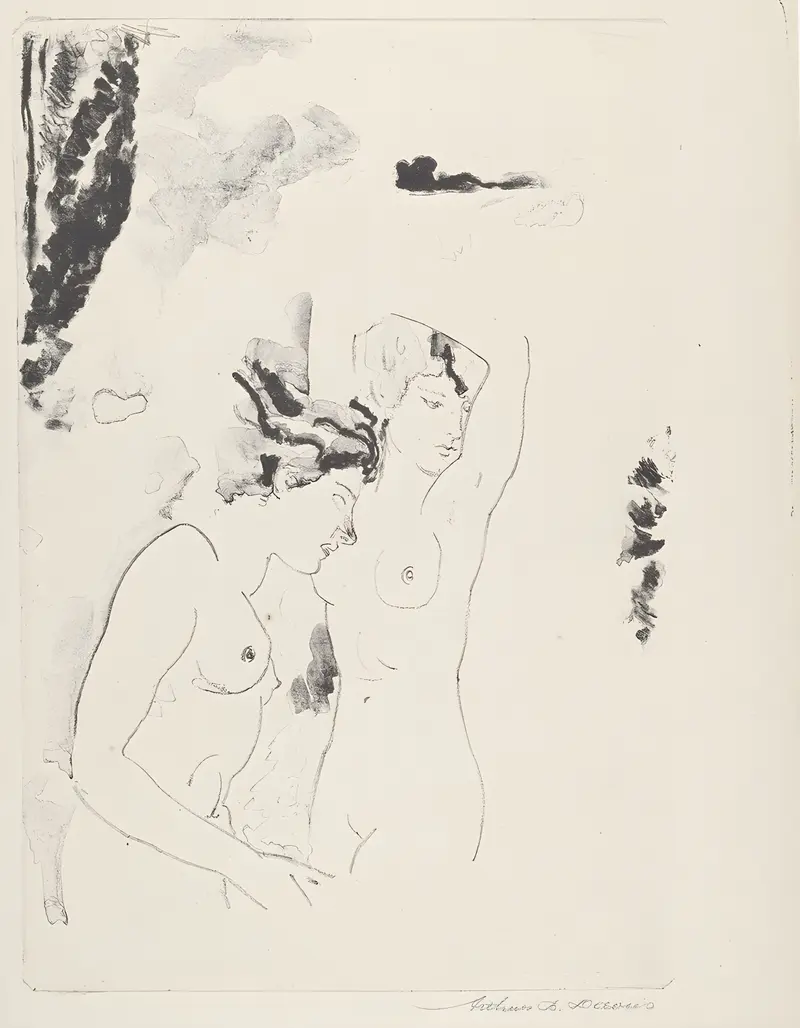
Nymphs of the Stream
Arthur Bowen Davies

Woman Dancing
Arthur Bowen Davies
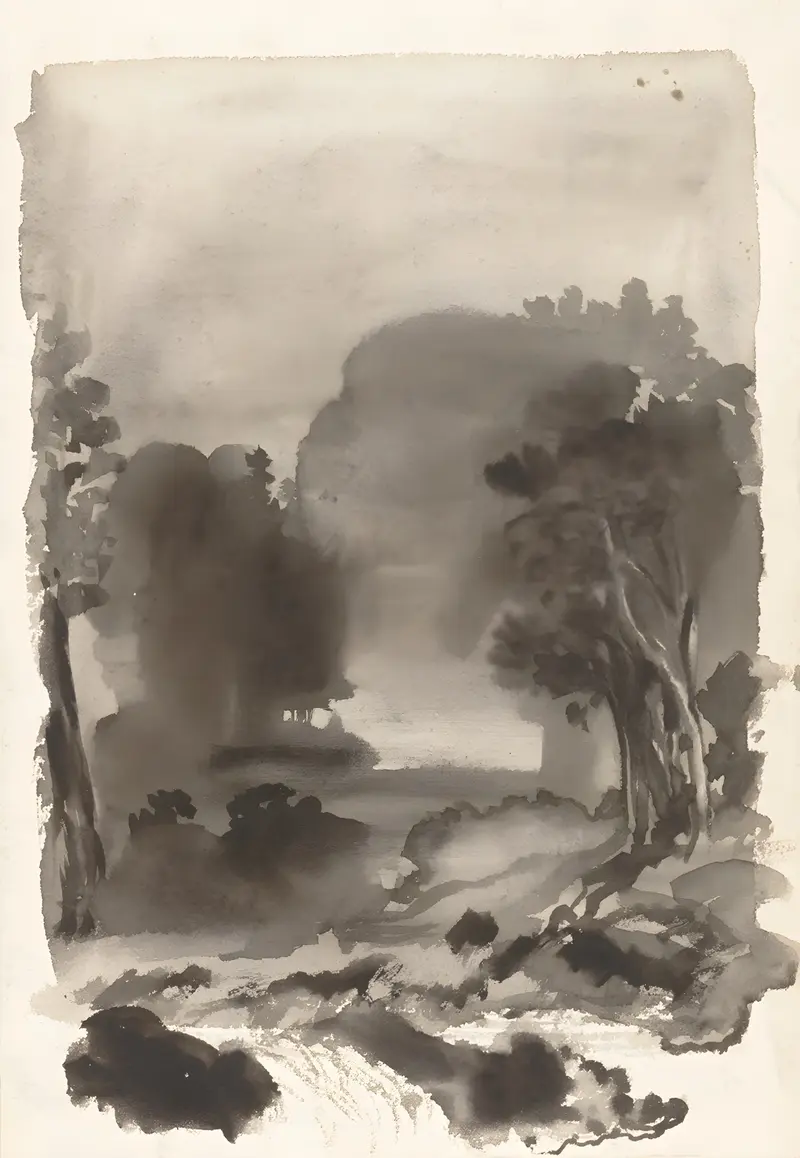
Landscape 2
Arthur Bowen Davies
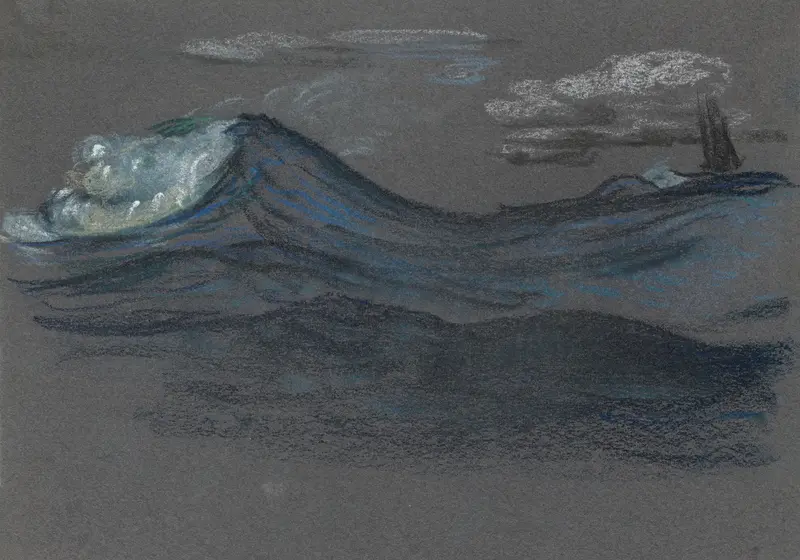
Ocean Swells
Arthur Bowen Davies
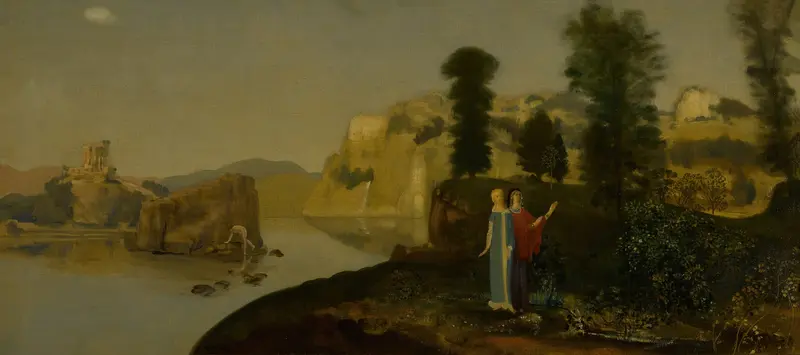
Silver Springs
Arthur Bowen Davies
On the Cliffs
Arthur Bowen Davies

Landscape
Arthur Bowen Davies
Flora
Arthur Bowen Davies
Along the Erie Canal
Arthur Bowen Davies
More Landscape Art

The Starry Night
Vincent van Gogh

View of Delft
Johannes Vermeer

Water Lilies
Claude Monet

The Grand Canal, Venice, looking north-west from the Ca' Corner to the Ca' Contarini degli Scrigni, with the campanile of Santa Maria della Carità
Canaletto

Windsor Castle
Canaletto

The Grand Canal looking North-East from the Palazzo Dolfin-Manin to the Rialto Bridge
Canaletto