
Voiliers à Ouistreham — History & Facts
In Voiliers à Ouistreham, yearning takes flight as colors collide and dance upon the canvas, inviting the viewer into a world where the sea meets the sky. Look to the center of the painting, where the bold strokes of blue and white swirl together, capturing the rhythm of the waves lapping at the shore. Notice how the vibrant sails of the boats unfurl, their reds and yellows contrasting sharply with the muted tones of the background. The artist’s use of light creates a shimmering effect on the water, invoking a sense of movement and spontaneity, while the brushwork suggests a fleeting moment, evoking the essence of leisure and adventure. The juxtaposition of the boats against the vastness of the ocean speaks to the tension between human ambition and nature’s limitless power.
Each sail, caught in the wind, embodies a restless spirit, yearning to venture beyond the boundaries of the horizon. The play of color reveals not just the beauty of the scene, but also an underlying melancholy—the desire to escape, to explore, to connect with something greater beyond the physical realm. Created in 1930, this piece emerged during a period of artistic exploration for its creator. Valtat, who was associated with the Fauvist movement, painted this work while living in France, amidst a shift in artistic paradigms.
The interwar years were marked by a blend of optimism and uncertainty, a contextual backdrop that permeates the canvas, reflecting both the joys of coastal life and a lingering desire for freedom and adventure.
More Artworks by Louis Valtat
Browse all →
Bord de rivière aux arbres
Louis Valtat

Normandie
Louis Valtat

Paysage du Midi
Louis Valtat
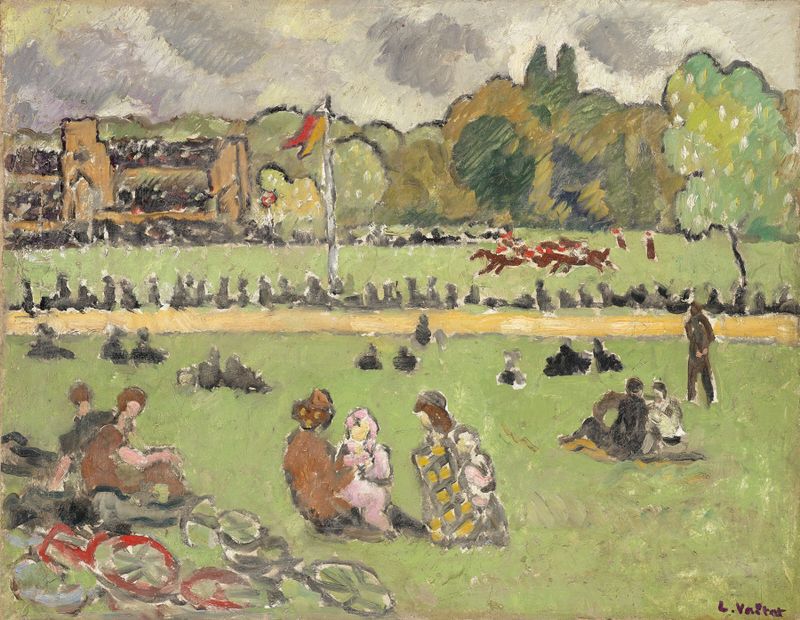
Les Courses
Louis Valtat
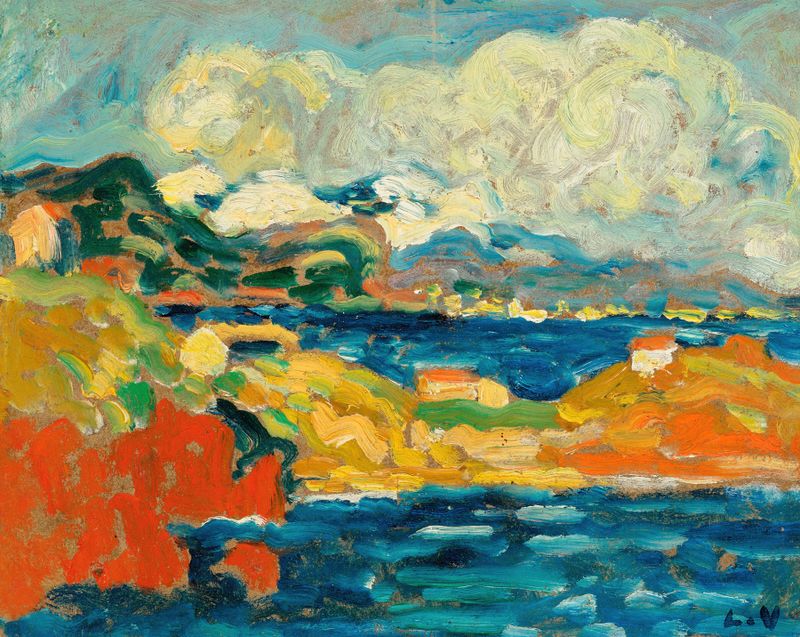
La baie à Anthéor
Louis Valtat

Femme assise au bord de la mer
Louis Valtat
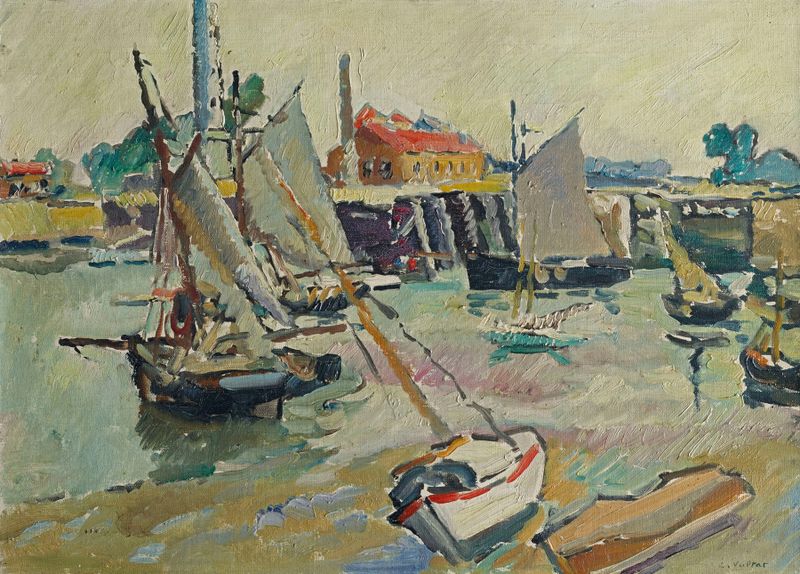
Voiliers au port à marée basse, Ouistreham
Louis Valtat

La maison au bord de la route en Normandie
Louis Valtat

La maison dans le jardin fleuri
Louis Valtat

Le jardin de la maison au toit rouge
Louis Valtat





