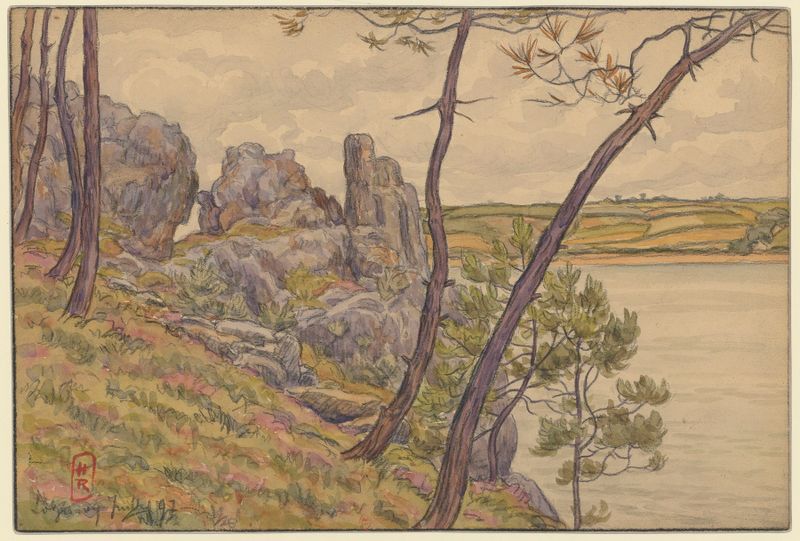
Vue de la baie avec boqueteau au premier plan et paysage en fond, le Trieux — History & Facts
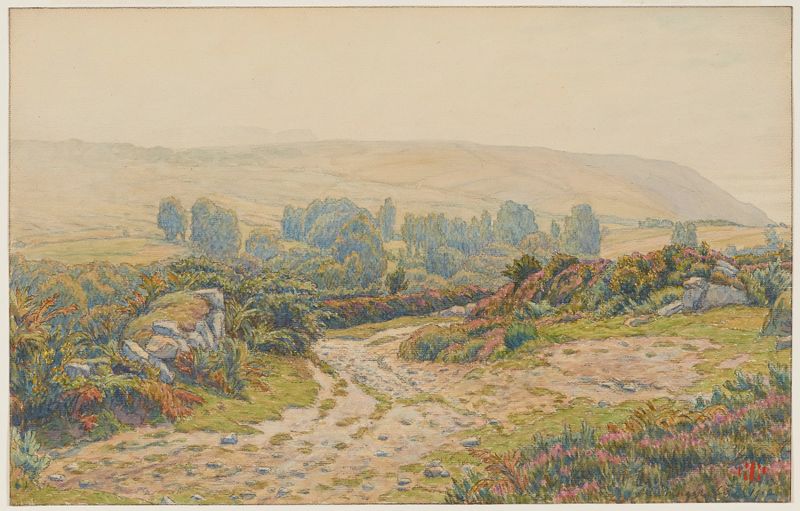
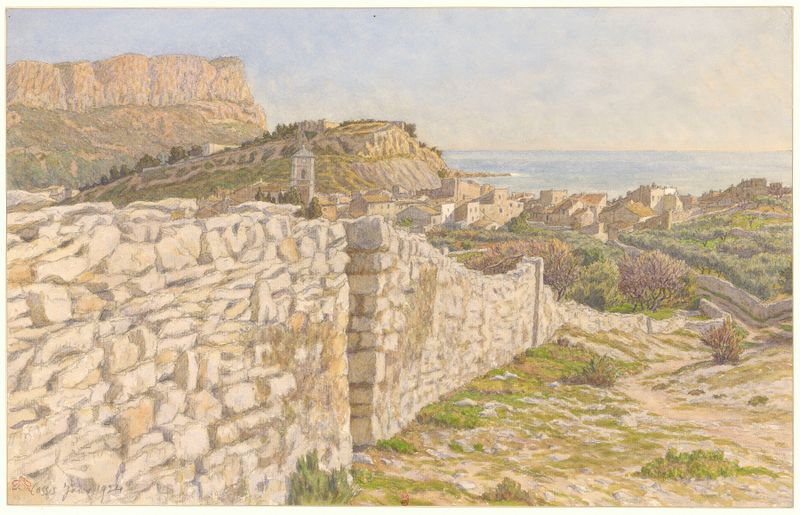
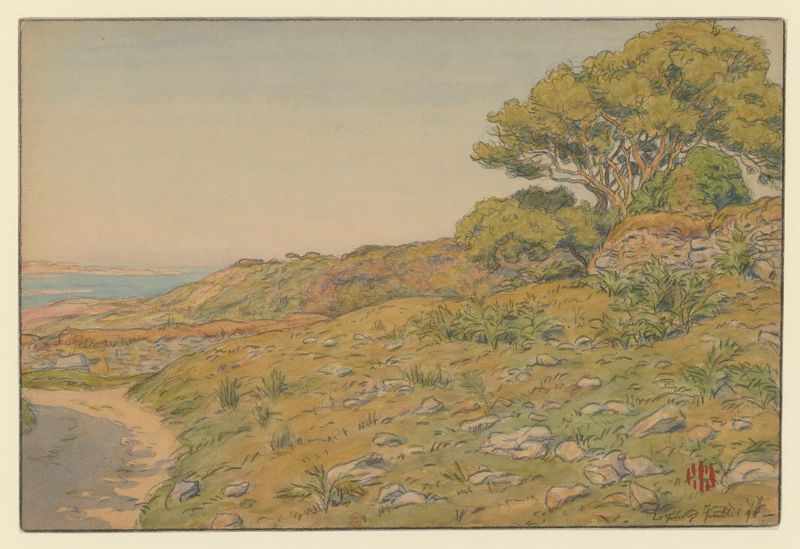
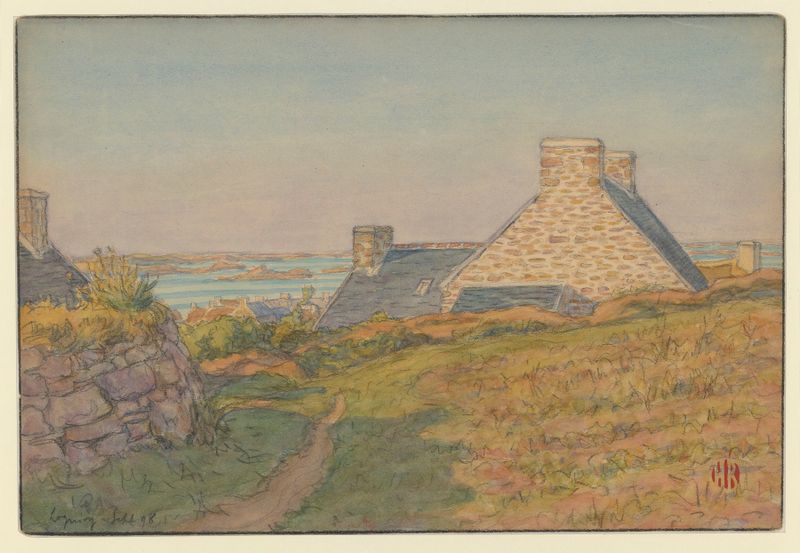
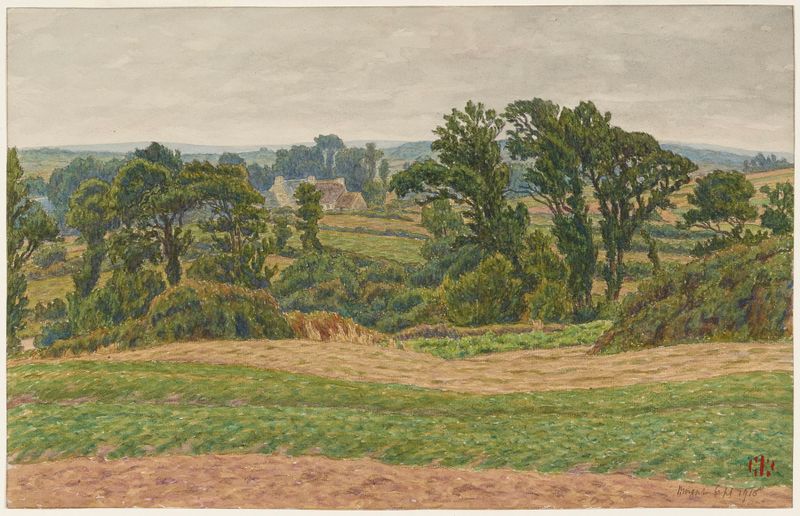
Can paint confess what words never could? In the delicate interplay of light and shadow, a profound sense of solitude emerges, whispering the unspoken truths of the human experience. Focus on the left side of the canvas, where a boqueteau stands proudly amidst a tranquil bay. Notice how the vibrant greens of the foliage contrast with the somber blues of the water, creating a serene yet haunting atmosphere. The gentle strokes and careful blending invite the viewer to traverse into the distance, where rolling hills cradle a sky brushed with soft pastels, hinting at the day's end. Yet, beneath this picturesque landscape lies an emotional landscape of its own.
The isolation of the boqueteau, standing alone against the expansive backdrop, evokes feelings of loneliness and longing. Moreover, the stillness of the water reflects not only the colors of the sky but also a stillness of being—a quiet plea for connection in the midst of vastness. The absence of human figures amplifies this sentiment, transforming the scene into a poignant meditation on existence. Created in 1895, this work by Rivière was born in a period marked by a shift in artistic expression, as artists began to explore the depths of emotion and the subtleties of nature.
Working in France, he was part of a movement that sought to evoke feelings through the interplay of color and form. At this time, Rivière's own life was intertwined with a search for meaning, mirroring the quiet introspection found in his art.