
Vue de Paris — History & Facts
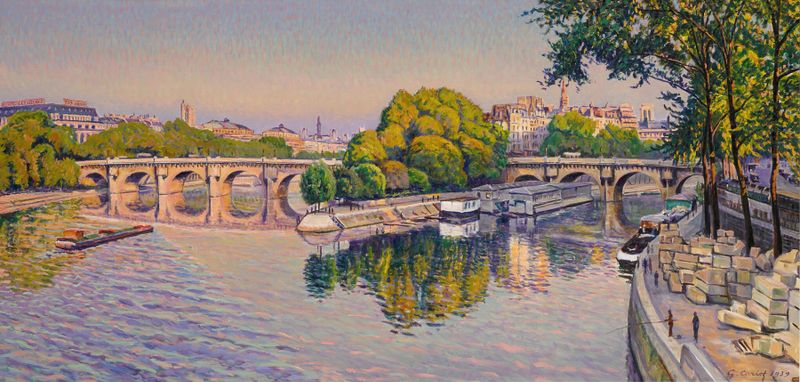
Could beauty survive in a century of chaos? In Vue de Paris, the answer unfurls through a vibrant panorama of a city awakening, capturing both the elegance of urban life and the resilience of spirit amidst turmoil. Look to the left at the gentle strokes of green that depict trees lining the streets, their leaves fluttering with a sense of vitality. Notice how the artist employs a warm palette, with soft yellows and pinks illuminating the buildings, as if the very bricks are infused with the dawn's light. The composition draws your eyes along the curves of the avenues, leading you to the bustling heart of Paris, where figures move in sync with the rhythm of the city, yet remain small against its grand architecture. Beneath the surface, the painting holds a symbolic contrast between the vibrancy of life and an underlying tension.
The joyous activity is juxtaposed with the looming shadows of the buildings, suggesting both protection and confinement. Each figure, caught in their daily endeavors, carries stories of hope and struggle, embodying the resilience of a city that has seen war and recovery, beauty intertwined with hardship. In 1936, Vue de Paris emerged from Gustave Cariot’s studio as Europe grappled with political unrest and economic instability. Living in Paris during a time marked by the rise of fascism and the looming specter of World War II, the artist sought to portray a moment of serenity amid chaos.
His work reflects an ambition to capture not just the city’s aesthetics but also its indomitable spirit during a tumultuous epoch in history.
More Artworks by Gustave Cariot
Browse all →
La vallée
Gustave Cariot

Le Jardin
Gustave Cariot

Les meules
Gustave Cariot
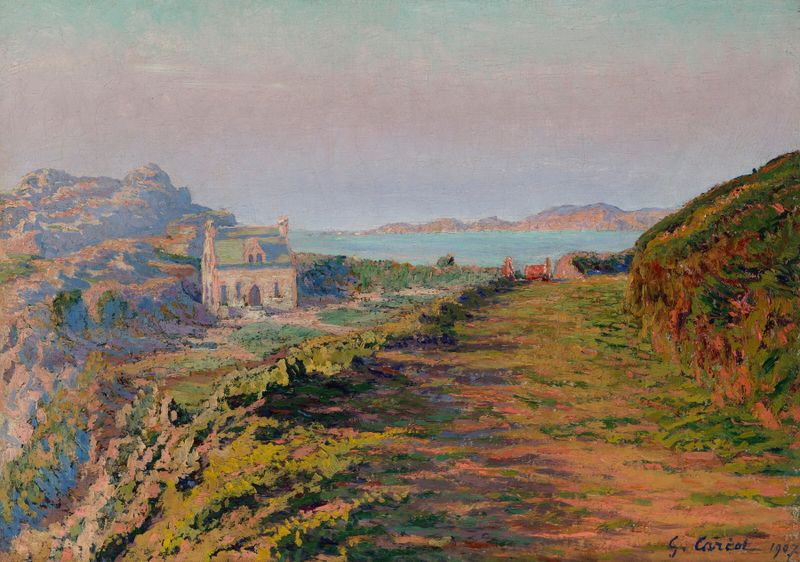
Maison Pen ar C’hastel à la pointe du Château, Perros-Guirrec
Gustave Cariot
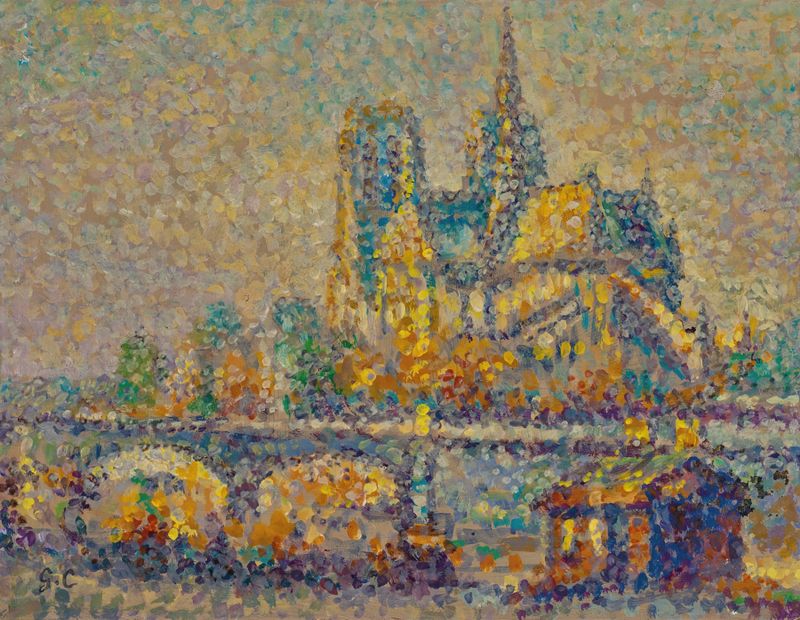
Notre-Dame de Paris
Gustave Cariot
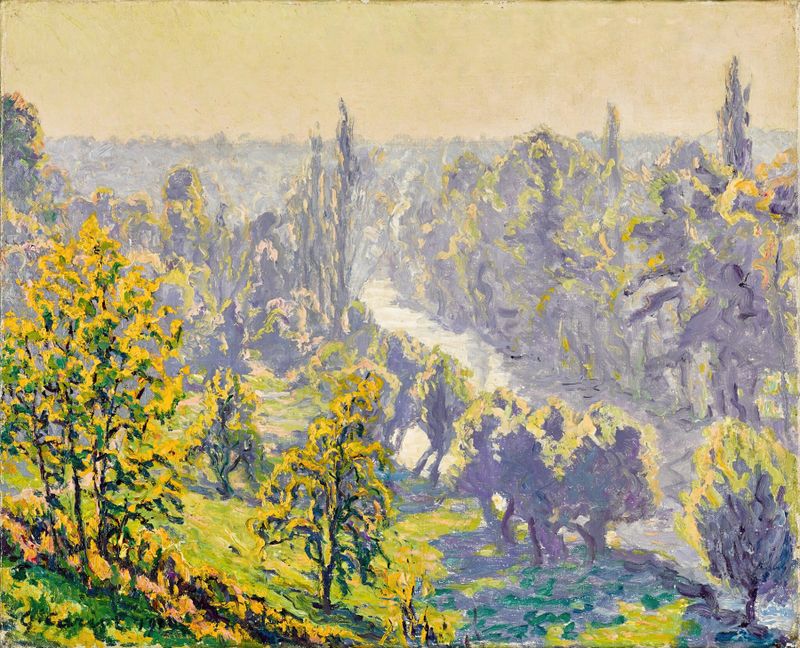
Périgny, automne, matinée sur l’Yerres
Gustave Cariot
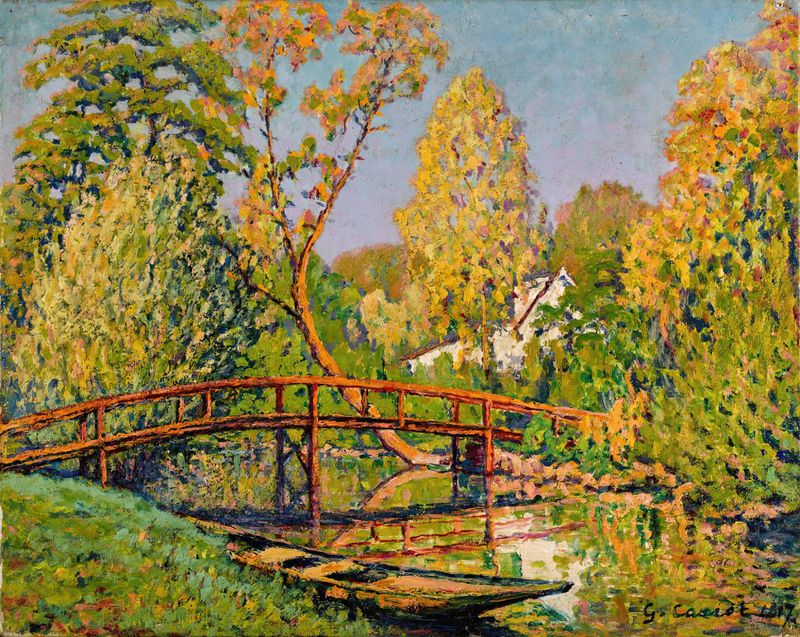
Périgny, pont sur l’Yerres
Gustave Cariot
Le Pont-Neuf, eté, 20 heures
Gustave Cariot

Moulin de Périgny
Gustave Cariot

Le chemin à Mandres
Gustave Cariot





