
Vue de tonnerre ou Le moulin d’enfer — History & Facts
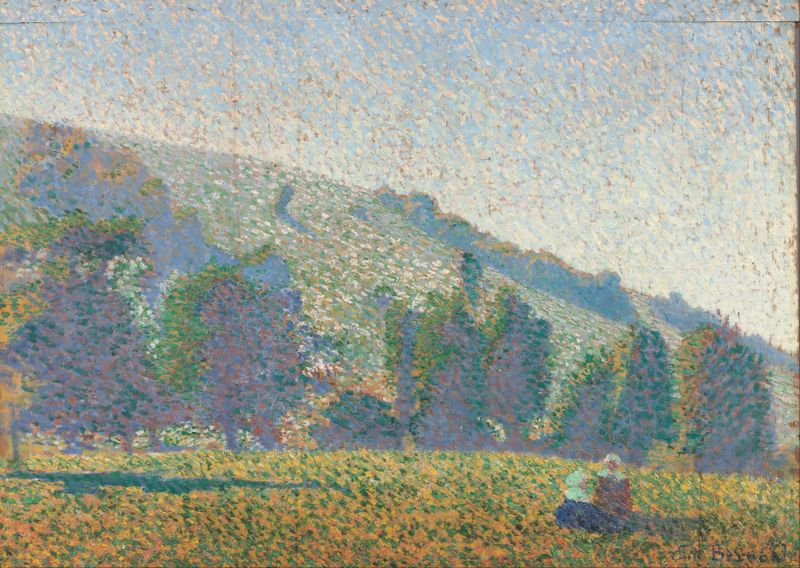
In Vue de tonnerre ou Le moulin d’enfer, this poignant truth resonates, as transformation unfolds in every brushstroke. The artwork invites the viewer to explore the intricate layers of nature and emotion, intertwining the serene and the tumultuous, revealing the duality of existence. Focus on the swirling clouds that dominate the sky, their darkened forms hinting at an impending storm. Look closely at the vibrant hues of gold and ochre illuminating the landscape below; they contrast sharply with the ominous shades above.
The windmill stands resolute against this backdrop, a symbol of endurance amidst chaos. Bernard's use of vivid colors and dynamic brushwork draws your eye across the canvas, echoing the tension of the natural world. Dig deeper, and you'll find a tapestry of meanings woven through the landscape. The windmill, seemingly static, suggests the human spirit's struggle against the forces of nature, illustrating a constant battle between serenity and turmoil.
Additionally, the dramatic interplay of light and shadow speaks to transformation—not just within the environment but also within ourselves, as we navigate the storms of life. This interplay invites contemplation on how beauty can emerge from adversity. In 1904, Emile Bernard was immersed in the Post-Impressionist movement, seeking to redefine artistic expression. At this time, he was living in France, surrounded by a burgeoning dialogue about color and form.
The artist was deeply influenced by both the Symbolist and Cloisonnist styles, which informed his exploration of emotional depth and metaphysical themes, evident in this striking piece.
More Artworks by Emile Bernard
Browse all →
House among trees; Pont-Aven
Emile Bernard
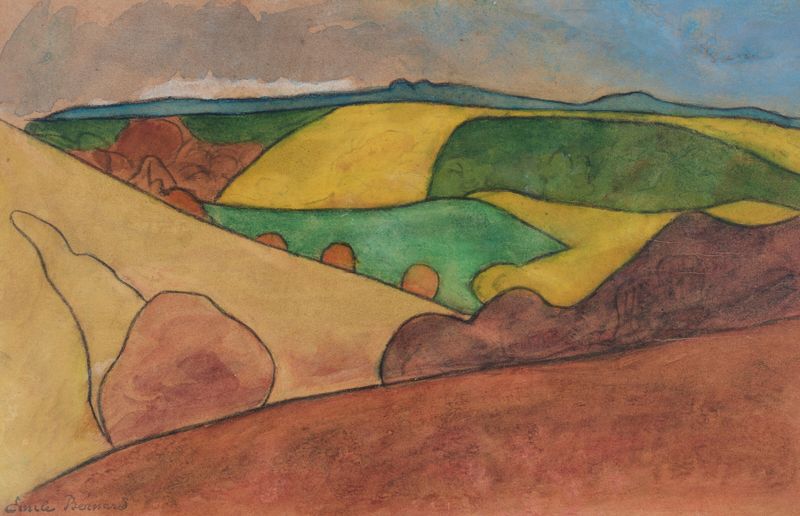
Paysage de Bretagne
Emile Bernard

Harvest by the Sea
Emile Bernard
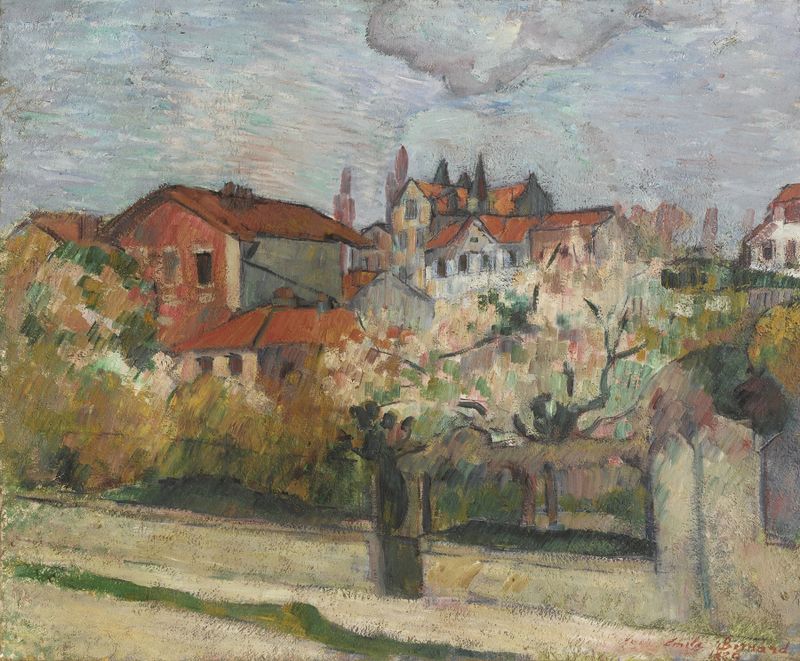
Jardin en fleur à Asinères
Emile Bernard
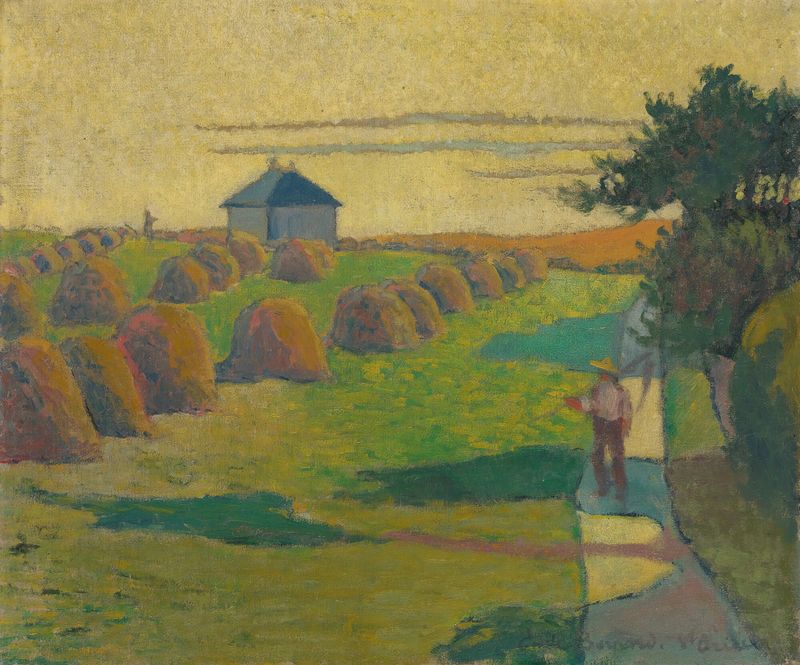
Saint-Briac
Emile Bernard
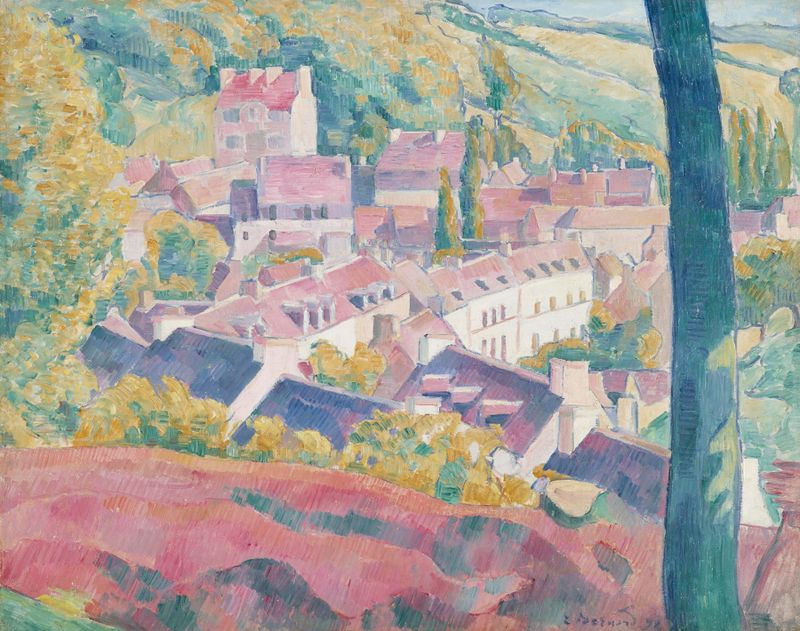
Pont-Aven Seen from the Bois d’Amour
Emile Bernard
Two Breton women in a meadow
Emile Bernard

Un Coin Du Bois D’amour A Pont Aven
Emile Bernard

Vue des toits
Emile Bernard

Landscape at Pont-Aven
Emile Bernard





