
Vue sur Tonnerre avec l’église Notre Dame — History & Facts
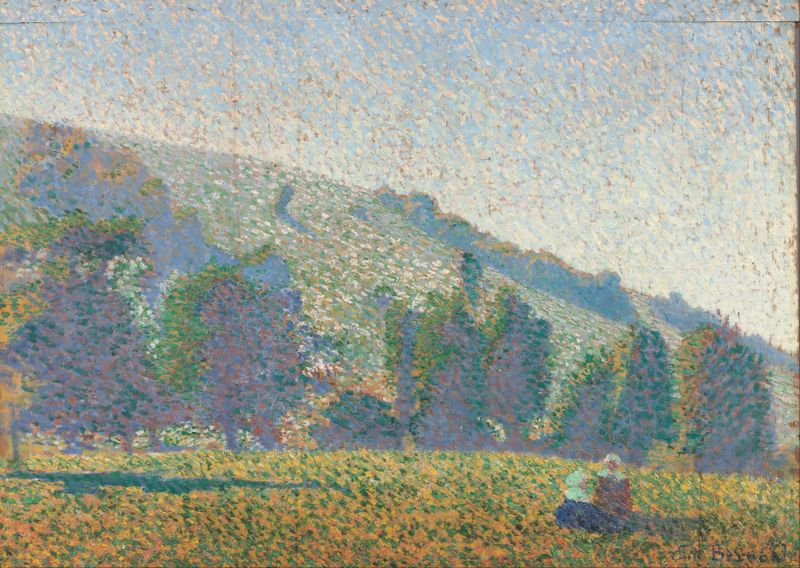
What if silence could speak through light? In Vue sur Tonnerre avec l’église Notre Dame, that very essence resonates, capturing a moment where innocence lives within stillness. Look to the foreground at the soft hues of the landscape, where a gentle gradient of greens and yellows meets the serene blue sky. The church, standing tall yet humble, commands attention at the center, its structure defined by meticulous brush strokes that evoke both solidity and fragility. The light dances across the canvas, creating a warm, inviting glow that seems to cradle the entire scene, whispering a gentle harmony between the earth and the heavens. Peering deeper, one notices the playful contrast between the vibrancy of the fields and the somber presence of the church.
The innocence of rural life embodies the simplicity of the moment, yet there is an underlying tension between the sacred and the everyday. The positioning of the church against the expansive sky hints at a longing for connection, a bridge between the spiritual and the earthly, suggesting that within every serene exterior lies a deeper story yearning to be told. In 1904, Emile Bernard found himself navigating the complexities of Post-Impressionism, a period marked by a blend of traditional techniques and modern themes. Living in France, he was influenced by his contemporaries while striving to carve out his own identity.
This work reflects his embrace of color and form, attempting to capture not just a view, but a feeling, a moment suspended in innocence amidst the ever-changing tides of life.
More Artworks by Emile Bernard
Browse all →
House among trees; Pont-Aven
Emile Bernard
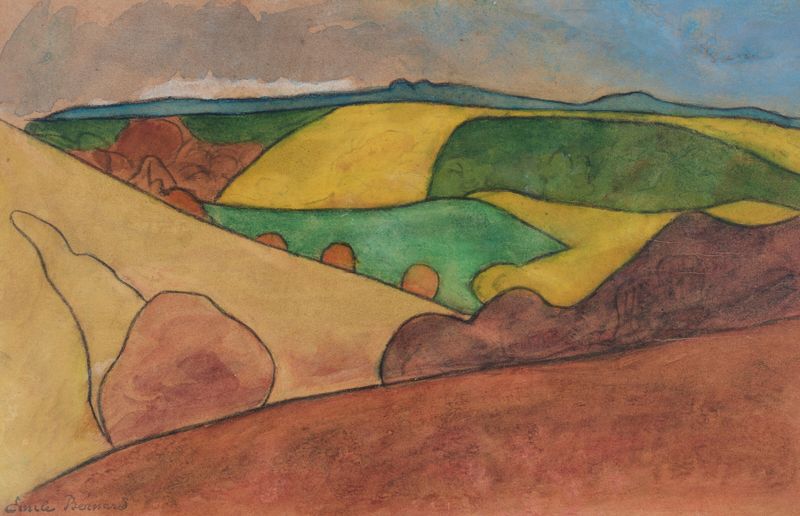
Paysage de Bretagne
Emile Bernard

Harvest by the Sea
Emile Bernard
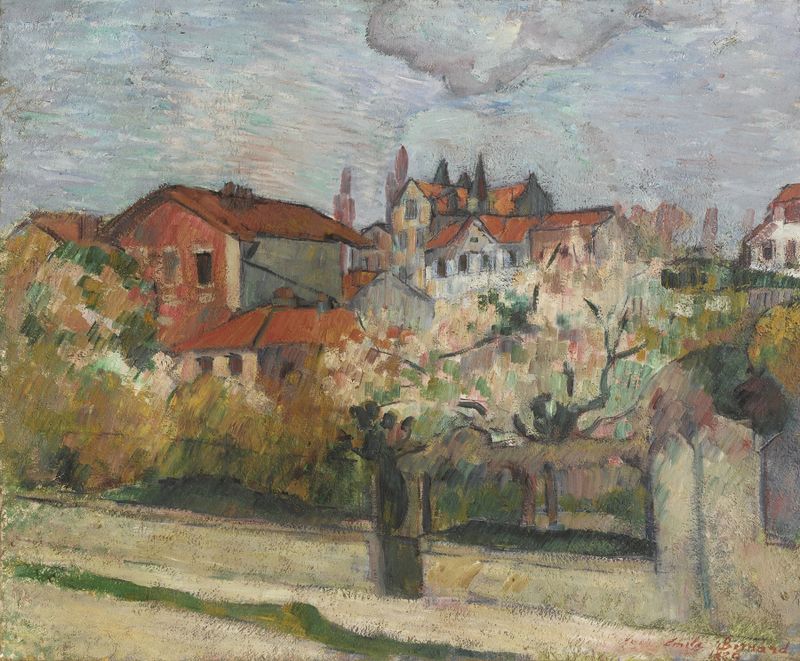
Jardin en fleur à Asinères
Emile Bernard
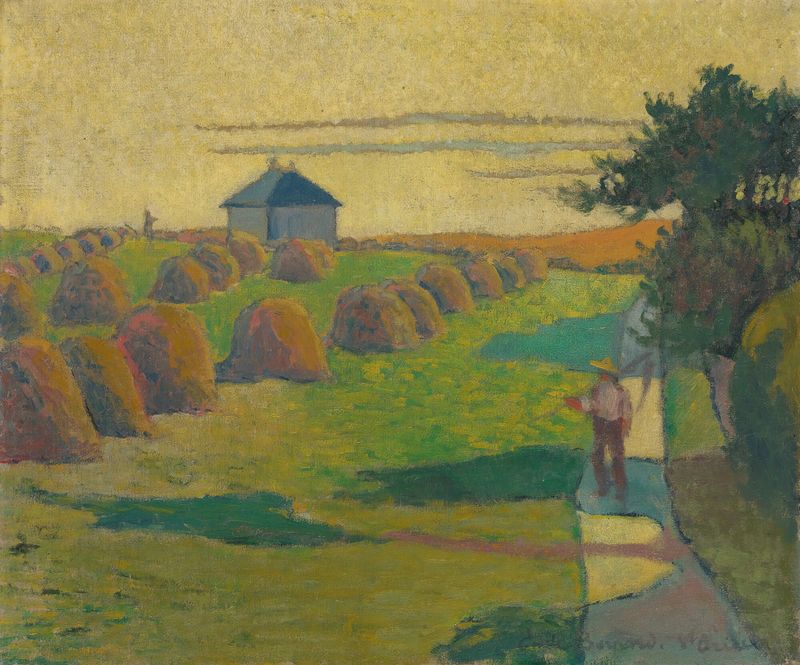
Saint-Briac
Emile Bernard
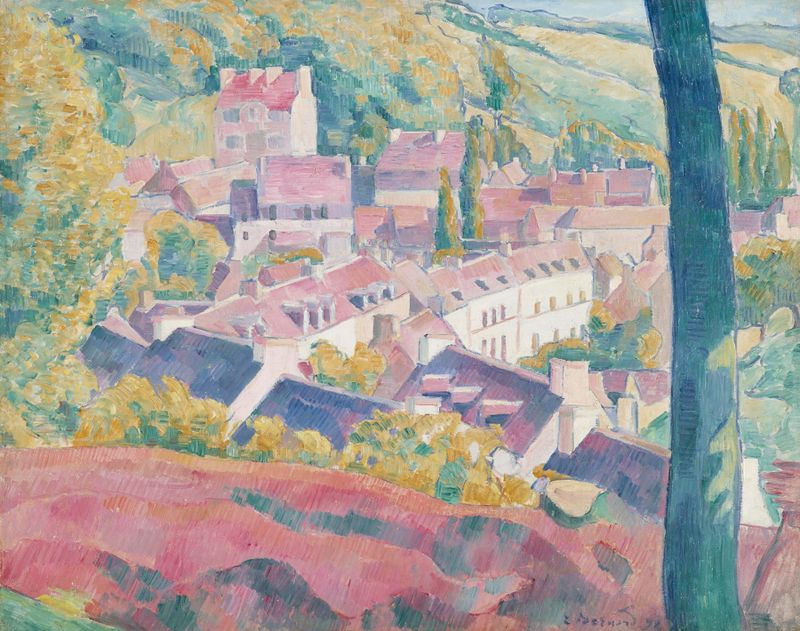
Pont-Aven Seen from the Bois d’Amour
Emile Bernard
Two Breton women in a meadow
Emile Bernard

Un Coin Du Bois D’amour A Pont Aven
Emile Bernard

Vue des toits
Emile Bernard

Landscape at Pont-Aven
Emile Bernard





