
Vue à vol d’oiseau de l’emplacement des abattoirs de Vaugirard prise de l’impasse Carlier — History & Facts
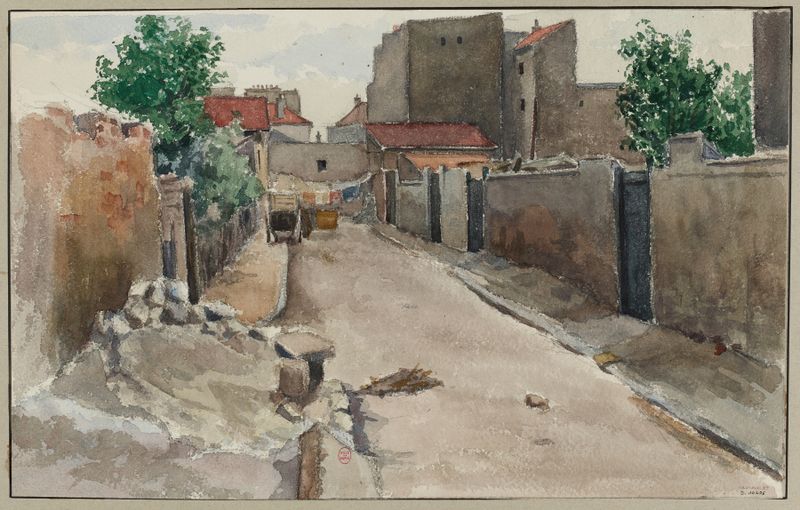
In the world of art, revolution often begins with the quiet observation of life’s stark realities. Here, the canvas serves as a window into a past both grim and transformative, inviting us to reflect on the changes that shape our cities and our existence. Look closely at the lower left corner, where the sprawling structure of the abattoir looms, rendered in muted grays and browns. The starkness of the architecture stands in contrast to the soft blues of the sky above, evoking a sense of unease that permeates the scene.
Notice the way the artist has employed sharp lines to delineate the buildings, while the surrounding areas appear more fluid and organic, almost as if nature is striving to reclaim what civilization has built. This tension between man-made structures and the natural world invites contemplation on the impact of industrialization. As you explore the canvas further, consider how the careful arrangement of space reflects a social commentary. The abattoir, a venue of death, represents the harsh reality of urban life in 19th-century Paris, juxtaposed with the beautiful sky above, symbolizing hope and change.
The painting encapsulates the duality of progress—what is gained and what is sacrificed. Each figure in the scene, whether active or passive, contributes to this narrative of transformation, embodying the people caught in the gears of revolution, both literal and metaphorical. F. Séguin created this piece in 1896, a time when Paris was undergoing significant changes due to modernization and industrialization.
It was an era marked by social upheaval and a burgeoning awareness of labor rights. The artist, part of a generation witnessing these transformations, sought to capture not just the physical landscape, but also the emotional landscape of a city on the brink of a new era, where every brushstroke tells the stories of lives intertwined with the fate of their surroundings.
More Artworks by F. Séguin
Browse all →
Rue Brantôme. (anciennement rue des Petits Champs donnant rue Saint Martin et rue Beaubourg)
F. Séguin
La rue de Chambéry, prise de la rue de Nice la Frontière
F. Séguin
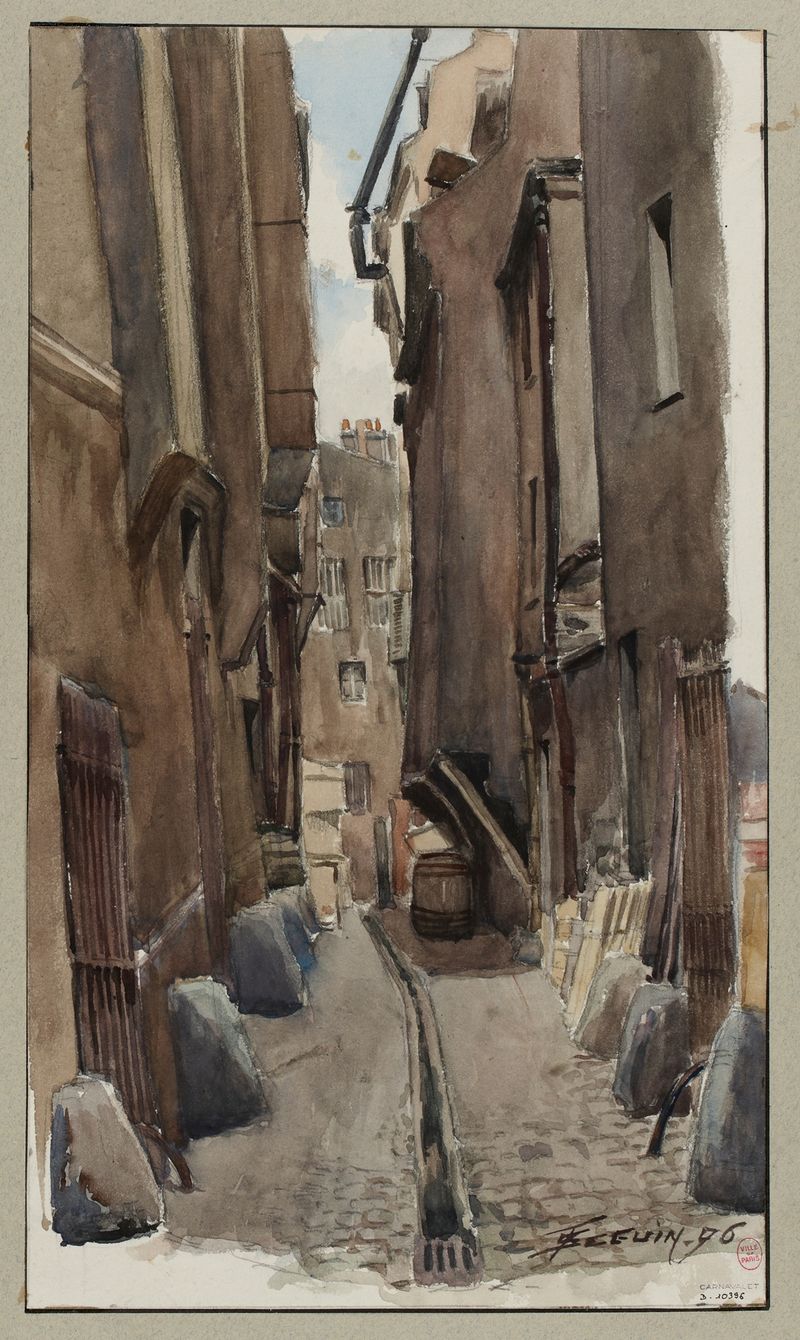
Le Cul de sac du Bœuf, (rue Saint Merri)
F. Séguin

Rue Descartes
F. Séguin
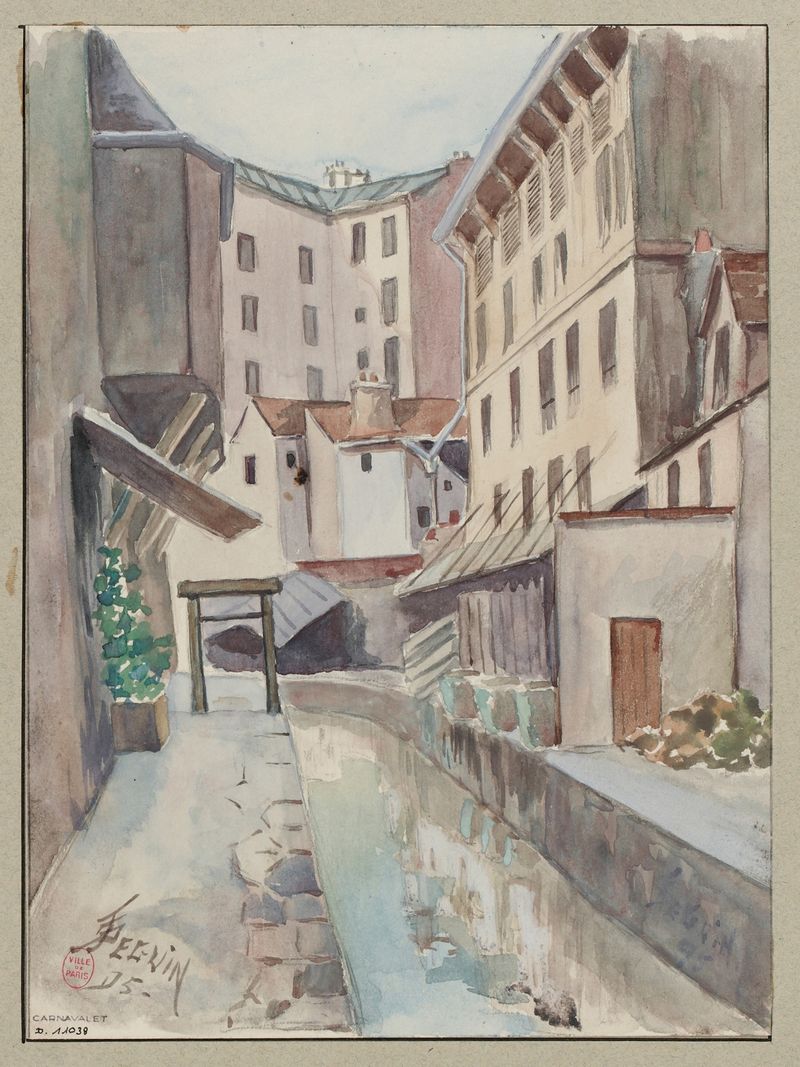
Le bord de la Bièvre à l’avenue des Gobelins
F. Séguin

Villa des Otages mur où furent fusillés les 52 derniers otages de la Commune, rue Haxo
F. Séguin
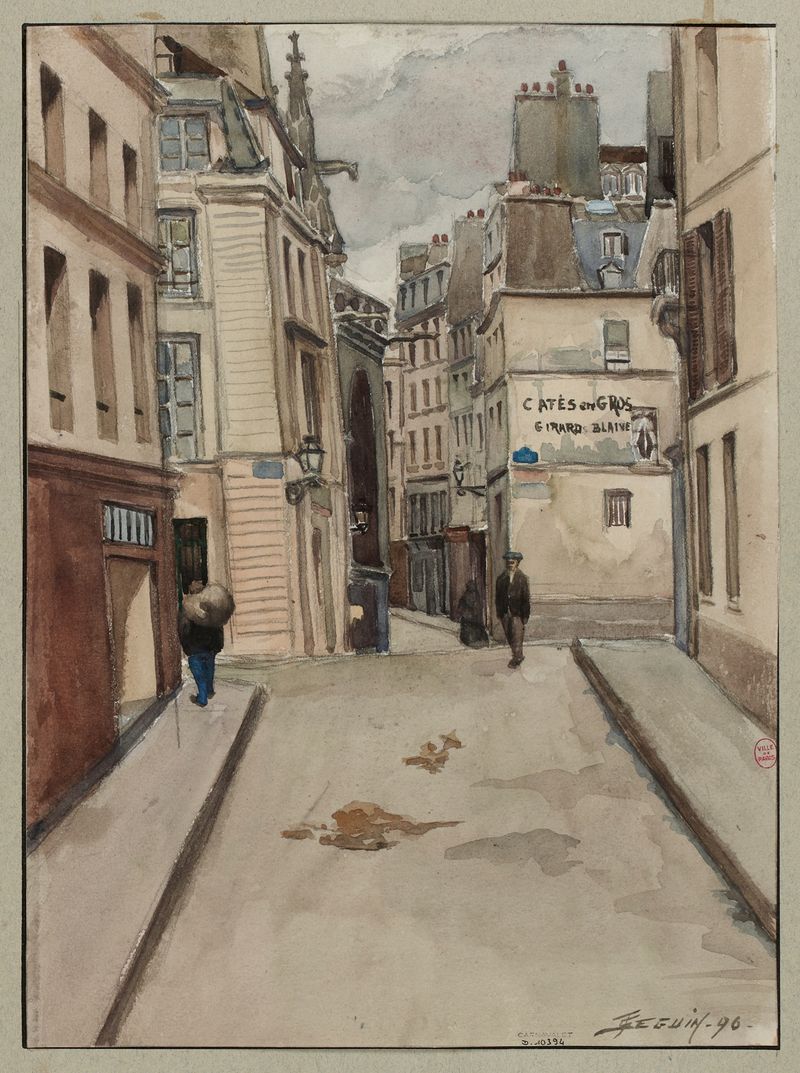
Rue du Cloître Saint Mérry, de la rue du Renard à la rue Saint Martin
F. Séguin
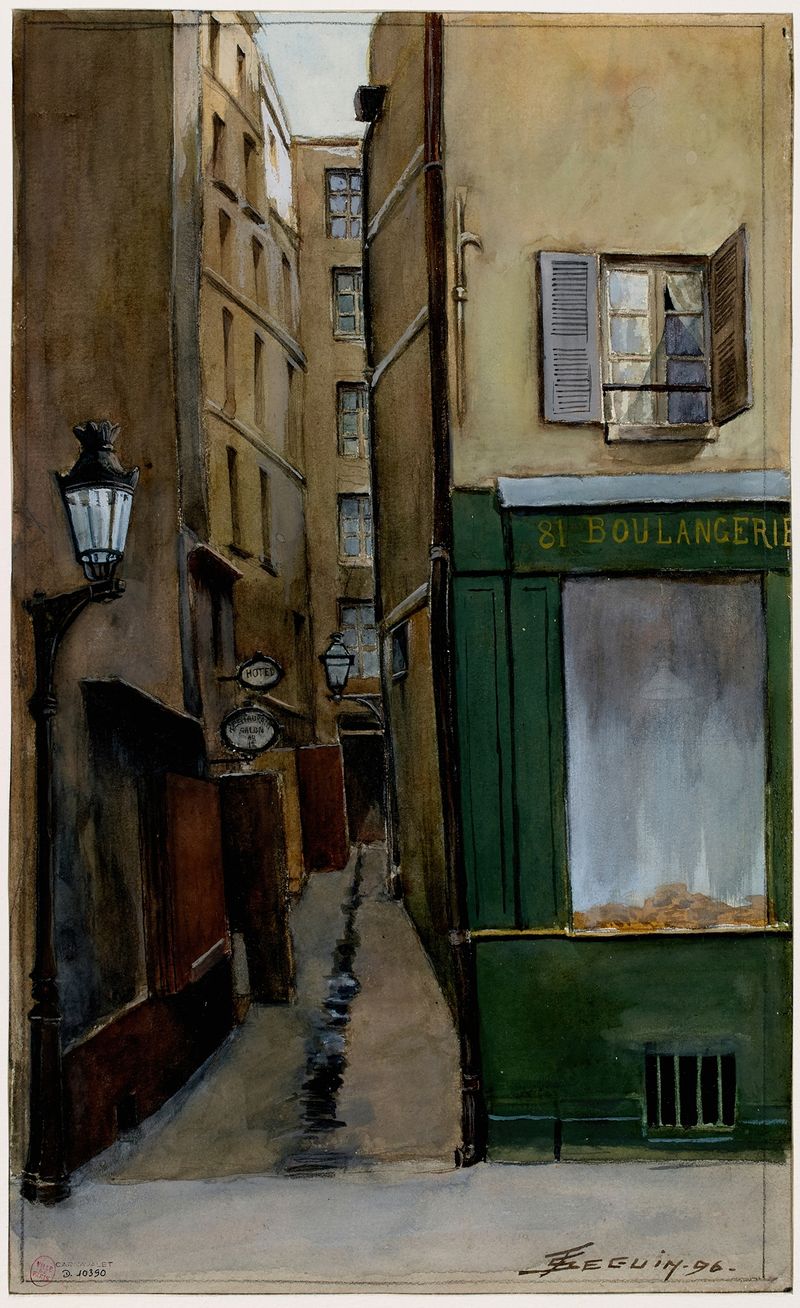
Cul de sac du Fiacre, 81 rue Saint Martin
F. Séguin
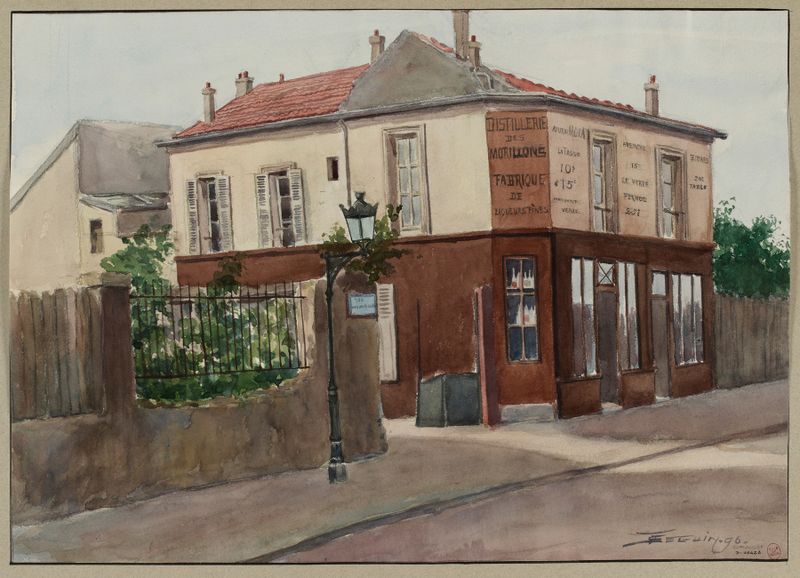
Angle de l’impasse Carlier et au 24 rue des Morillons, Vaugirard
F. Séguin
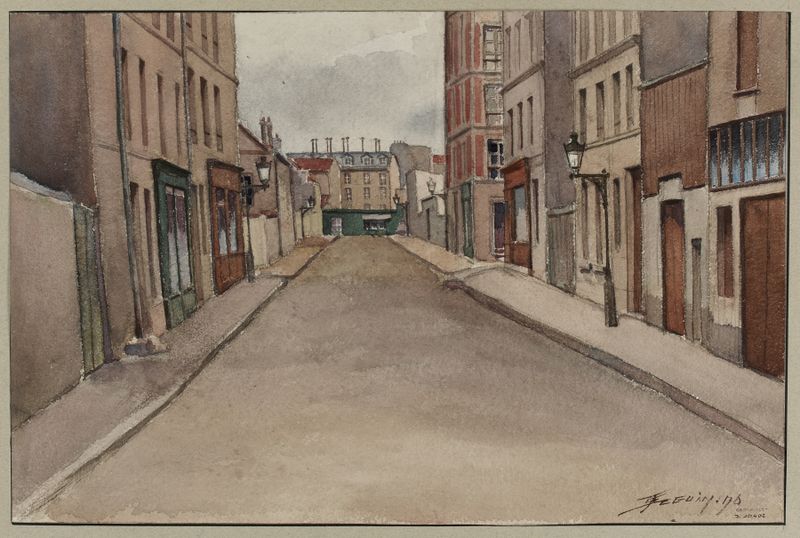
Rue Franquet
F. Séguin
More Architecture Art
Browse all →
The statue of Liberty
Frédéric Auguste Bartholdi

View of Houses in Delft, Known as ‘The Little Street’
Johannes Vermeer

View of Houses in Delft, Known as ‘The Little Street’
Johannes Vermeer

The Cathedral in Rouen. The portal, Grey Weather
Claude Monet

The yellow house
Vincent van Gogh

The Church in Auvers-sur-Oise, View from the Chevet
Vincent van Gogh