
Waldinneres bei Saut du Doubs — History & Facts
Where does light end, and longing begin? In the stillness of Waldinneres bei Saut du Doubs, a dreamlike world unfurls, inviting the viewer to traverse the line between the seen and the felt. Look to the left at the trees, their trunks rising with an unwavering strength, cloaked in a deep green that seems to breathe life into the canvas. As your gaze wanders right, notice how the dappled sunlight filters through the leaves, casting intricate patterns on the forest floor, a delicate interplay of shadow and illumination. The painter’s use of rich, earthy tones juxtaposed with bright highlights creates a vibrant rhythm, drawing you deeper into the tranquility of this wooded sanctuary. As you explore further, consider the quiet sense of nostalgia that envelops the scene.
The gentle curvature of the stream hints at the passage of time, a reminder of memories that ripple through our lives like water through rocks. The soft gradients of light evoke a feeling of yearning, suggesting that this serene moment is fleeting, slipping through the fingers like sand. Each brushstroke resonates with the tension between presence and absence, capturing a space that feels both familiar and elusive. Carl Schuch painted Waldinneres bei Saut du Doubs in 1887, during a period marked by his deep connection to nature and his pursuit of capturing its ephemeral beauty.
Living in Germany at the time, he was influenced by the broader movement of plein air painting, which sought to depict the natural world with immediacy and authenticity. This work reflects his dedication to exploring the emotional depths of landscape, a pursuit that became central to his artistic legacy.
More Artworks by Carl Schuch
Browse all →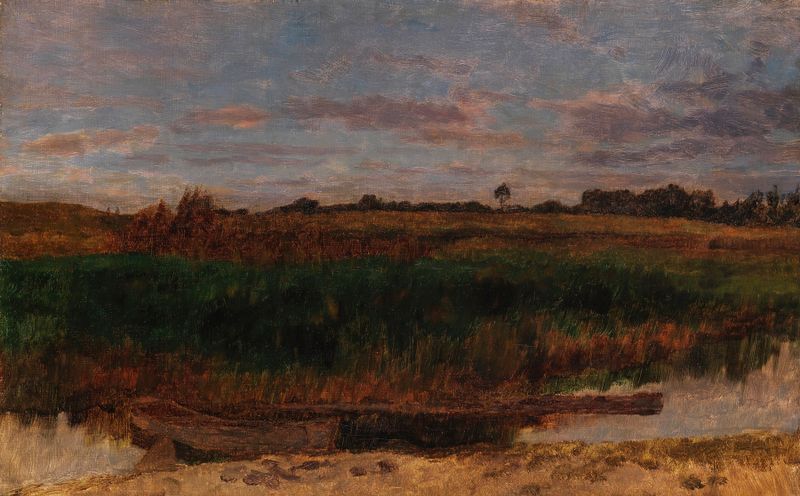
Schilffeld mit Kahn (Ferch am Schwielowsee)
Carl Schuch

A Farmstead on a Country Road
Carl Schuch
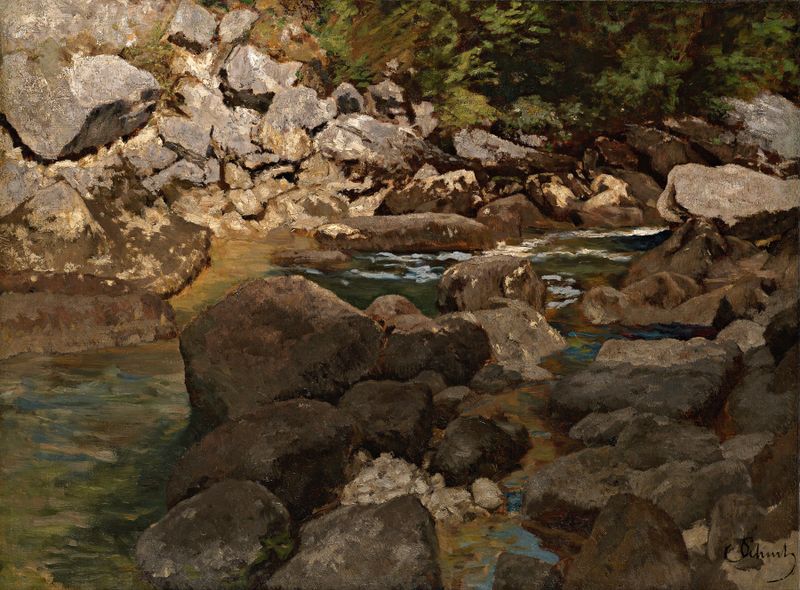
Mountain Stream with Boulders
Carl Schuch
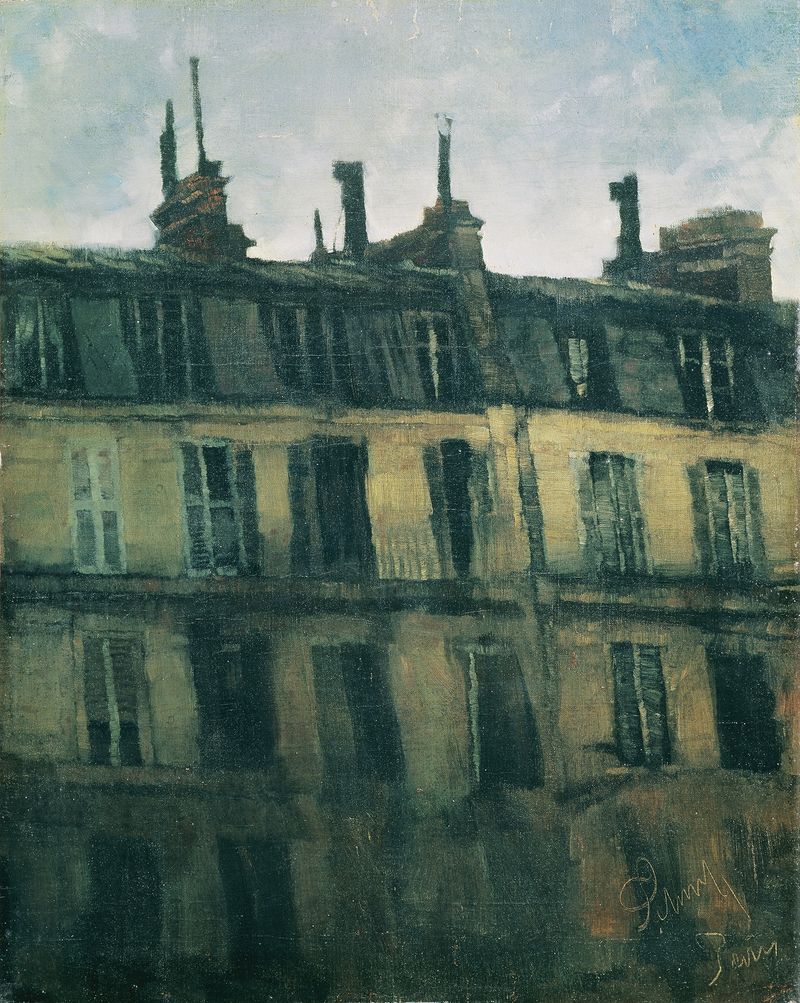
Pariser Häuser
Carl Schuch
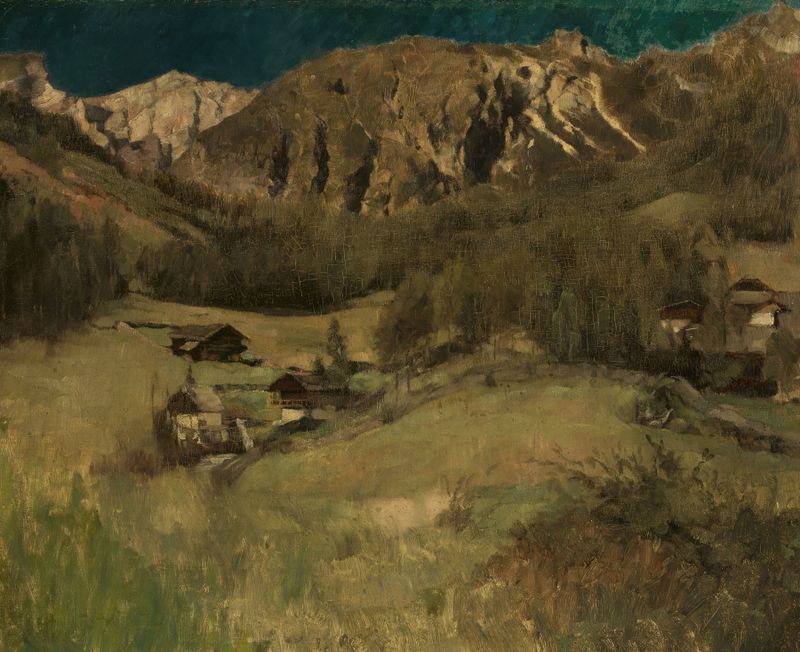
Landscape from Tyrol
Carl Schuch

Blick auf den Hochkalter am Hintersee
Carl Schuch
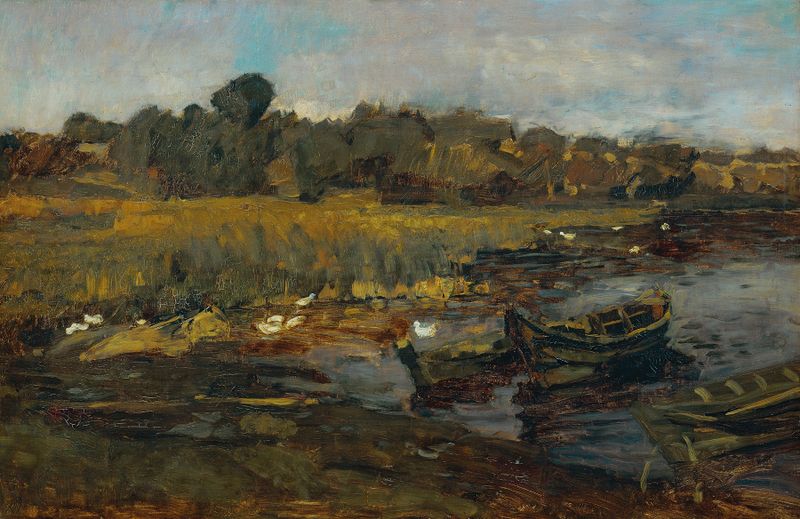
Schilflandschaft am Schwielowsee mit Enten
Carl Schuch
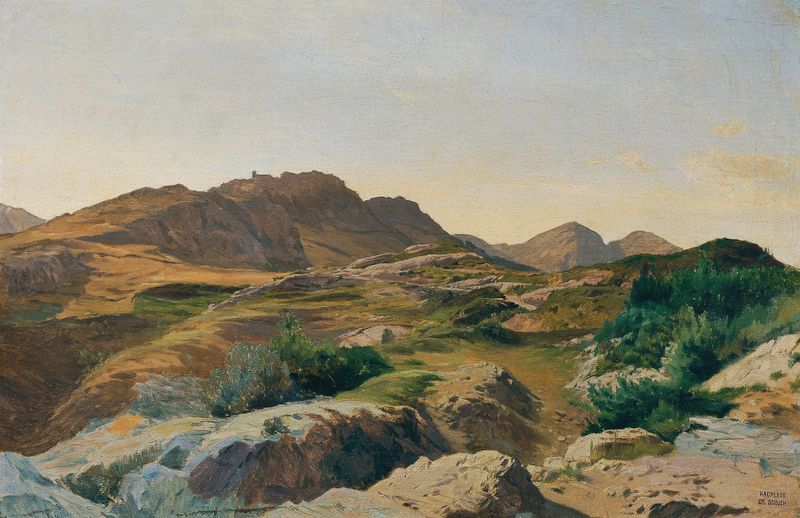
Landschaft im Sabinergebirge
Carl Schuch

Waldrand bei Purkersdorf
Carl Schuch
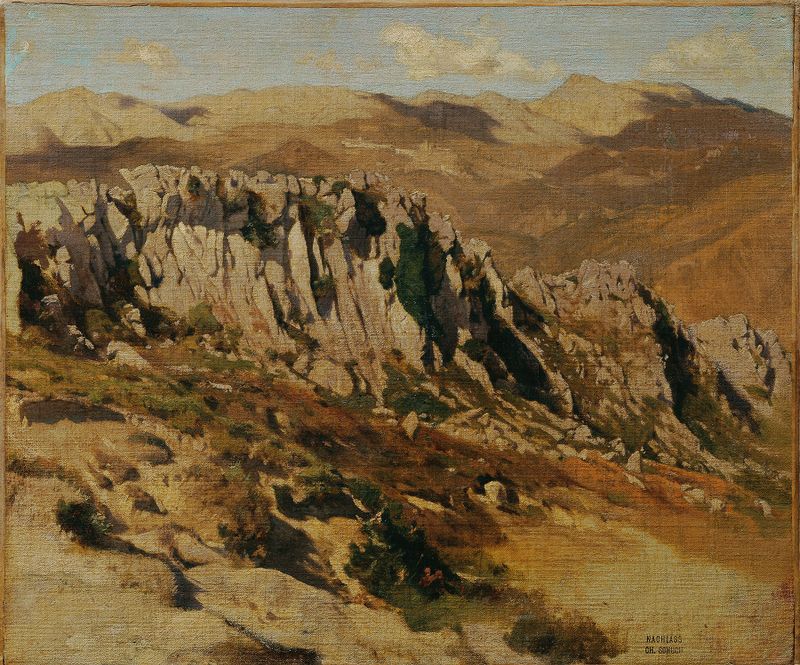
Felsenlandschaft bei Olevano
Carl Schuch





