
Warwick Castle, East Front from the Outer Court — History & Facts
When Canaletto crossed the Channel in 1746, he left behind the canals of Venice for the green estates of England, and no commission was more prestigious than that from Francis Greville, Earl of Warwick. In 1752, Greville invited the Venetian artist to immortalize his ancestral seat, Warwick Castle, just as he had once painted the palazzi of the Grand Canal. This painting is one of a set of five views of the castle ordered by the Earl, who sought to display both his taste and his power through the eyes of Europe's most celebrated view-painter.
The resulting works became a sensation among English collectors, eager to see their own landscapes rendered with the clarity and order that had made Canaletto famous. In Warwick Castle, East Front from the Outer Court, the artist chooses a vantage point that frames the castle not as a distant monument, but as a living estate. The eye is led through the open gate, past the figures strolling in the sunlight, to the imposing towers and crenellated walls that rise above the scene. The careful rendering of the stonework, the play of light on the lawns, and the crisp shadows cast by the afternoon sun all serve to emphasize the solidity and grandeur of the Greville family’s home.
Unlike the bustling, watery scenes of Venetian life in Canaletto’s earlier works, here the human figures are few, dwarfed by the architecture, suggesting the enduring legacy of the English aristocracy. The approach recalls Canaletto’s Venetian vedute, but the mood is quieter, the palette cooler, as if the English air itself has tempered the artist’s brush. The painting’s journey began in the private rooms of Warwick Castle, where it hung alongside its companion pieces for generations. Over time, works from the set were dispersed, but this view has remained closely associated with the castle and its history.
The exact medium is not firmly documented—Canaletto worked primarily in oil on canvas, but some English commissions were executed in gouache or tempera. Today, Warwick Castle, East Front from the Outer Court is recognized as a key example of Canaletto’s English period, marking his adaptation to a new clientele and landscape. Its presence in museum and private collections continues to shape how we see both the artist and the English country house through eighteenth-century eyes.
More Artworks by Canaletto

The Grand Canal, Venice, looking north-west from the Ca' Corner to the Ca' Contarini degli Scrigni, with the campanile of Santa Maria della Carità
Canaletto

Venice, Bacino di San Marco on Ascension Day
Canaletto

Windsor Castle
Canaletto

The Grand Canal looking North-East from the Palazzo Dolfin-Manin to the Rialto Bridge
Canaletto

Venice: The Campo SS. Giovanni e Paolo
Canaletto

Venice: The Grand Canal from the Rialto to the Palazzo Foscari
Canaletto
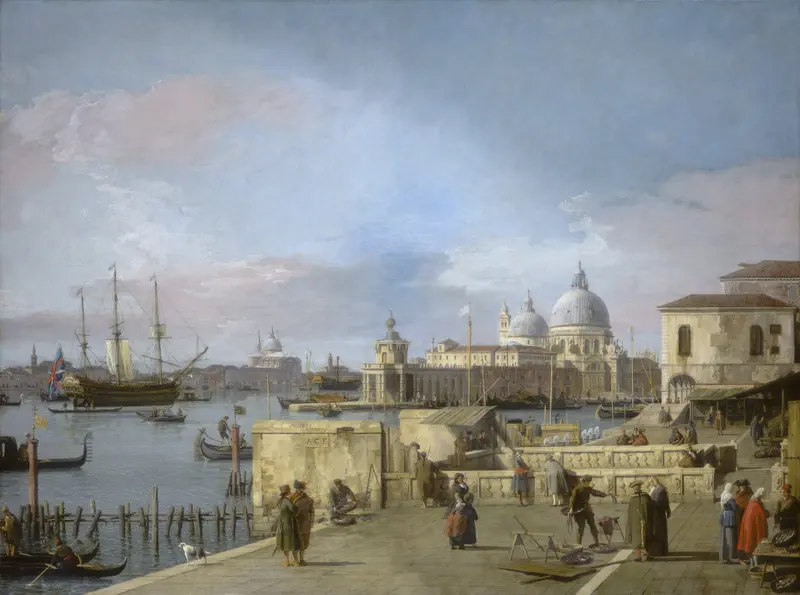
Venice: The Molo towards the Dogana and Santa Maria della Salute
Canaletto

Venice: The Piazzetta
Canaletto
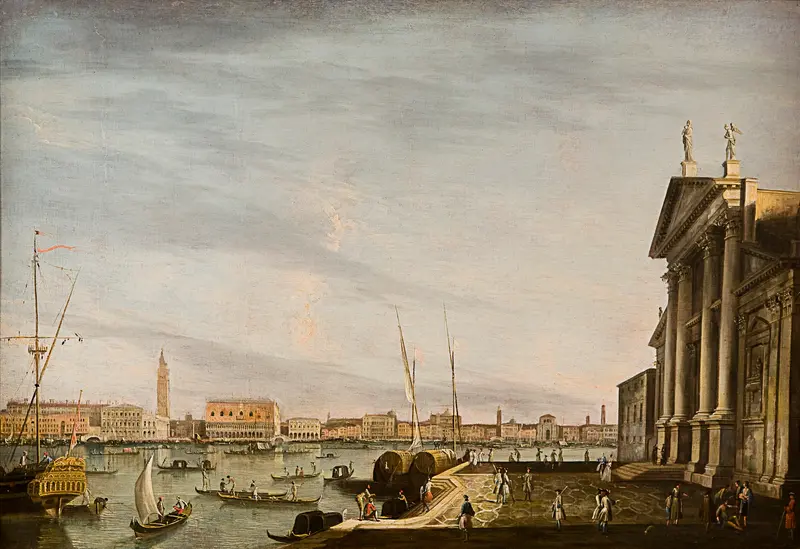
Venice, View of San Giorgio Maggiore
Canaletto

London: The Thames from Somerset House Terrace towards Westminster
Canaletto


