Water Lilies (Agapanthus) — History & Facts
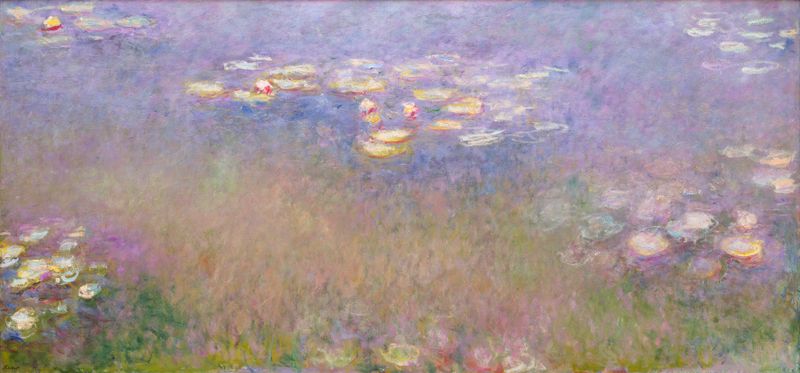
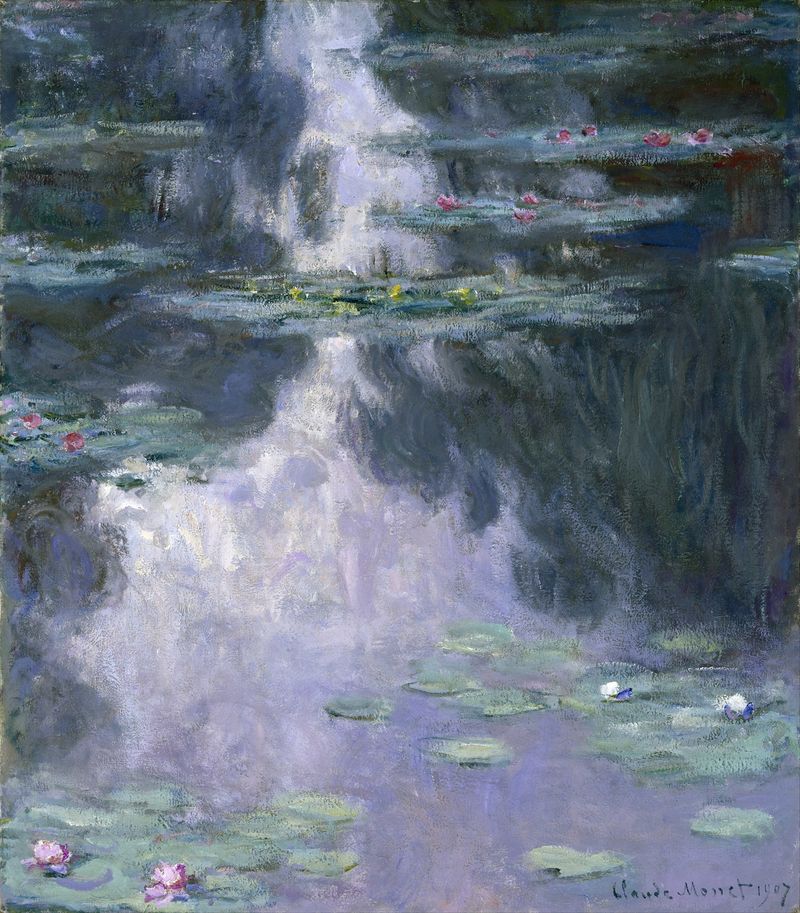
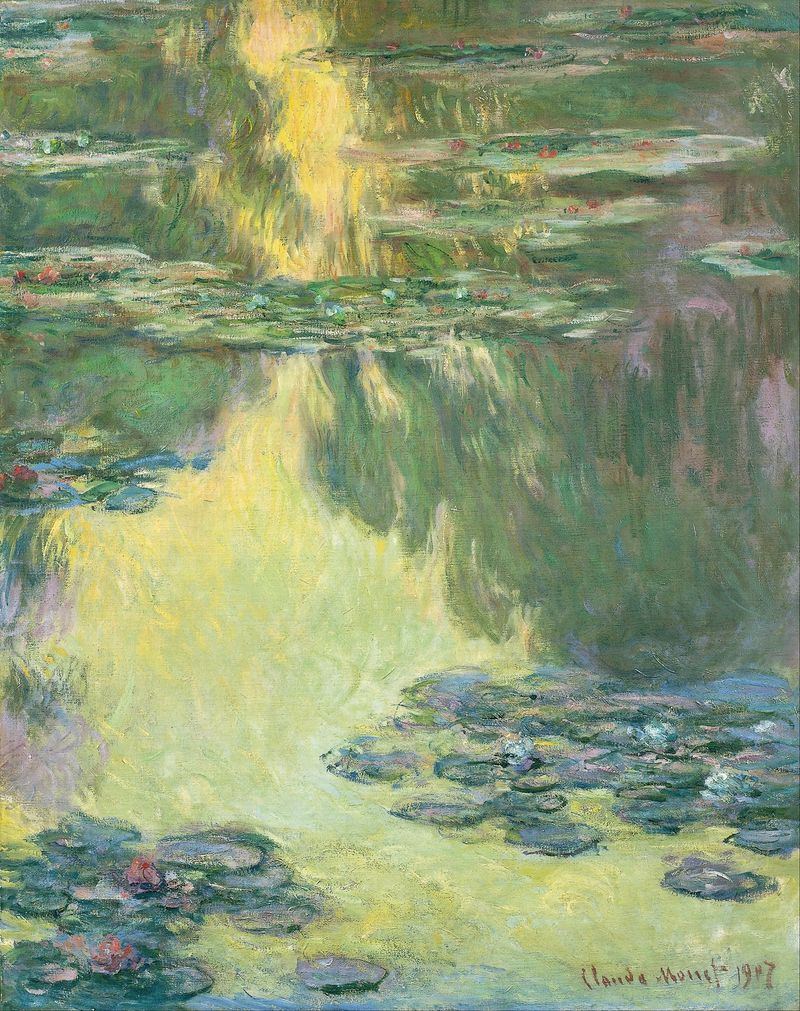
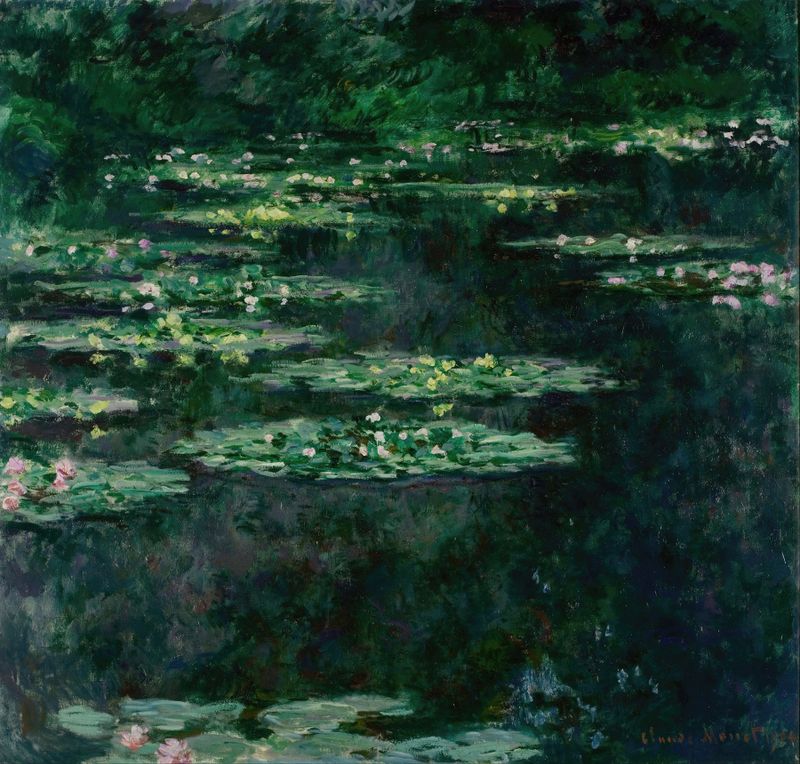
Is this a mirror — or a memory? The vibrant colors dance across the canvas, evoking a sense of serenity that shimmers between reality and imagination. Focus on the multitude of hues that blend seamlessly in the water’s surface, where the lilies float gracefully. Notice how Monet employs soft brushstrokes to create a gentle movement, inviting the eye to wander from one blossom to the next. The palette, rich in blues and greens, contrasts with the bursts of white and violet from the flowers, creating a symphony of color that sings of life and tranquility. The interplay of light and shadow reveals hidden depths within the piece.
Each lily, delicate and ephemeral, seems to whisper stories of moments passed, while the reflections in the water hint at an unseen world beneath the surface. This duality captures a tension between presence and absence, urging viewers to reflect on their own memories and experiences as they gaze upon the tranquil scene. During the period Monet created this work, from 1915 to 1926, he was grappling with personal loss and the physical limitations imposed by his failing eyesight. Immersed in his garden at Giverny, he found solace in the beauty around him, transforming his emotional turmoil into a series of paintings that celebrate nature’s fleeting beauty.
This era marked a significant evolution in his style, as he continued to explore color and light, forging a unique path in the Impressionist movement.