
Widoki Krakowa – cover — History & Facts
When did color learn to lie? In the vibrant strokes of this cover, the city reveals itself in a splendor that beckons both admiration and skepticism, inviting us to question what we see. Look closely at the vivid hues that dominate the composition; the rich reds and deep blues spiral together, crafting an almost dreamlike panorama. Notice how the skyline of Kraków emerges, cradled in the embrace of luminous skies that seem to breathe with life. Each brushstroke, deliberate yet free, captures not just the architecture but the very essence of the city, suggesting a world infused with both memory and imagination. Yet, amidst the beauty lies a subtle contradiction — the juxtaposition of the serene skyline against a tumultuous backdrop.
The clouds swirl with a frenetic energy, hinting at the chaos of life below. Shadows play tricks on the mind, suggesting hidden stories within the city's walls. As the colors dance and turn, they reveal a deeper truth, a revelation about perception itself — what we see may not always be what is, echoing the complexity of human experience. Jan Kanty Gumowski created this work between 1925 and 1926, a time when Poland was navigating the tumultuous aftermath of World War I.
Living in a newly restored nation, he embraced both traditional and modernist influences in his art, reflecting the cultural rebirth of the era. His exploration of urban landscapes during this period sought to encapsulate the resilience and beauty of Kraków, engaging with themes of identity and change as the world around him evolved.
More Artworks by Jan Kanty Gumowski
Browse all →
Dziedziniec Zamku królewskiego na Wawelu
Jan Kanty Gumowski
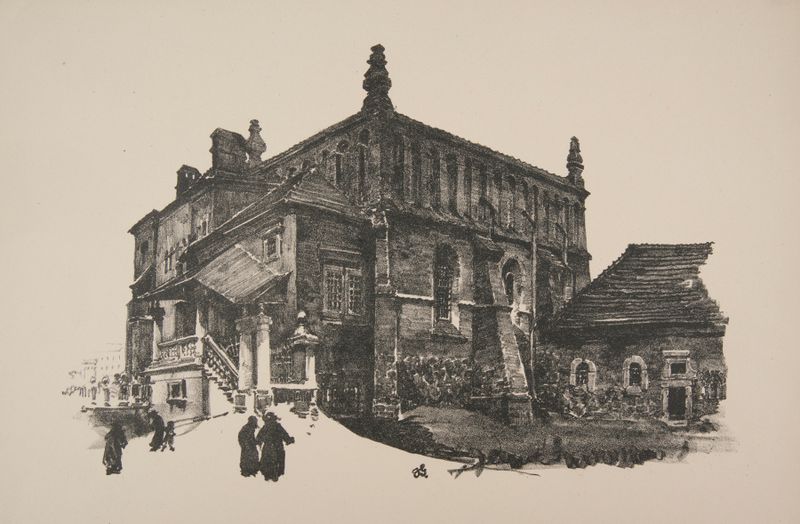
Stara synagoga na Kazimierzu
Jan Kanty Gumowski
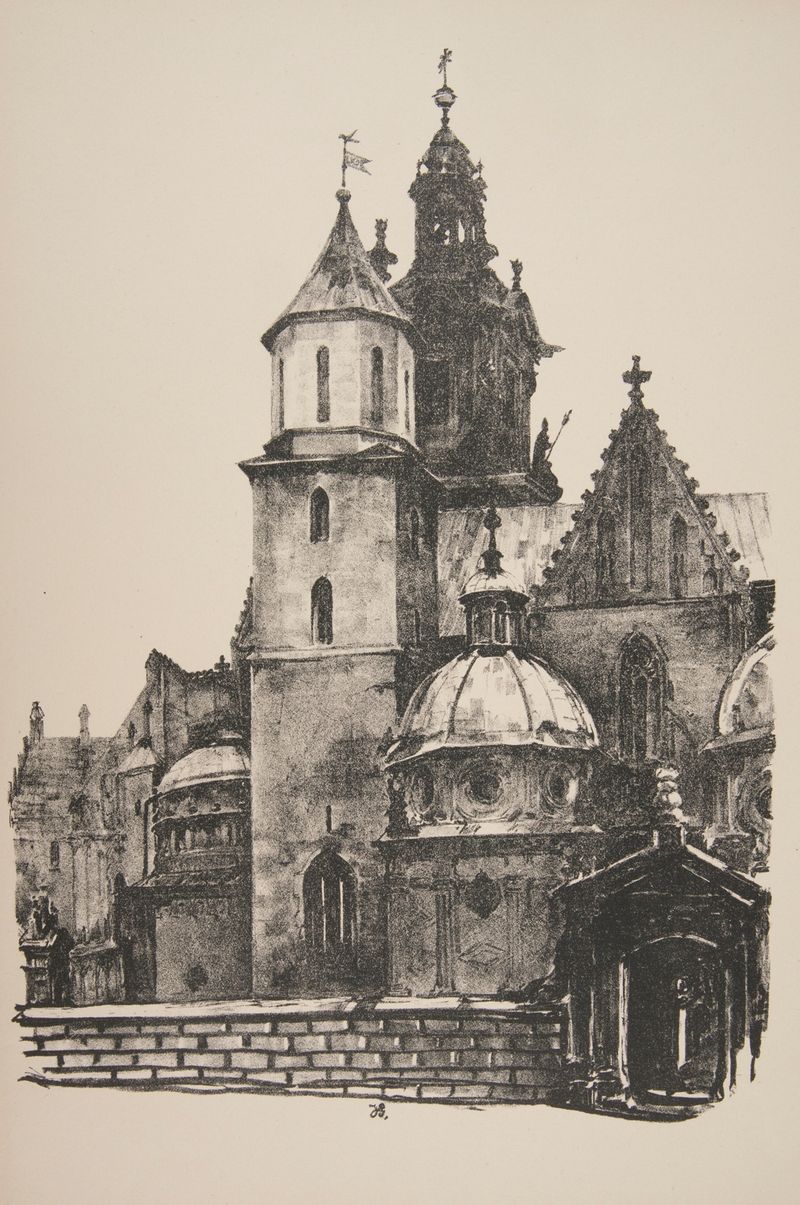
Katedra na Wawelu
Jan Kanty Gumowski
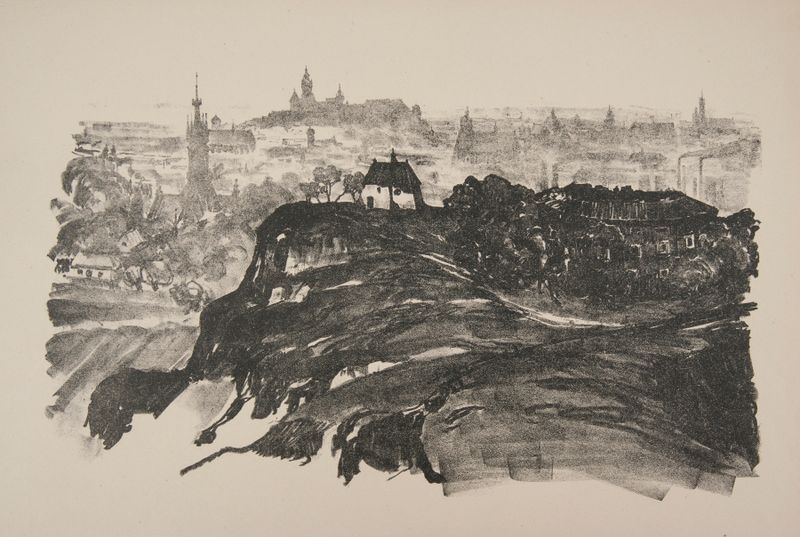
Widok ogólny Krakowa od południa
Jan Kanty Gumowski

Kościół Mariacki
Jan Kanty Gumowski
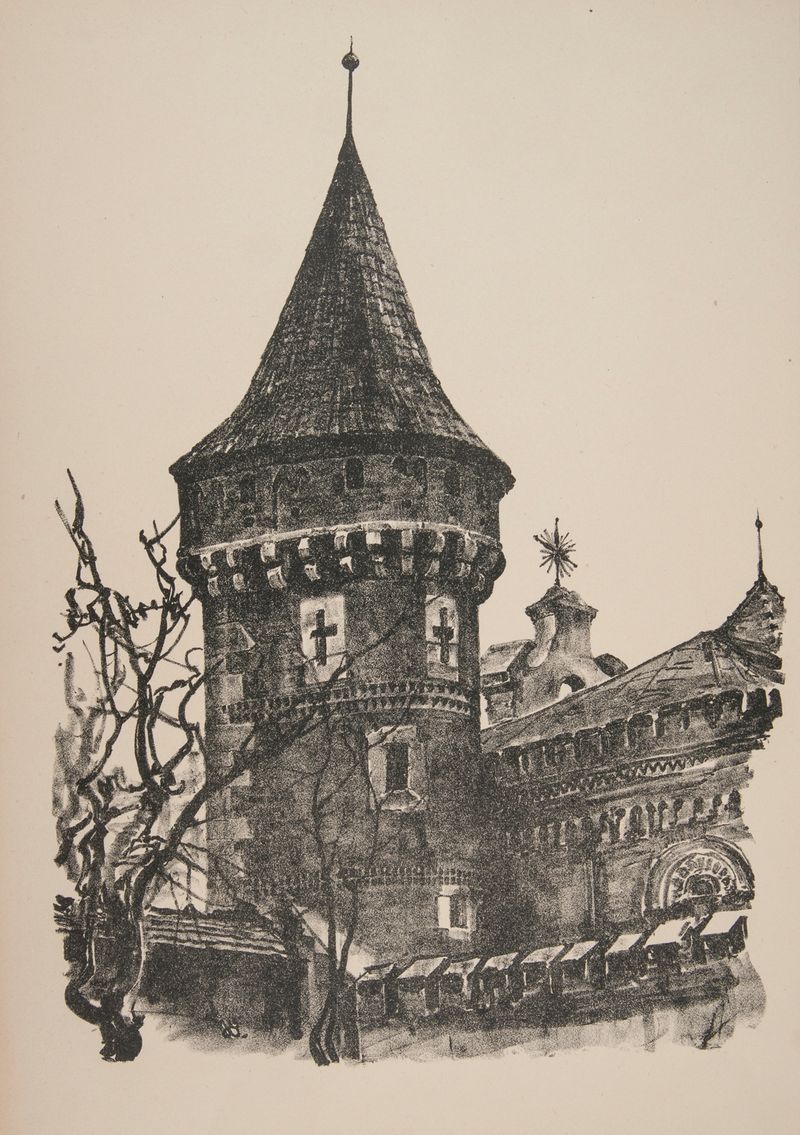
Baszta stolarska
Jan Kanty Gumowski
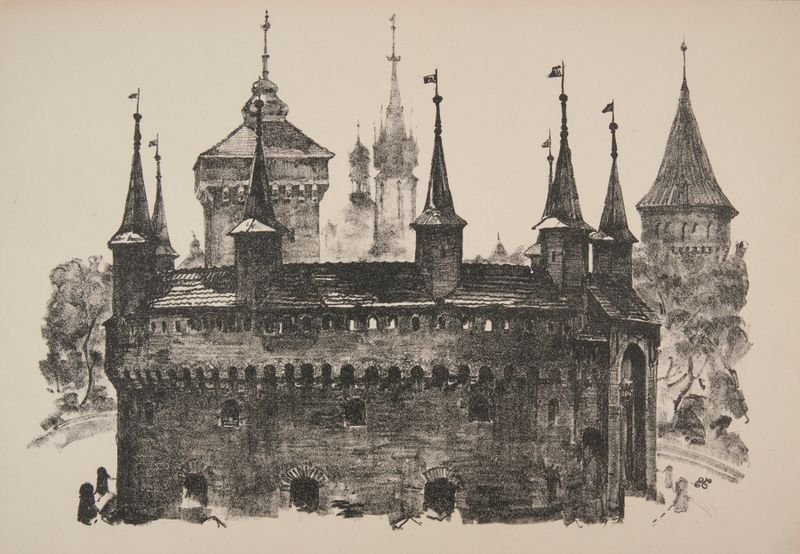
Barbakan
Jan Kanty Gumowski
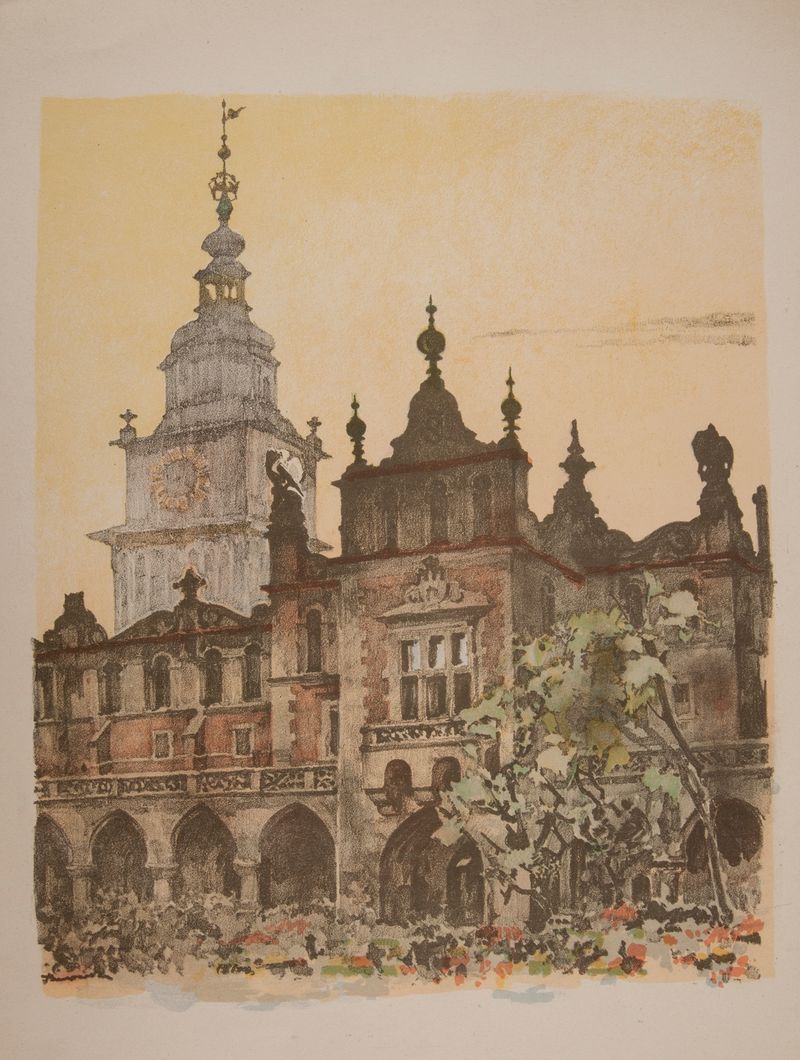
Sukiennice
Jan Kanty Gumowski

Brama Florjańska i baszta Pasamonikow
Jan Kanty Gumowski

Szczyty Sukiennic i wieże kościoła Marjackiego
Jan Kanty Gumowski





