
Wilanów landscape (Dry tree) — History & Facts
In the stillness of a landscape, a solitary tree stands like a sentinel against the passage of time, embodying both decay and resilience, an intersection of the divine and the ephemeral. Look to the center where a dry tree stretches its gnarled branches skyward, defying gravity and expectation. The muted palette of browns and grays casts a somber yet rich atmosphere, inviting the viewer to linger. Notice the subtle interplay of light filtering through the sparse foliage, illuminating the textured bark and casting elongated shadows across the ground.
This tension between light and darkness captures a moment of solitude and reflection, echoing the themes of life’s fragility. As you explore the painting further, the juxtaposition of the tree's starkness against the soft undulations of the landscape invites deeper contemplation. The starkness of the dry branches suggests loss, while the surrounding greenery hints at the persistence of life. This duality creates a space where memory and forgetting coexist, leading one to ponder the divine presence in moments of desolation and beauty, where nature's cycles echo the human experience. In 1930, the artist was navigating both personal and societal challenges while residing in Poland.
During this time, art was evolving, and Kowarski sought to express emotional truths through a lens of realism and the symbolism of nature. His work reflects a world on the cusp of change, capturing a poignant moment in history that resonates with the universal theme of endurance amidst adversity.
More Artworks by Felicjan Szczęsny Kowarski
Browse all →
Landscape with ruins on a hill
Felicjan Szczęsny Kowarski
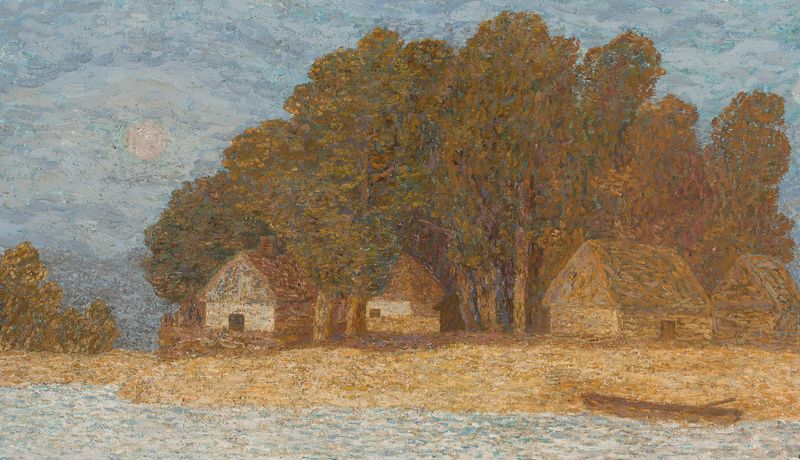
Landscape
Felicjan Szczęsny Kowarski

Evening landscape
Felicjan Szczęsny Kowarski
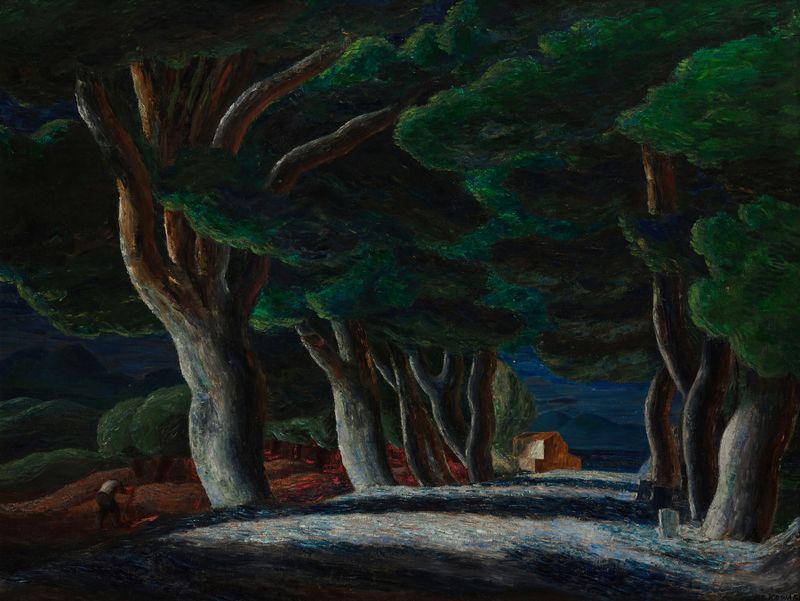
Landscape I
Felicjan Szczęsny Kowarski
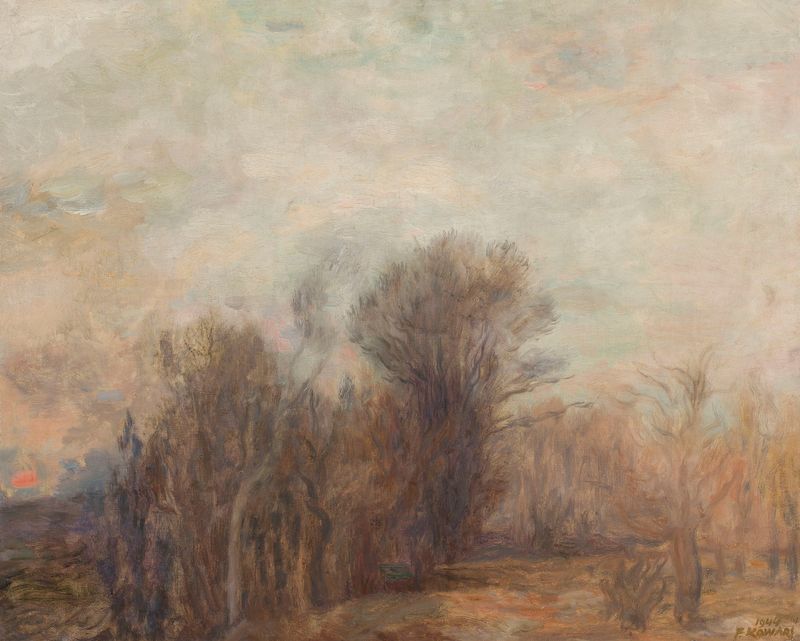
Autumn
Felicjan Szczęsny Kowarski
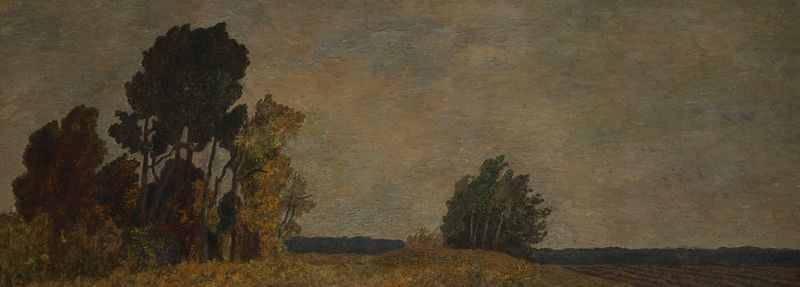
Forest Edge
Felicjan Szczęsny Kowarski

Mountainscape at sunset
Felicjan Szczęsny Kowarski
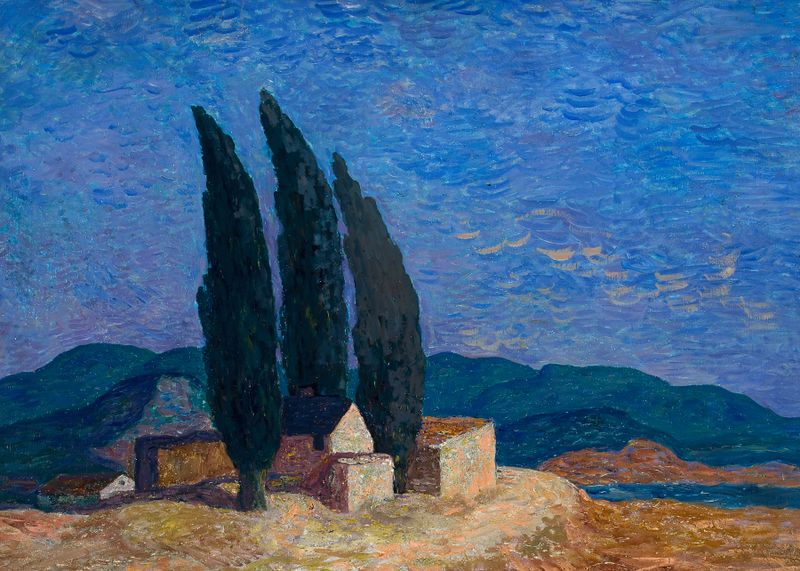
Italian landscape
Felicjan Szczęsny Kowarski
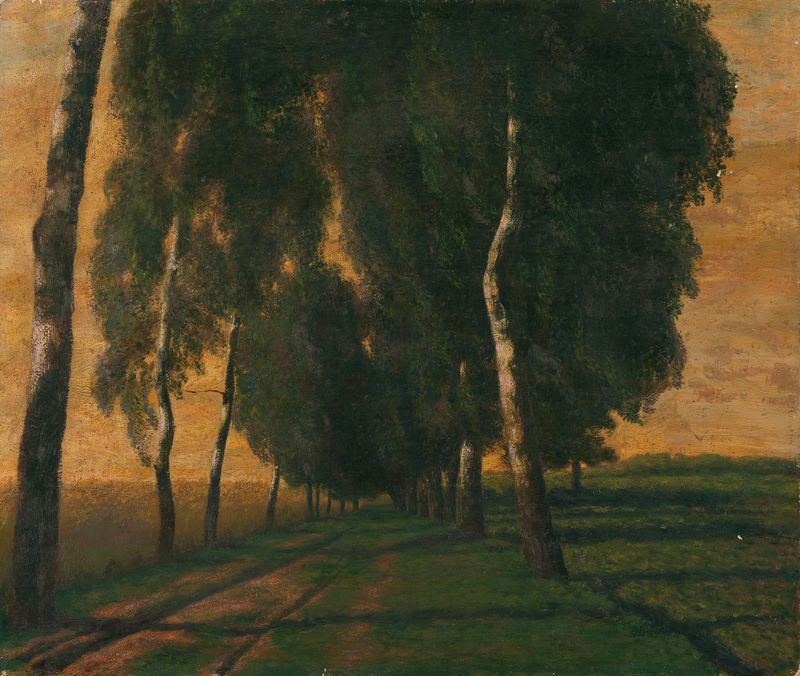
Landscape with a field road
Felicjan Szczęsny Kowarski

Italian landscape (Rome, Via Appia)
Felicjan Szczęsny Kowarski





