
Landscape — History & Facts
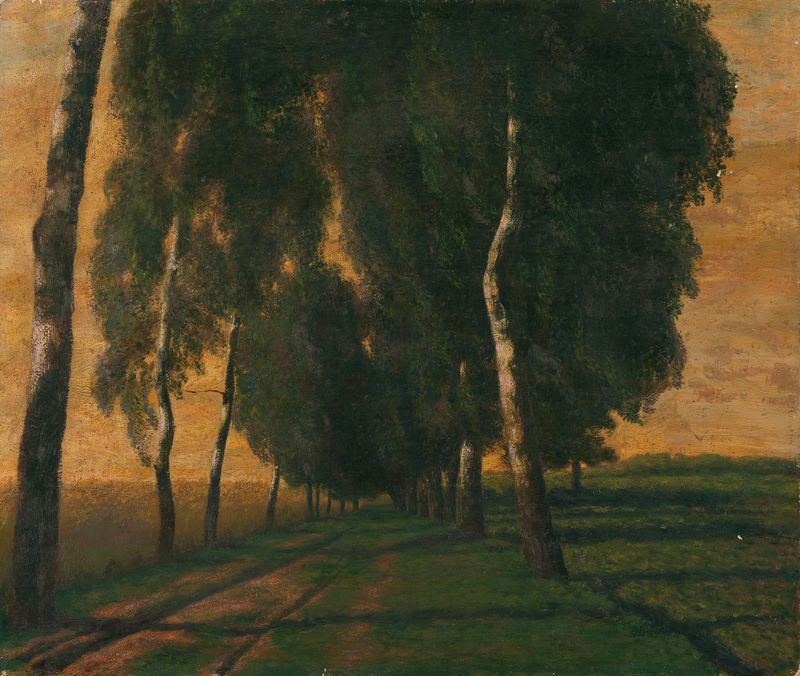
In the heart of every landscape lies a fleeting moment, captured and preserved against the relentless march of time. Light dances across the canvas, a reminder of both beauty and transience. Focus on the horizon first, where the soft glow of the sun spills over rolling hills, illuminating the gentle undulations of the terrain. The warm tones of ochre and amber blend seamlessly with the cooler greens and blues, creating a harmonious balance that draws the viewer's eye forward.
Notice how the brushstrokes vary in intensity; some areas are thick with texture, while others are smooth and fluid, guiding the viewer's journey through this pastoral scene. Deeper within the composition, contrasts emerge. The bright, sunlit areas evoke warmth and vitality, while the shadowed regions hint at the encroaching dusk, a metaphor for life’s duality. The delicate interplay of light and shadow serves as an emotional undercurrent, suggesting both the fleeting nature of beauty and the inevitability of change. Painted in 1946, during a time when the world was grappling with the aftermath of war, the artist sought solace in nature’s resilience.
In this period, Kowarski was living in Poland, where he navigated the complexities of post-war realities and his own artistic evolution. The landscape he created is not just a scene but a heartfelt dialogue between memory and the present, embodying a collective yearning for peace.
More Artworks by Felicjan Szczęsny Kowarski
Browse all →
Landscape with ruins on a hill
Felicjan Szczęsny Kowarski

Evening landscape
Felicjan Szczęsny Kowarski
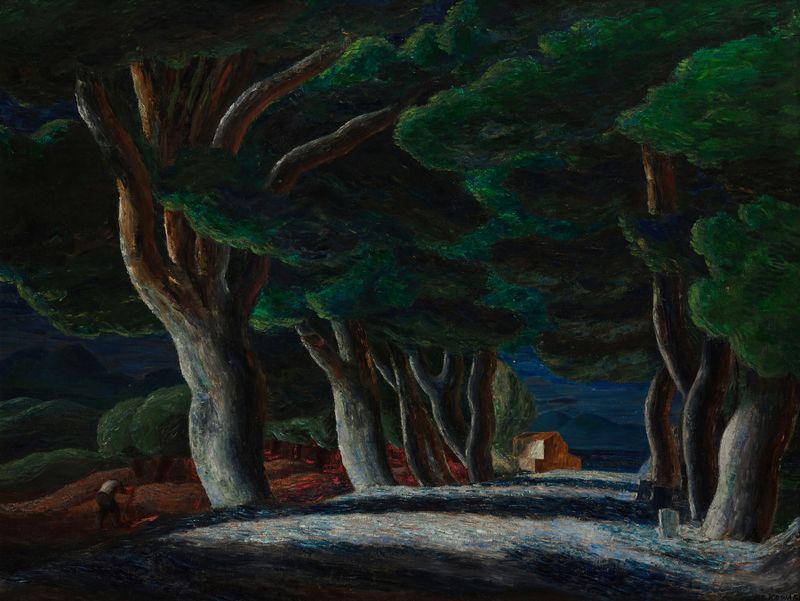
Landscape I
Felicjan Szczęsny Kowarski
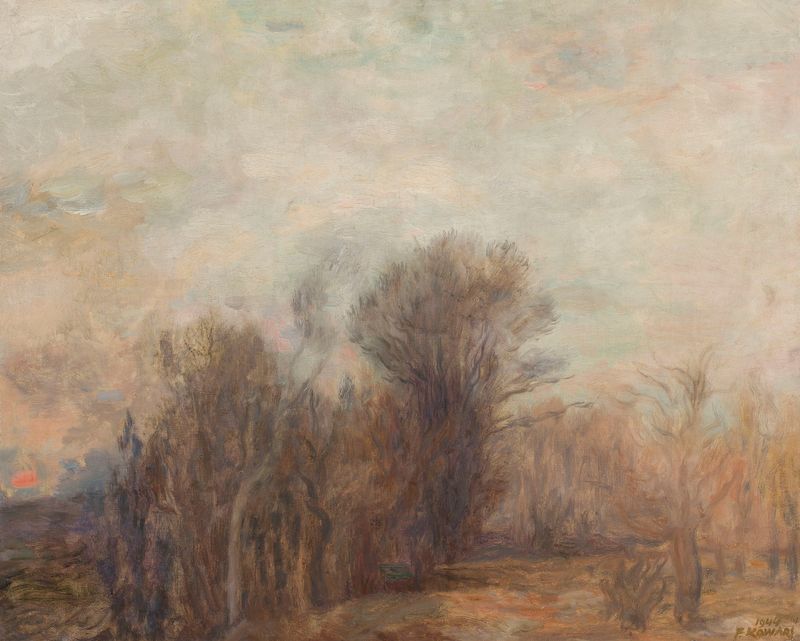
Autumn
Felicjan Szczęsny Kowarski
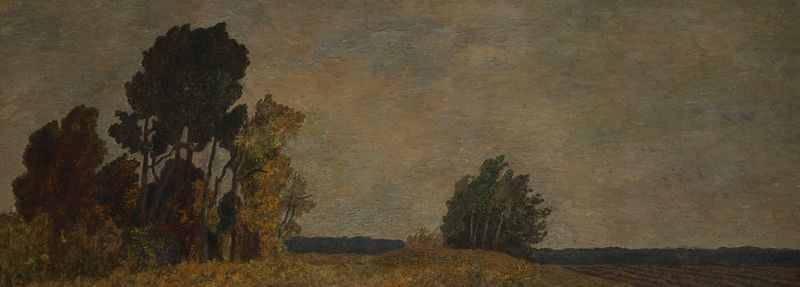
Forest Edge
Felicjan Szczęsny Kowarski

Mountainscape at sunset
Felicjan Szczęsny Kowarski
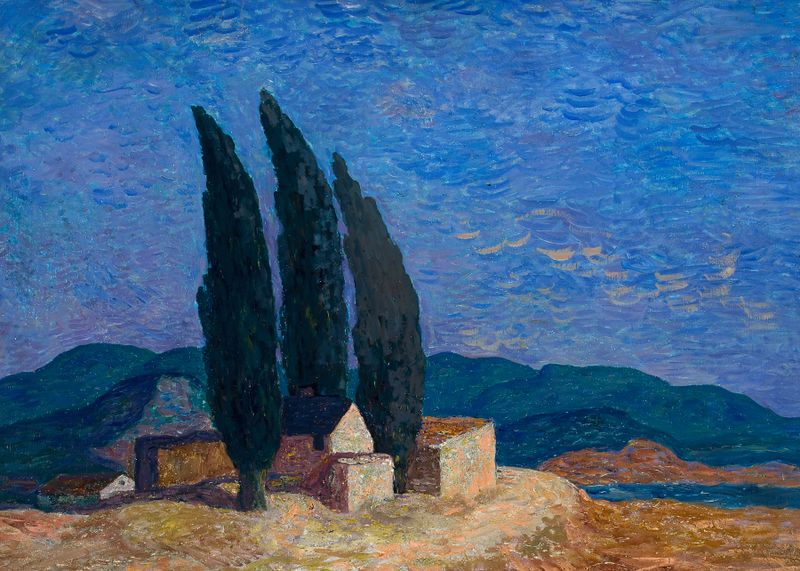
Italian landscape
Felicjan Szczęsny Kowarski
Landscape with a field road
Felicjan Szczęsny Kowarski

Wilanów landscape (Dry tree)
Felicjan Szczęsny Kowarski

Italian landscape (Rome, Via Appia)
Felicjan Szczęsny Kowarski





