
Evening landscape — History & Facts
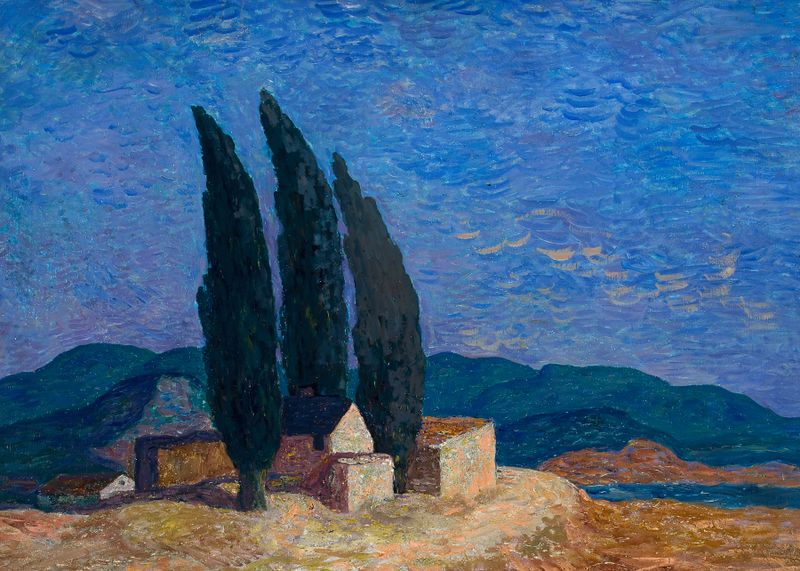
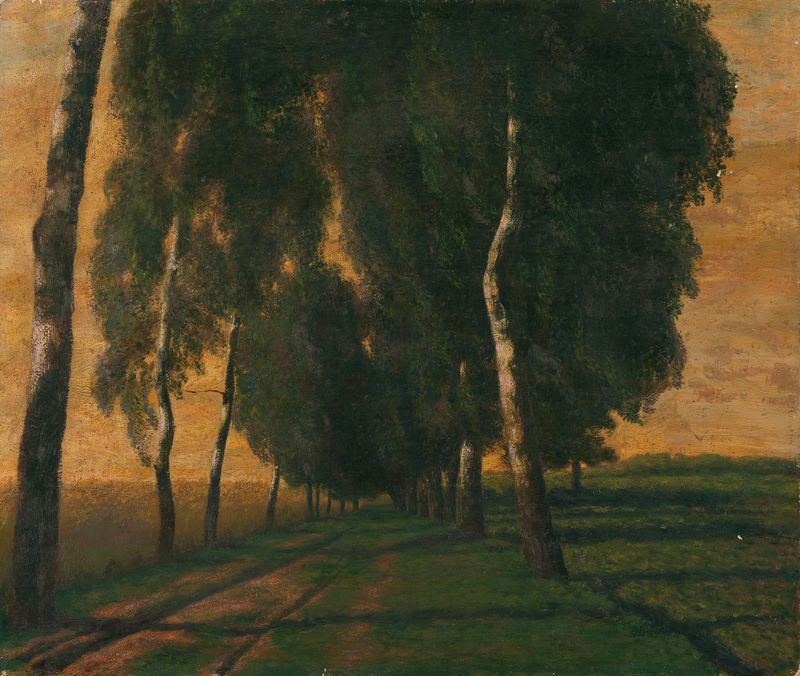
When did color learn to lie? The hues of twilight whisper secrets, beckoning memories that linger in the corners of our minds, painted over with a veneer of nostalgia. Look to the left at the deep blues mingling with warm oranges, where the sky meets the earth in a soft embrace. The brushstrokes curl and swirl, suggesting movement as if the evening itself is alive and breathing. Notice how the light spills over the landscape, illuminating the silhouette of trees standing sentinel against the fading day, creating a dynamic contrast that draws the eye into the heart of the scene.
Each layer of paint evokes a sense of calm yet unsettled tranquility, inviting reflection. Beneath the surface, this work speaks of the tension between memory and reality. The vibrant colors, while beautiful, carry a hint of longing, suggesting a past that feels both familiar and distant. The trees, rooted yet reaching toward the sky, symbolize the desire to grasp fleeting moments, while the patchwork of light and shadow hints at the duality of joy and sorrow intertwined in our recollections.
Each element seems to hold a story, echoing the complexity of human experience. In 1941, Felicjan Szczęsny Kowarski painted this piece during a tumultuous time in Europe, marked by the shadows of World War II. Living in Poland, he sought refuge in landscapes that offered solace amidst chaos. This work reflects his artistic journey during a period when the world outside was fraught with uncertainty, showcasing his desire to capture the beauty and fragility of fleeting moments in life.
More Artworks by Felicjan Szczęsny Kowarski
Browse all →
Landscape with ruins on a hill
Felicjan Szczęsny Kowarski
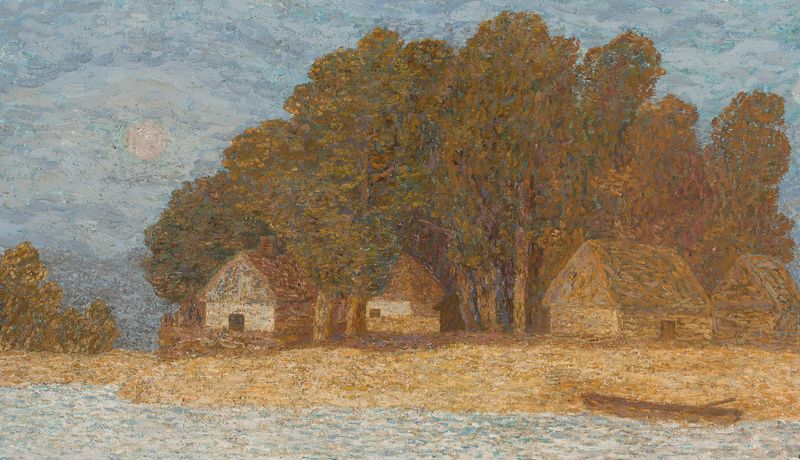
Landscape
Felicjan Szczęsny Kowarski
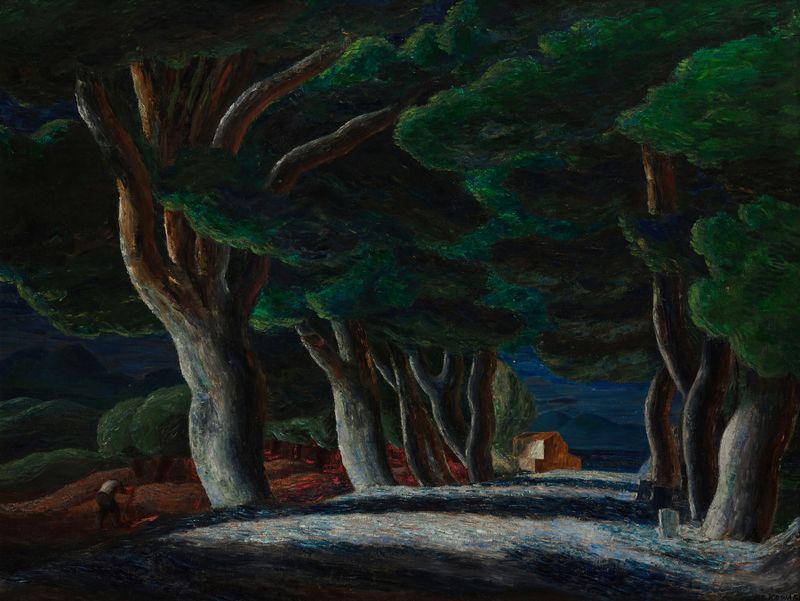
Landscape I
Felicjan Szczęsny Kowarski
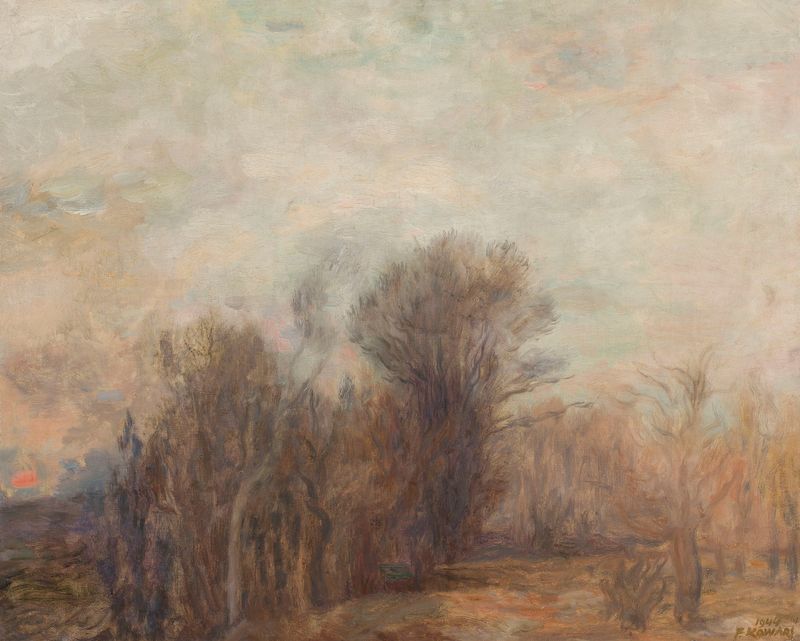
Autumn
Felicjan Szczęsny Kowarski
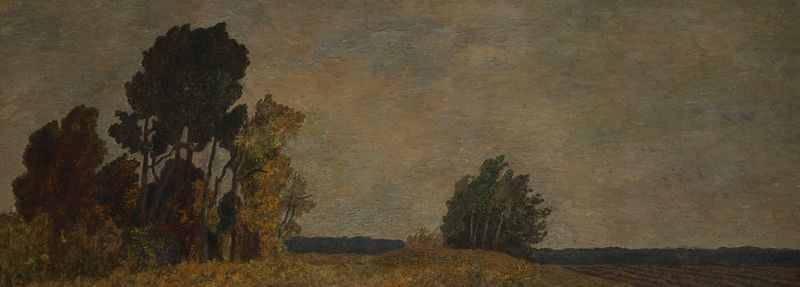
Forest Edge
Felicjan Szczęsny Kowarski

Mountainscape at sunset
Felicjan Szczęsny Kowarski
Italian landscape
Felicjan Szczęsny Kowarski
Landscape with a field road
Felicjan Szczęsny Kowarski

Wilanów landscape (Dry tree)
Felicjan Szczęsny Kowarski

Italian landscape (Rome, Via Appia)
Felicjan Szczęsny Kowarski





