
Winter Landscape — History & Facts
In the icy grasp of winter, each stroke of the brush serves as a poignant reminder of the betrayals hidden beneath the surface of serenity, a struggle between nature’s beauty and its biting cold. Look to the center where the sweeping expanse of snow captures your gaze, its shimmering white gently speckled with shadows of gray and blue. Notice how the trees stand tall against the horizon, their skeletal branches etched against the pale sky, while a soft light filters through the clouds, casting a muted glow that creates an atmosphere of haunting stillness. The careful composition invites contemplation, drawing your attention to the interplay between light and dark, life and desolation. As you delve deeper, observe the subtle details—the footprints leading away from the viewer, hinting at a story of departure or loss.
The color palette, dominated by chilled tones, evokes a sense of isolation and perhaps even a quiet betrayal, where the landscape, though serene, tells a story of harsh realities. Each element of the painting resonates with a tension between the beauty of nature and the underlying feelings of solitude and abandonment. Created in an unspecified year during the late 18th to early 19th century, the artist found himself navigating the shifting tides of the Romantic movement. At this time, George Morland was establishing his reputation as a painter who captured the essence of rural life and atmospheric landscapes, even as he faced personal struggles, including financial difficulties and tumultuous relationships.
The world around him was filled with exploration and emotional depth, reflecting an era where nature became a canvas for complex human experiences.
More Artworks by George Morland
Browse all →
The Bell Inn
George Morland
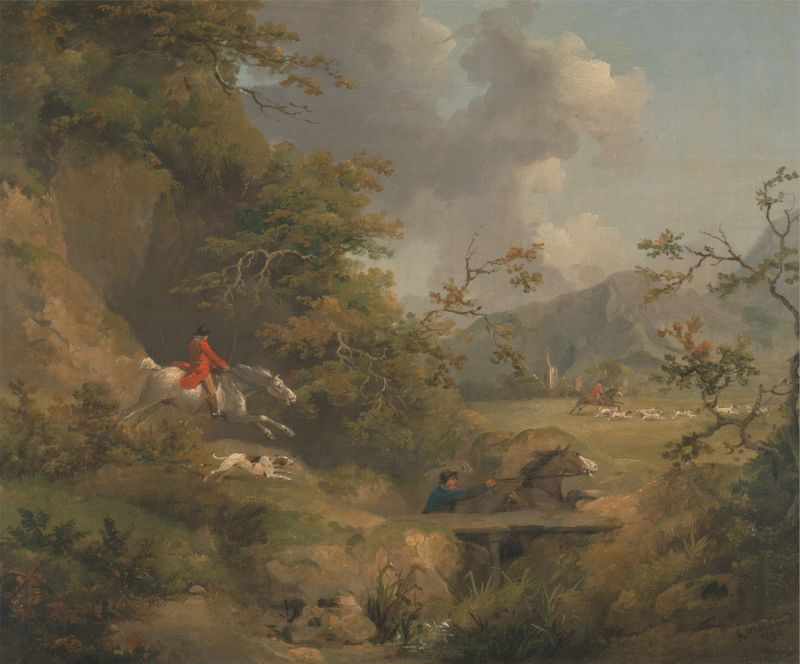
Foxhunting in Hilly Country
George Morland

View at Enderby, Leicestershire
George Morland

Pheasant Shooting
George Morland

The Mail Coach
George Morland

Rocky Landscape with Two Men on a Horse
George Morland
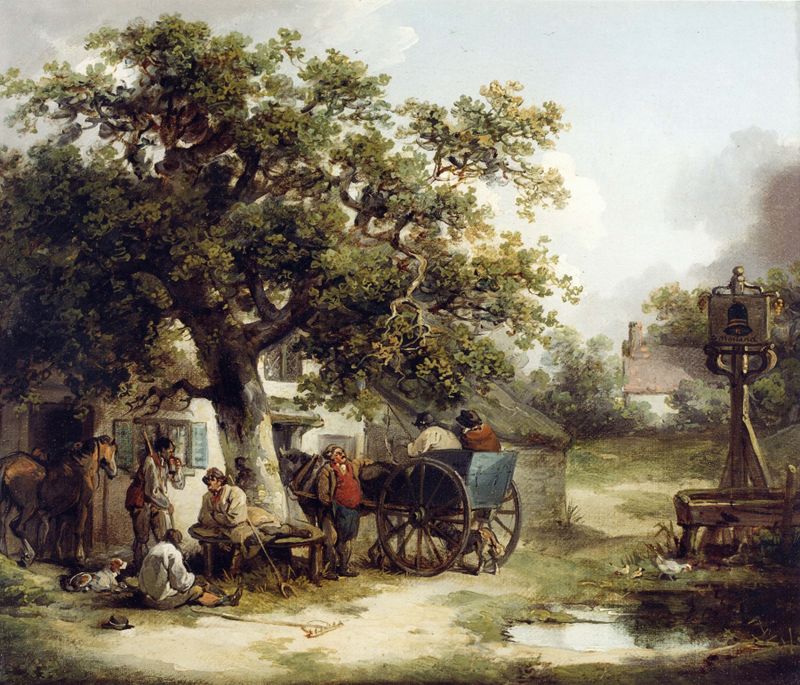
The Bell Inn, Kilburn
George Morland

Landscape
George Morland

Trepanning a Recruit
George Morland

A Country Inn
George Morland





