
Winter Landscape with Ruins and a Chapel — History & Facts
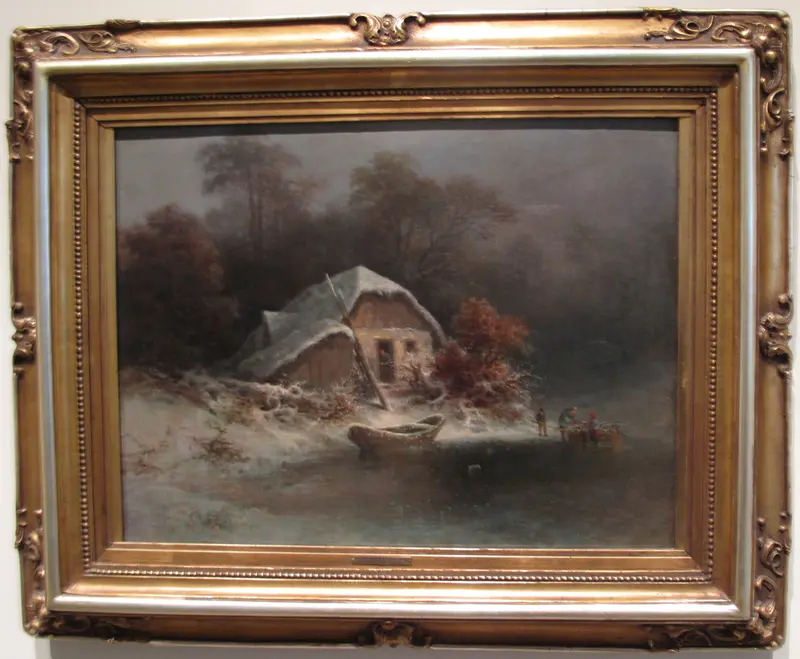
A single figure braves the frozen hush, drawing the viewer’s gaze into the heart of Winter Landscape with Ruins and a Chapel by August Piepenhagen. The eye is led first to the snow-laden path, where the solitary walker—perhaps a traveler or a villager—seems dwarfed by the wild sweep of nature and the looming silhouette of ancient ruins. The bare, twisting trees frame the scene, their branches etched against a sky heavy with winter’s chill.
The muted palette of whites, greys, and browns amplifies the sense of quiet, while the small chapel stands as a fragile refuge, its roof stooping under the weight of snow. Every detail, from the icy stream in the foreground to the distant, crumbling tower, is chosen to heighten the feeling of isolation and endurance. Works like this belong to a tradition of 19th-century landscape painting, when artists across Europe turned their attention to the drama and poetry of nature’s seasons. Painters such as August Piepenhagen often found inspiration in the Romantic movement, which valued the emotional resonance of wild places and the ruins of the past.
These winter scenes were sought after by collectors who prized their ability to evoke both nostalgia and awe, often displaying them in private homes as reminders of nature’s beauty and unpredictability. Though little is recorded about the specific journey of this painting—now documented as part of a private collection since at least 2010—it stands as a quiet testament to a world where solitude and memory linger in the snow. Look again at the figure on the path, and consider what stories the winter silence might keep.
More Artworks by August Piepenhagen

Returning Home Before the Storm in a Mountain Landscape
August Piepenhagen
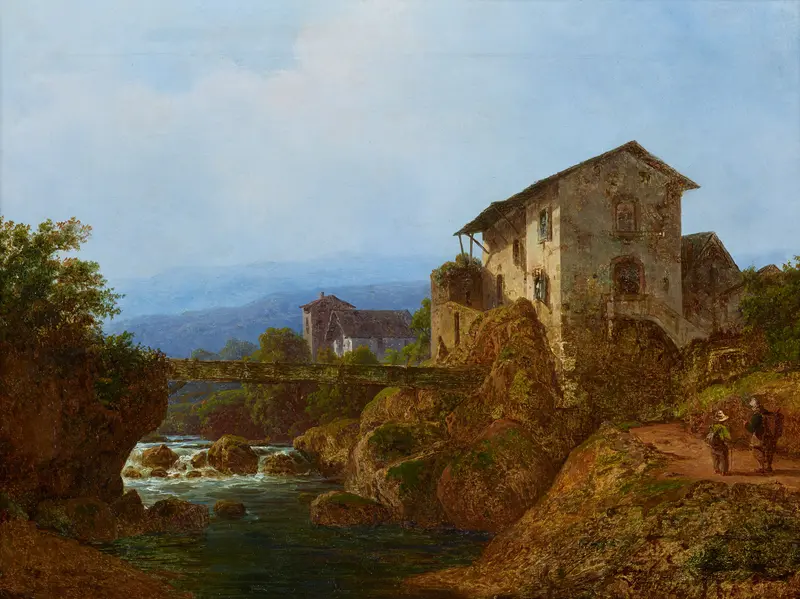
Alte Dorfbrücke
August Piepenhagen
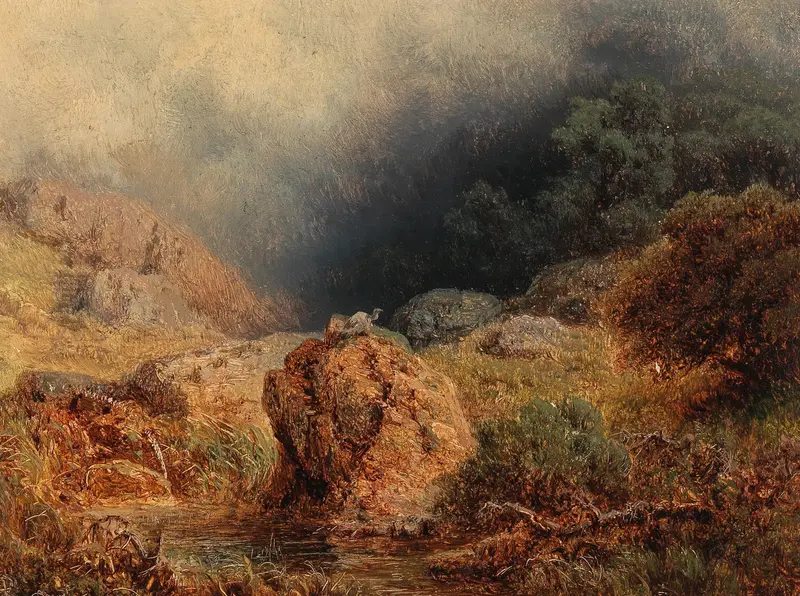
Nahendes Unwetter in den Bergen
August Piepenhagen
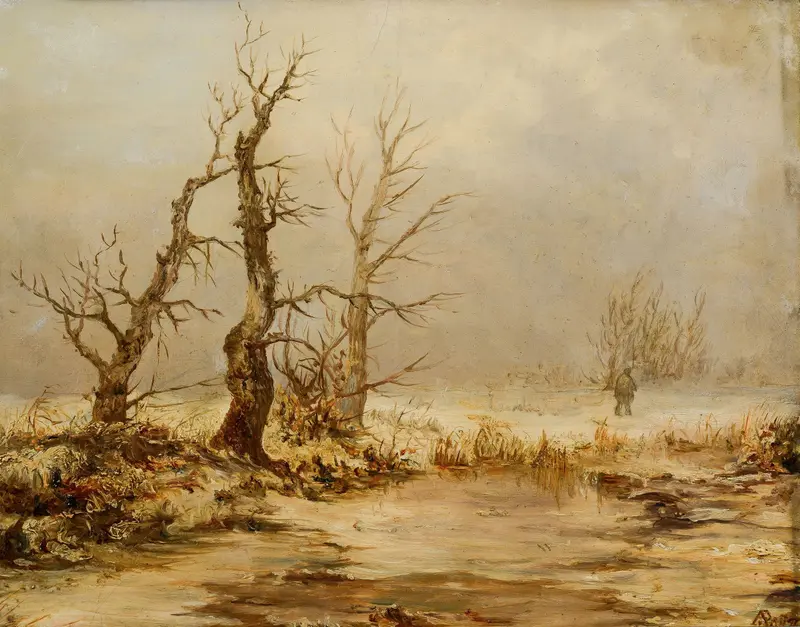
Wintry landscape
August Piepenhagen
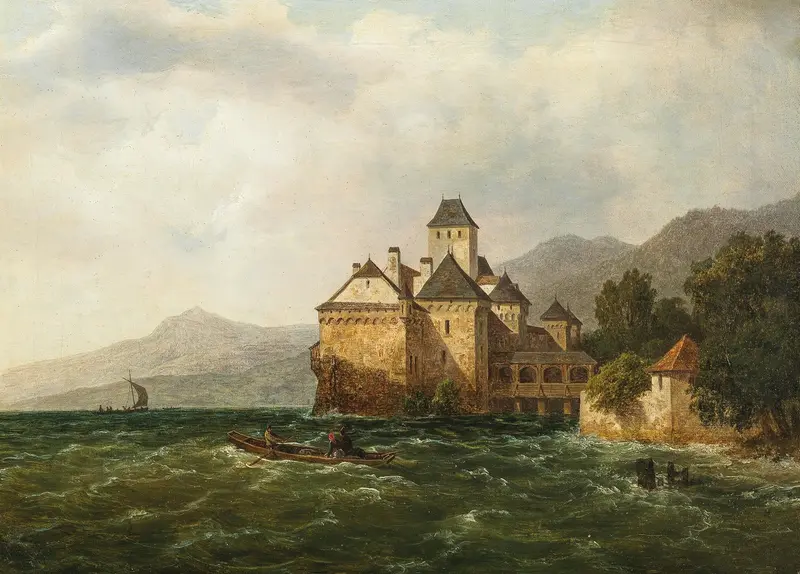
A View of Chillon Castle on Lake Geneva
August Piepenhagen
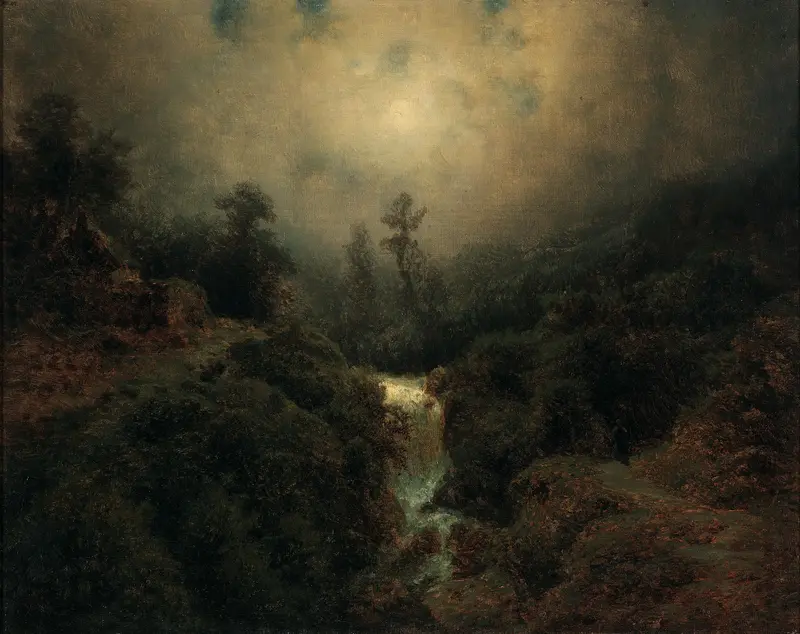
Romantische Mondlandschaft mit Wanderer
August Piepenhagen
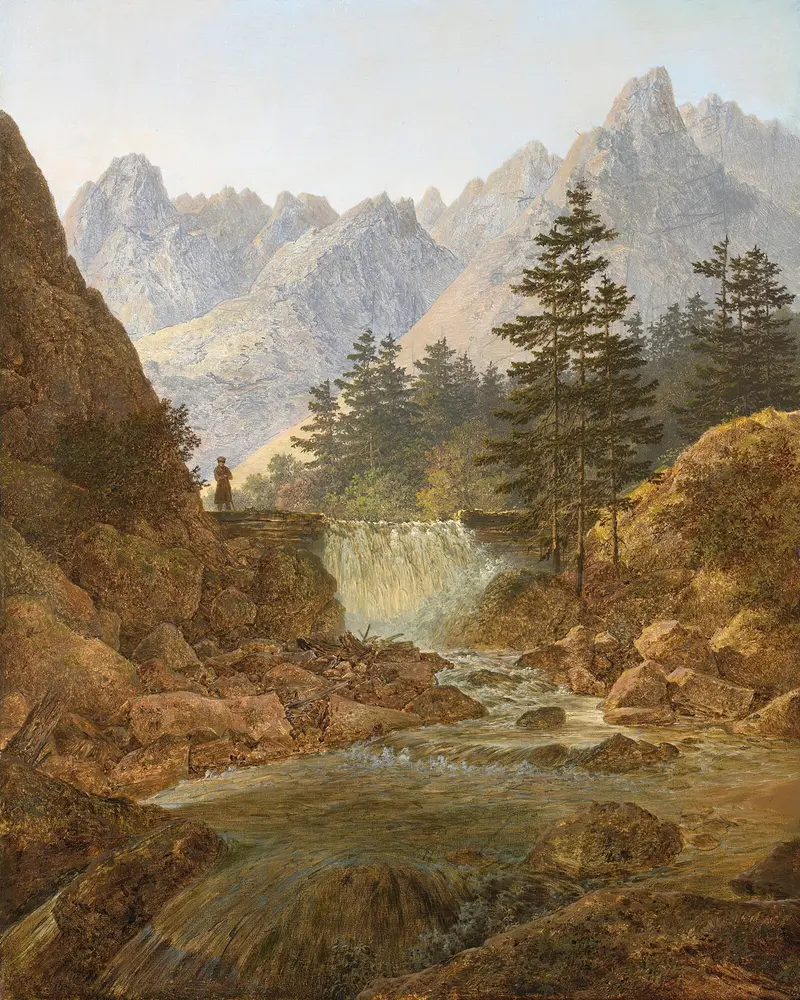
Gebirgslandschaft Mit Wanderer
August Piepenhagen
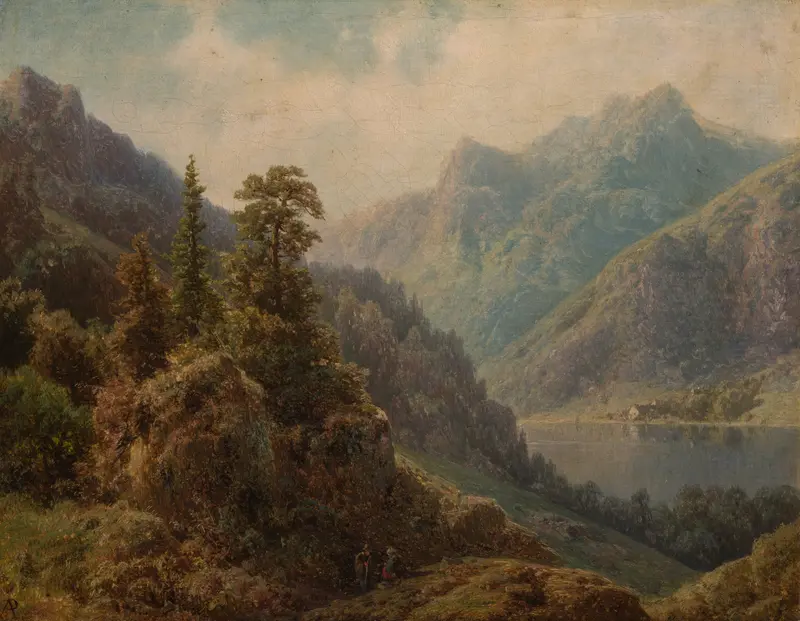
Lake in the Mountains
August Piepenhagen
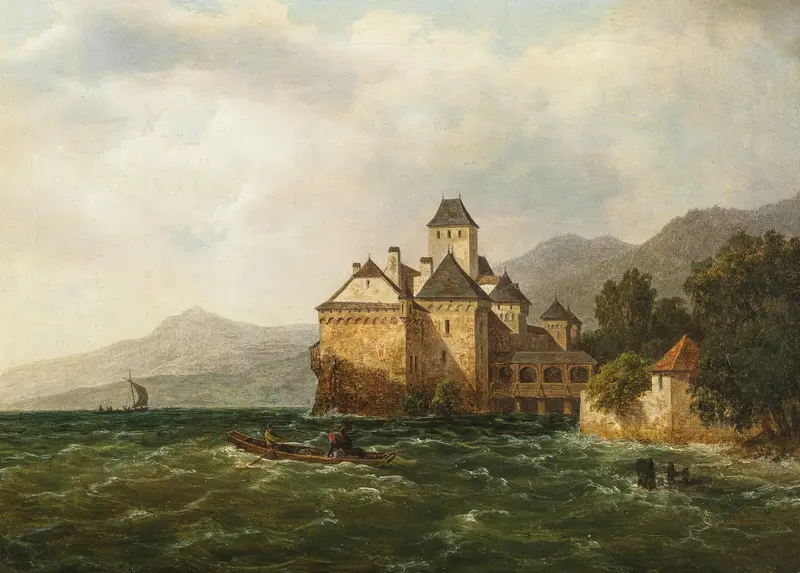
Schloss Chillon
August Piepenhagen
Chack by a Frozen Lake.
August Piepenhagen
More Landscape Art

The Starry Night
Vincent van Gogh

View of Delft
Johannes Vermeer

Water Lilies
Claude Monet

The Grand Canal, Venice, looking north-west from the Ca' Corner to the Ca' Contarini degli Scrigni, with the campanile of Santa Maria della Carità
Canaletto

Windsor Castle
Canaletto

The Grand Canal looking North-East from the Palazzo Dolfin-Manin to the Rialto Bridge
Canaletto