
Świteź — History & Facts
What if silence could speak through light? In Julian Falat's Świteź, a serene yet haunting atmosphere envelops the viewer, whispering tales of betrayal woven into its soft, shimmering colors. Look to the right at the gently lapping waters of the lake, where reflections mingle with the sky, creating an ethereal boundary between the two realms. Notice how the light falls upon the trees, their vibrant greens punctuated by the subtle warmth of yellow and amber hues, suggesting a fleeting moment of dawn or dusk. The composition draws your gaze along the water’s edge, inviting you to explore the textured brushstrokes that lend a sense of movement and tranquility, while the delicate interplay of shadow and illumination evokes a sense of impending change. Beneath the surface, the painting reveals deeper layers of emotional tension.
The stillness of the landscape belies a sense of lurking unease, as the glimmering surface of the water hints at secrets and betrayals beneath. The juxtaposition of light and dark not only reflects the beauty of nature but also mirrors the complexities of human relationships—moments of clarity overshadowed by hidden truths and forgotten promises. Falat created Świteź during a period of artistic exploration and personal reflection between 1883 and 1884. Living in Poland, he was influenced by the Romantic movement, which sought to capture the essence of nature while expressing deeper emotional resonance.
This painting embodies his mastery in blending realism with emotional depth, responding to both the tranquility and the tumult of his time.
More Artworks by Julian Falat
Browse all →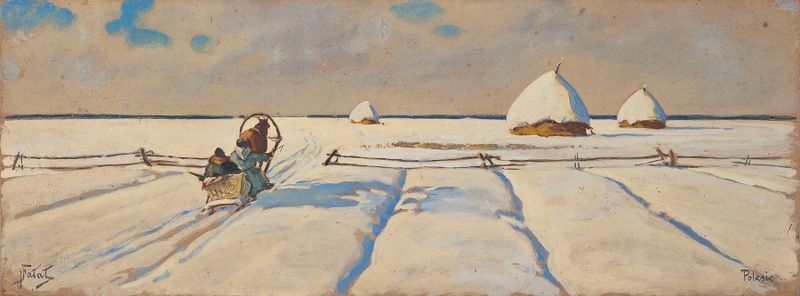
Sleigh in a snowy field – Polesia
Julian Falat
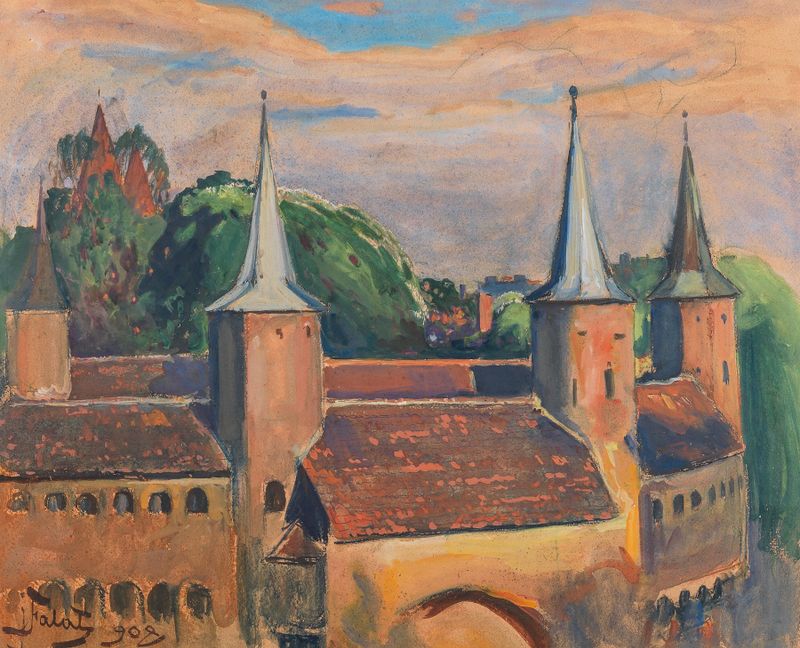
The Kraków Barbican
Julian Falat
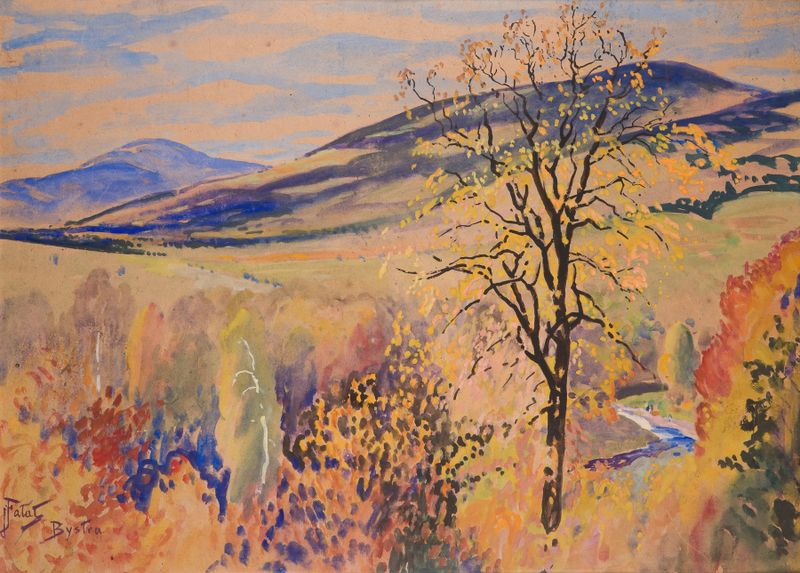
Pejzaż jesienny z Bystrej
Julian Falat
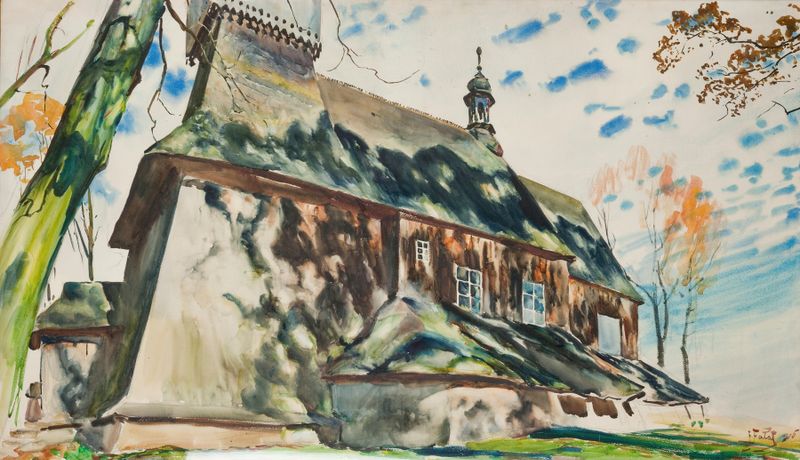
Church in Osiek
Julian Falat
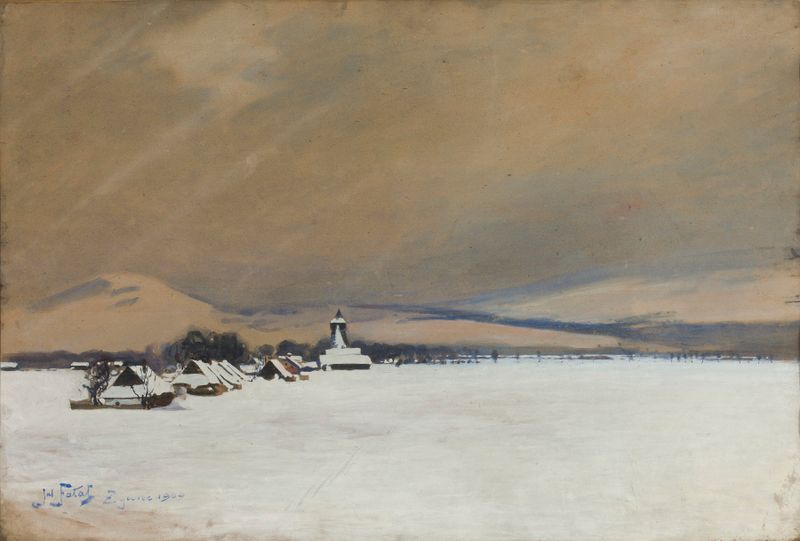
Winter landscape from Żywiec
Julian Falat
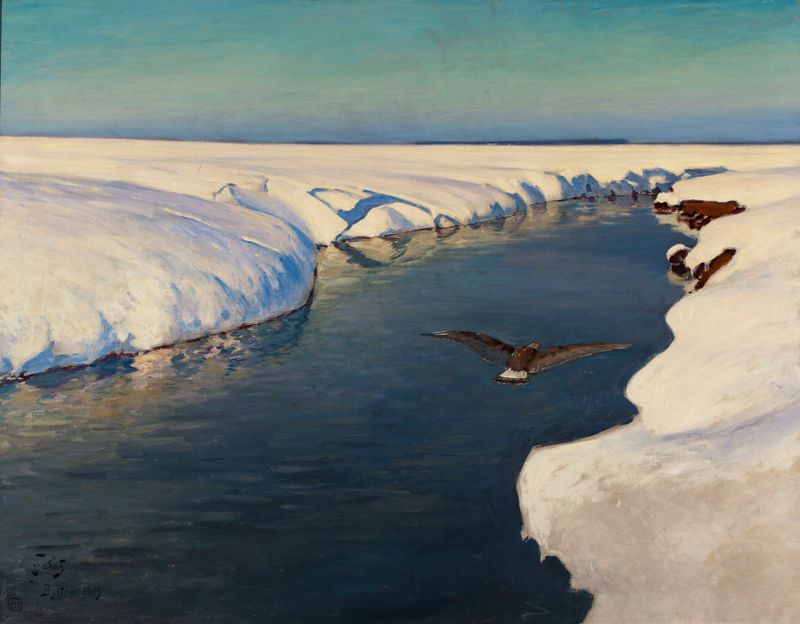
Winter landscape with a river and a bird
Julian Falat
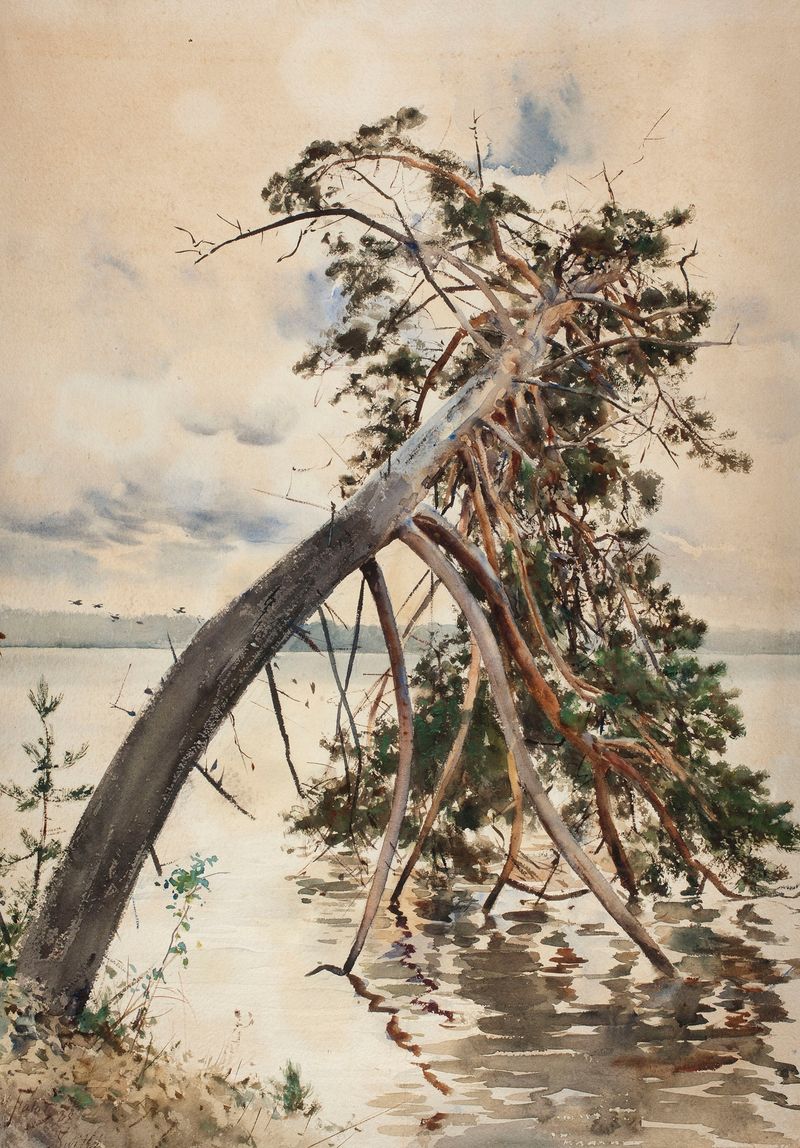
Świteź
Julian Falat
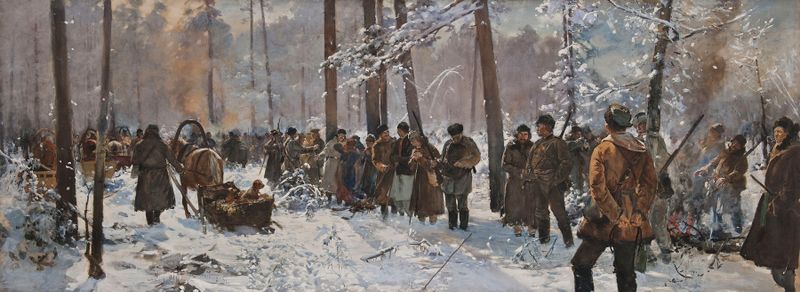
Battue at a hunt in Nieśwież
Julian Falat
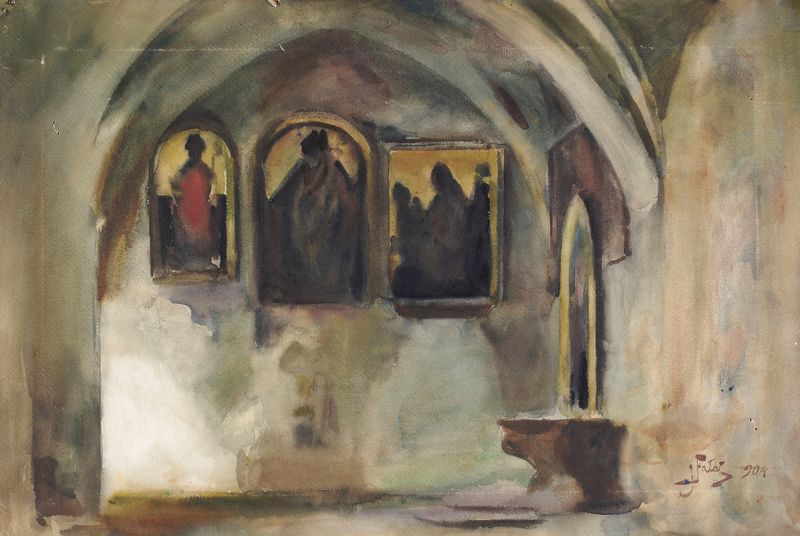
Cloister of the Franciscan Church in Krakow
Julian Falat
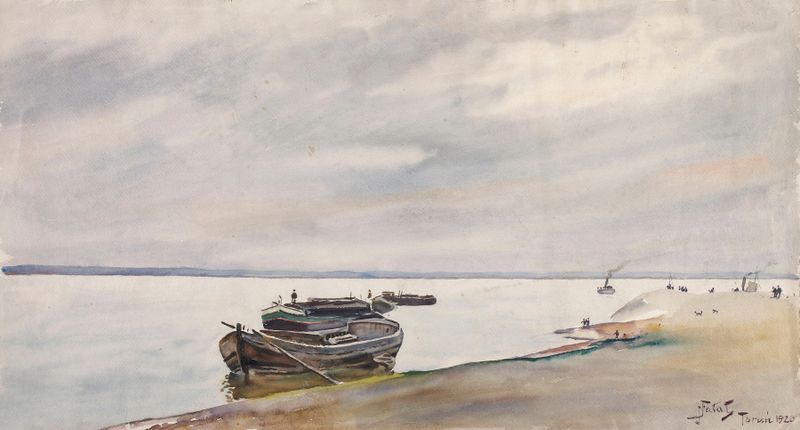
Boats and steamship on the Vistula near Toruń
Julian Falat





