
Boats and steamship on the Vistula near Toruń — History & Facts
What if silence could speak through light? In Boats and steamship on the Vistula near Toruń, a profound stillness envelops the riverbanks, evoking whispers of change as the sun dips low. Look first to the horizon, where the golden light dances on the water’s surface, illuminating the silhouettes of boats and gently billowing steam against the backdrop of a tranquil sky. Notice how the color palette shifts from soft pastels to deeper tones, capturing the fleeting transition of day into night. The brushstrokes are fluid, almost ethereal, suggesting movement beneath the calm facade, a reminder of the unseen currents that run through both water and life. The juxtaposition of the boats — sturdy and steadfast — against the steamship, which glides forward, hints at the tension between tradition and progress.
Each vessel carries its own narrative, embodying a moment of reflection amidst an era teetering on the brink of revolution. The shimmering light that caresses them seems to both reveal and conceal, echoing the uncertainty of the times and the eternal flow of the river itself. In 1920, Julian Falat painted this scene from the vantage of a Poland redefined by the aftermath of World War I. The country was navigating its newfound independence, and in the world of art, movements were beginning to shift towards modernism.
This painting, rooted in Impressionist principles, embodies the transitional spirit of the era, as Falat sought to capture both the beauty of his homeland and the latent energy of change.
More Artworks by Julian Falat
Browse all →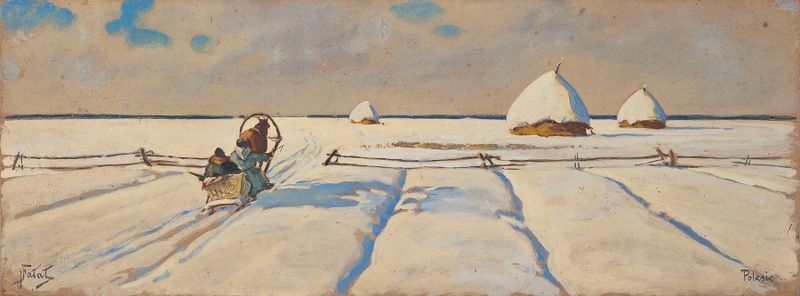
Sleigh in a snowy field – Polesia
Julian Falat
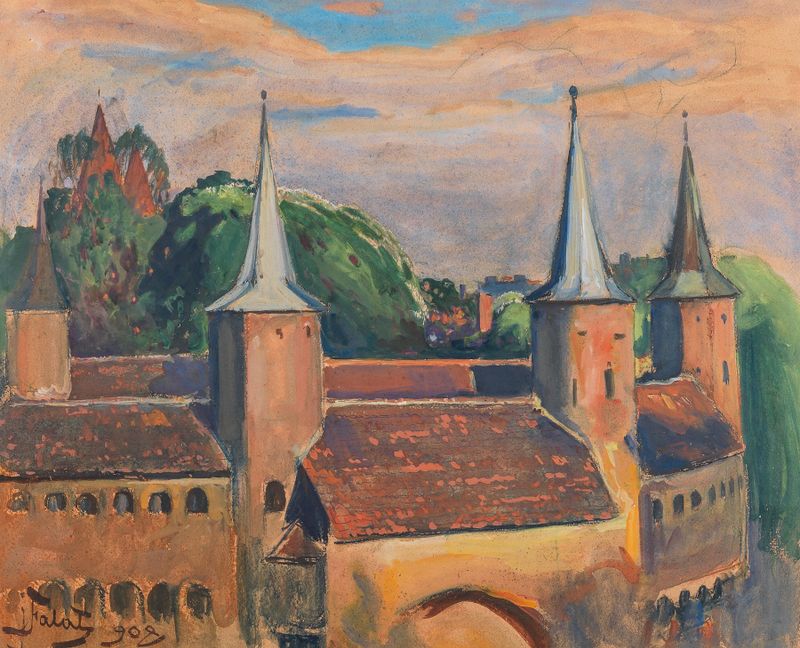
The Kraków Barbican
Julian Falat
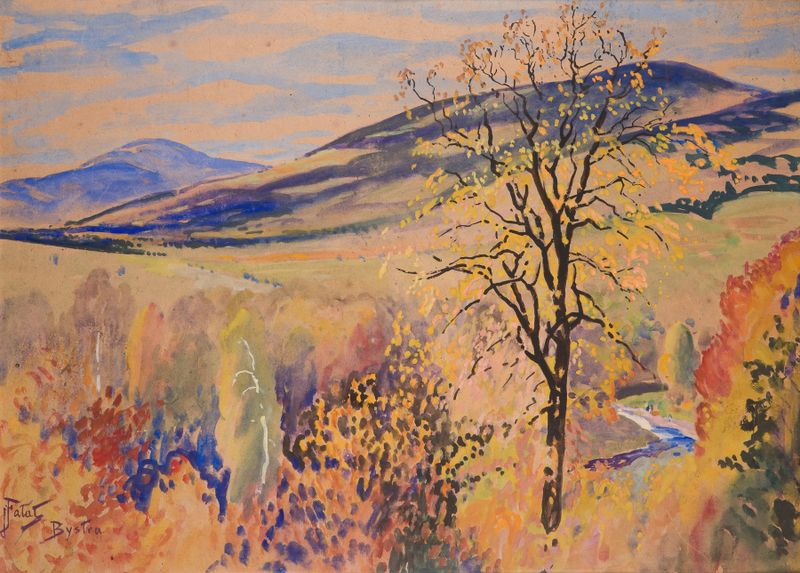
Pejzaż jesienny z Bystrej
Julian Falat
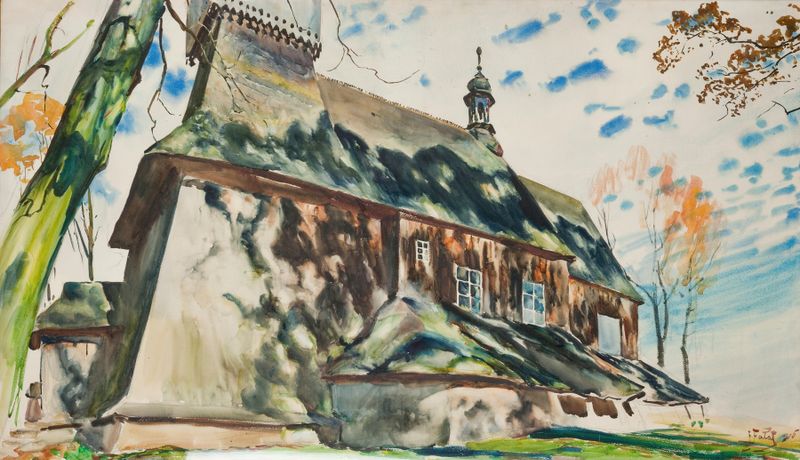
Church in Osiek
Julian Falat
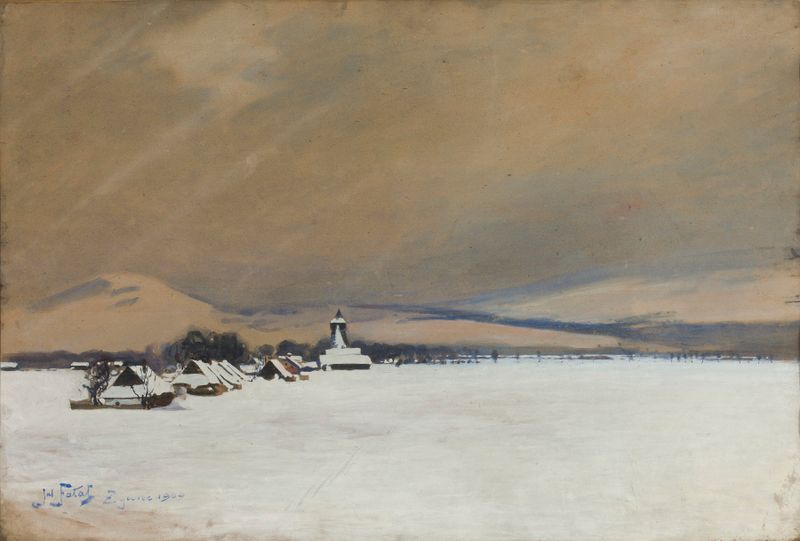
Winter landscape from Żywiec
Julian Falat
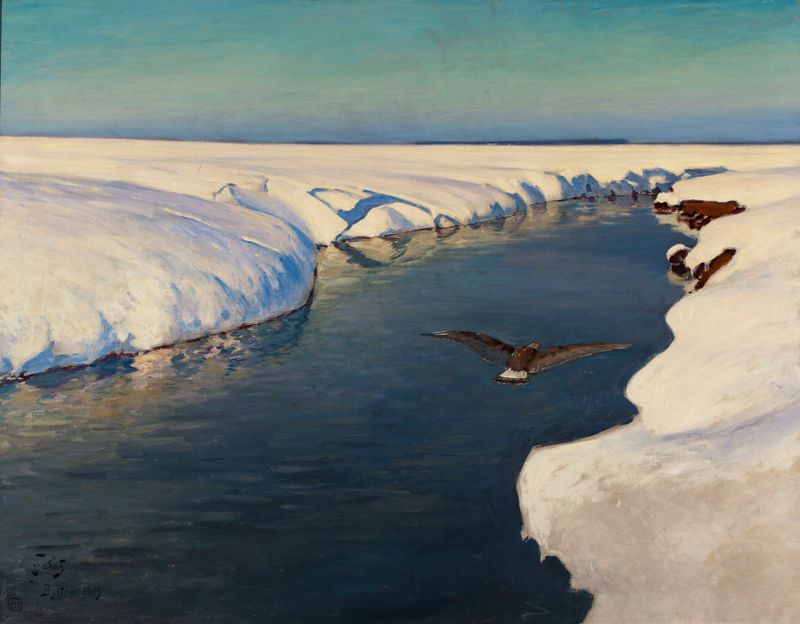
Winter landscape with a river and a bird
Julian Falat
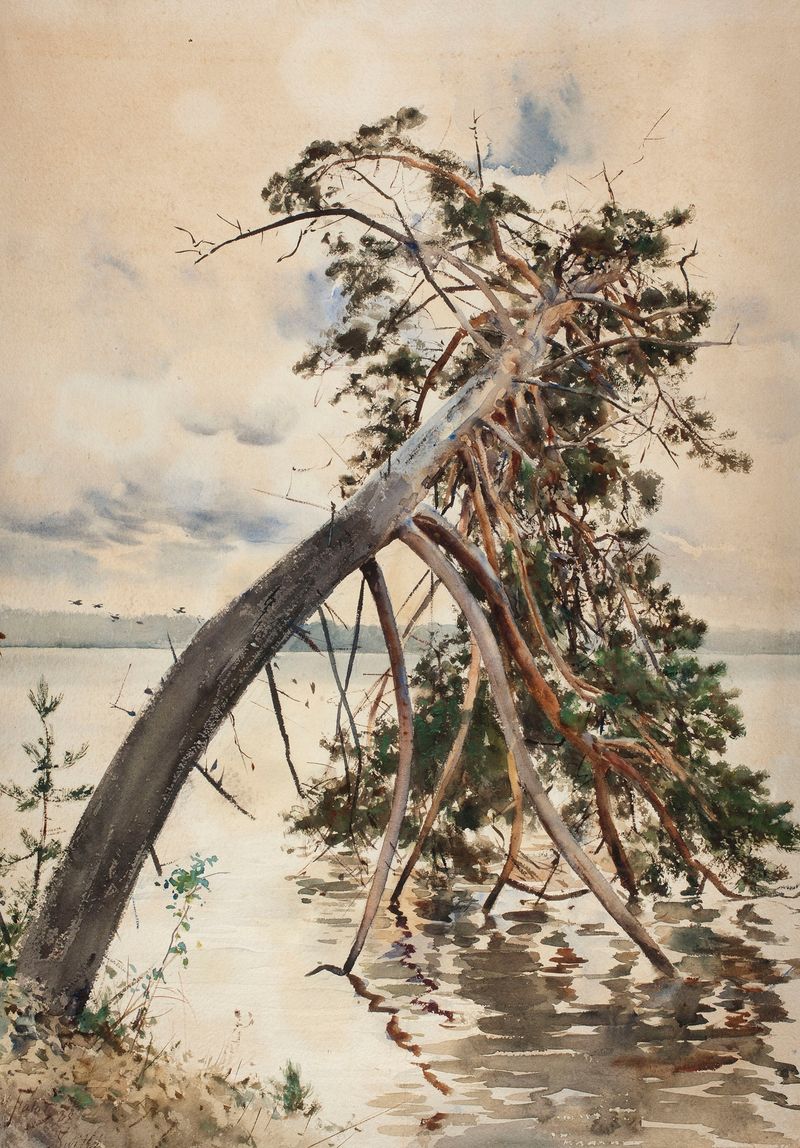
Świteź
Julian Falat
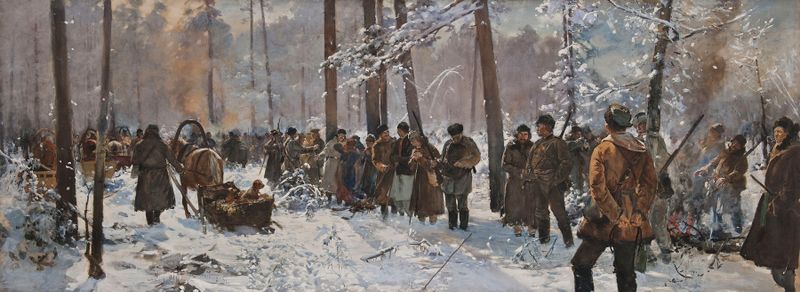
Battue at a hunt in Nieśwież
Julian Falat
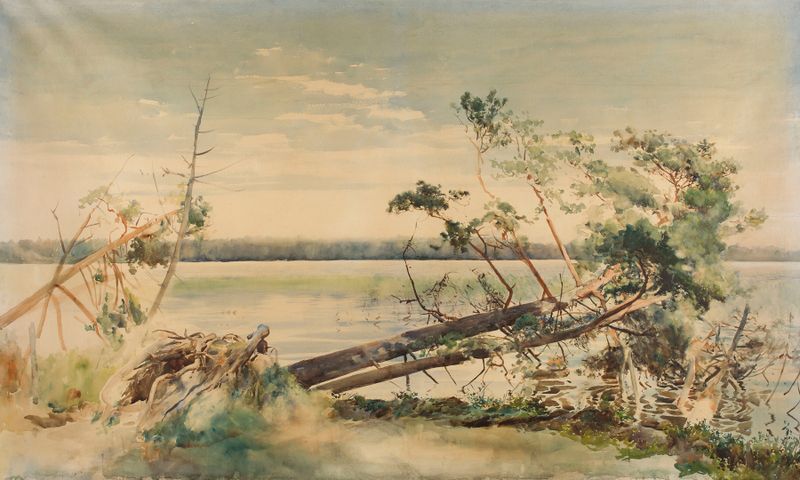
Świteź
Julian Falat
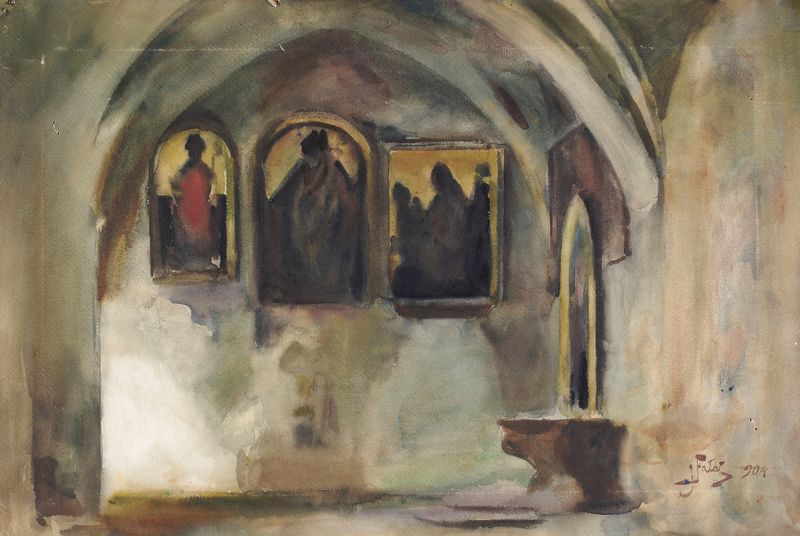
Cloister of the Franciscan Church in Krakow
Julian Falat





