Woman on a Divan — History & Facts
What first catches the eye in Woman on a Divan is the sense of quiet enclosure, as if the room itself is a stage set for a single, private moment. The woman’s patterned dress and headscarf, rendered in bold, almost playful strokes, draw the gaze to her reclining form, while the surrounding walls—outlined in washes of violet and ochre—frame her like a living portrait. Above her, the wall is adorned with mysterious, almost hieroglyphic marks and shapes, suggesting a world of symbols or memories hovering just out of reach.
The palette is both spare and deliberate, with the cool purples and warm yellows creating a gentle tension that keeps the viewer’s attention moving from the figure to the curious decorations and back again. The woman’s sideways glance and relaxed posture hint at a story untold, inviting us to imagine her thoughts or the conversation she has just left behind. Painted in 1914, this work belongs to a world on the edge of transformation. August Macke was a leading figure in the Expressionist movement, known for his luminous color and ability to distill everyday life into scenes of vivid immediacy.
In the years before the First World War, artists like Macke sought new ways of seeing, breaking with tradition to capture fleeting moods and the pulse of modern life. This watercolor, now part of the Museo Thyssen-Bornemisza’s permanent collection in Madrid, is a testament to that restless spirit. History has kept few traces of the sitter or the exact circumstances, but the painting’s freshness and intimacy remain—reminding us that even the quietest moments can hold entire worlds.
More Artworks by August Macke
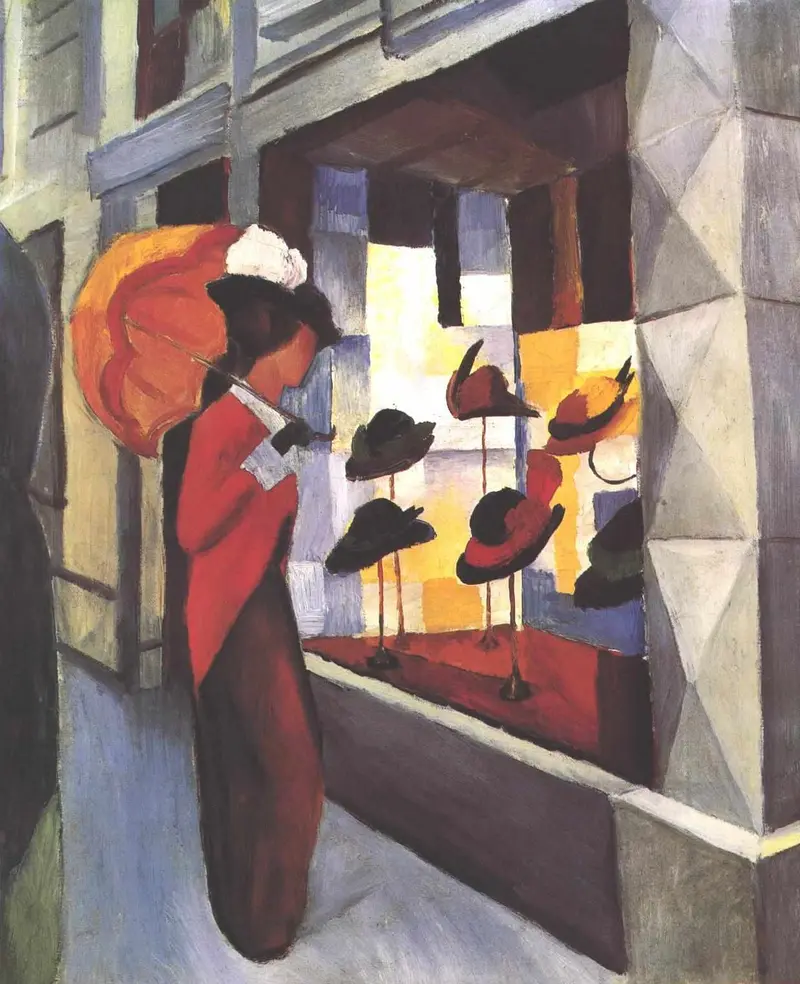
Woman with a Parasol in Front of a Hat Shop
August Macke

Street with Church in Kandern
August Macke
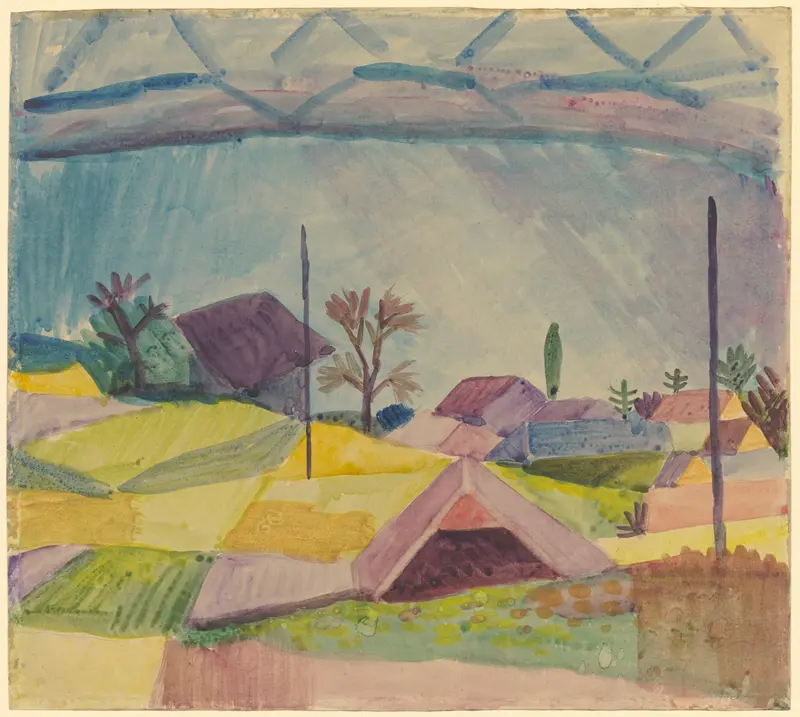
View of Hilterfingen
August Macke

Paar im Nachen
August Macke
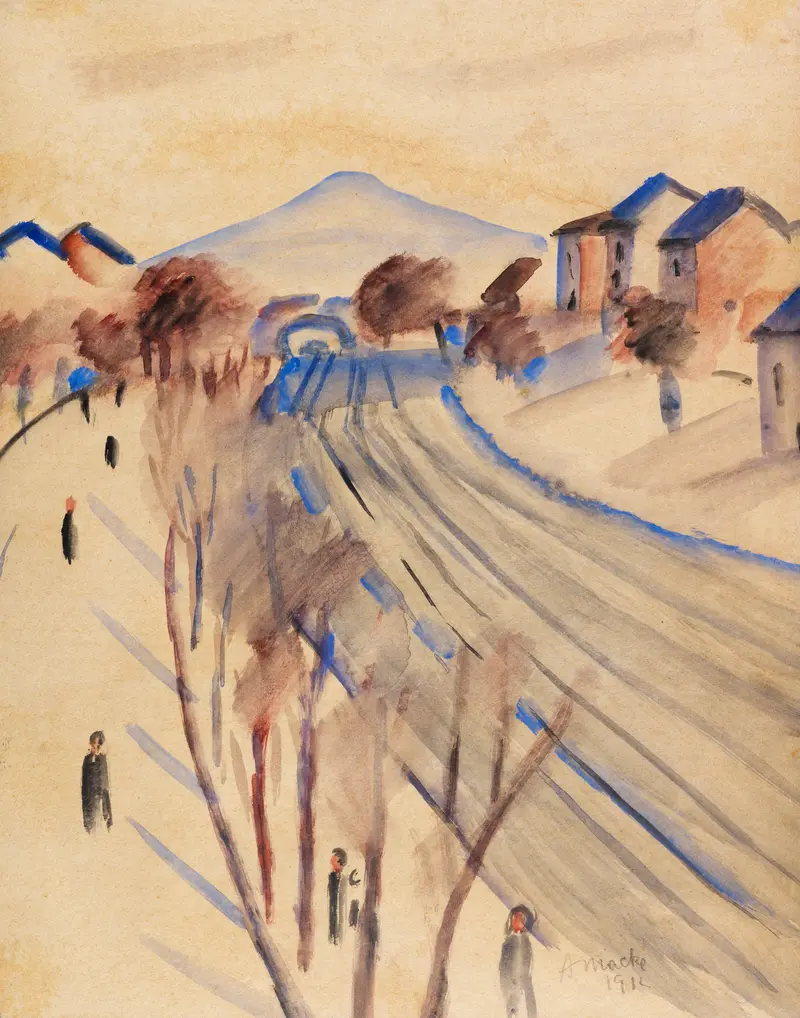
Ölberg mit Bahngleisen II
August Macke
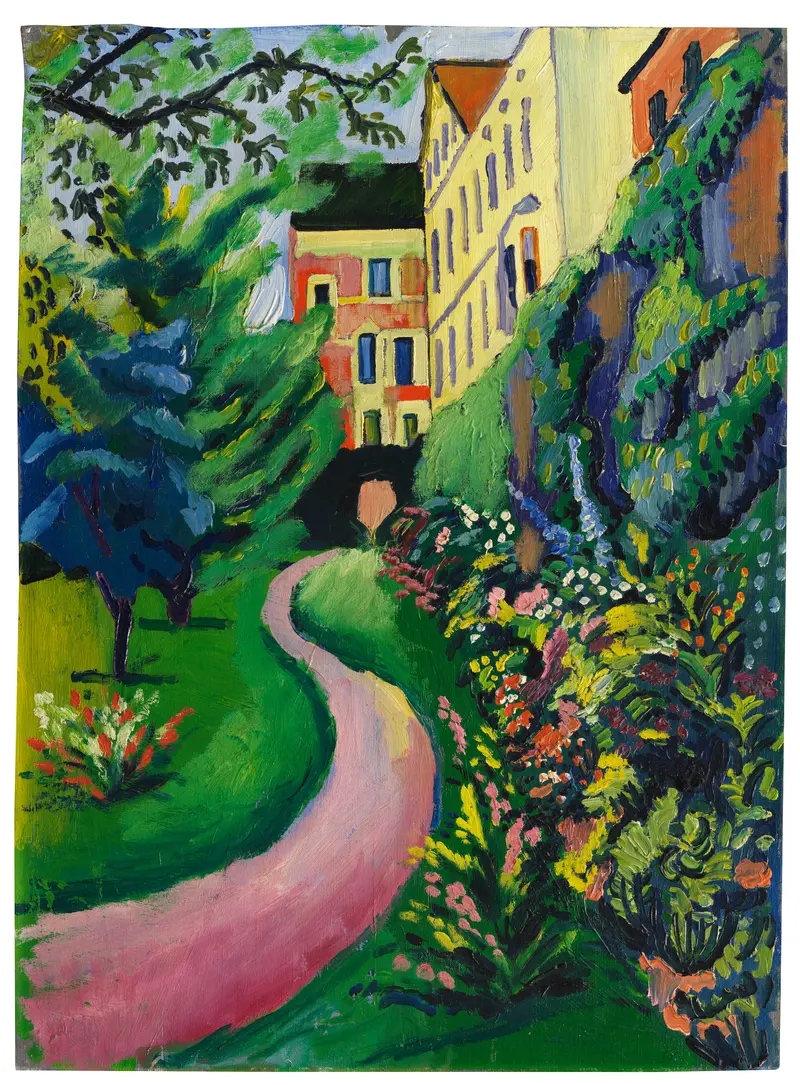
Unser Garten mit blühenden Rabatten
August Macke
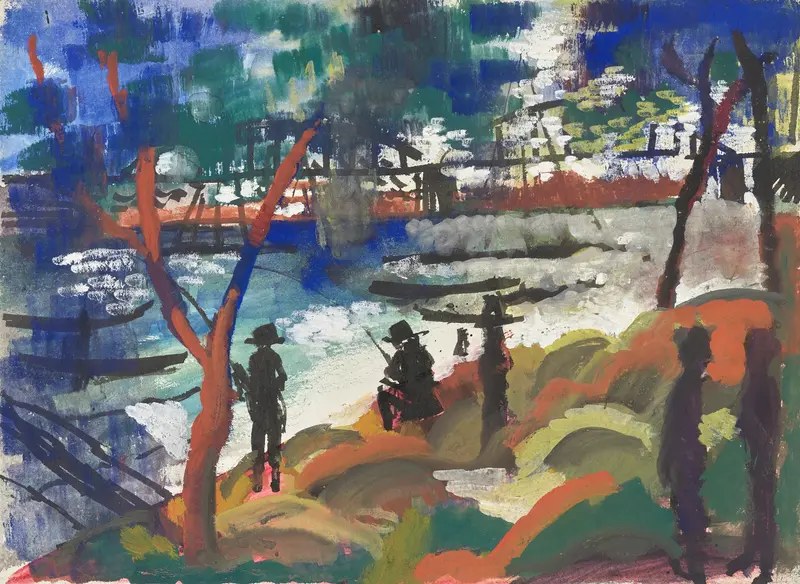
Angler am Fluss
August Macke
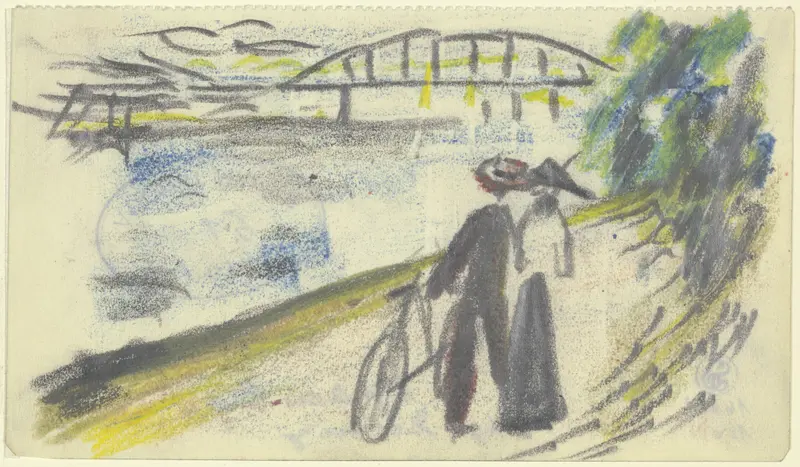
Path at the Rhine
August Macke
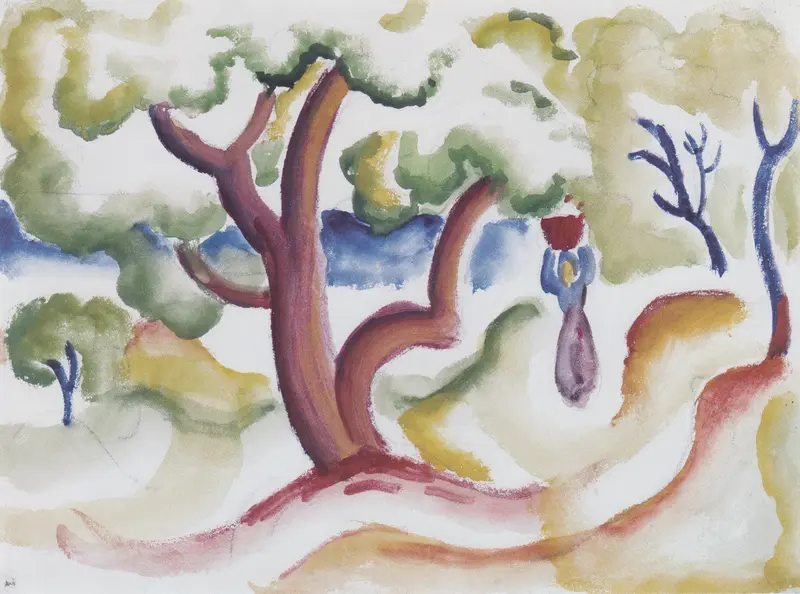
Frau mit Krug unter Bäumen
August Macke
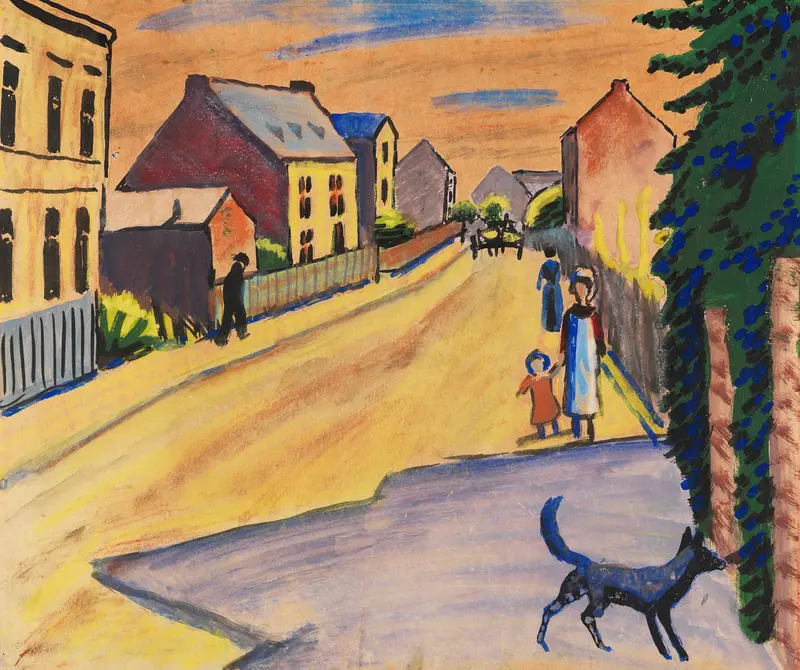
Sonnige Straße mit Hund
August Macke