
Woman Walking on the Banks of the Aven — History & Facts
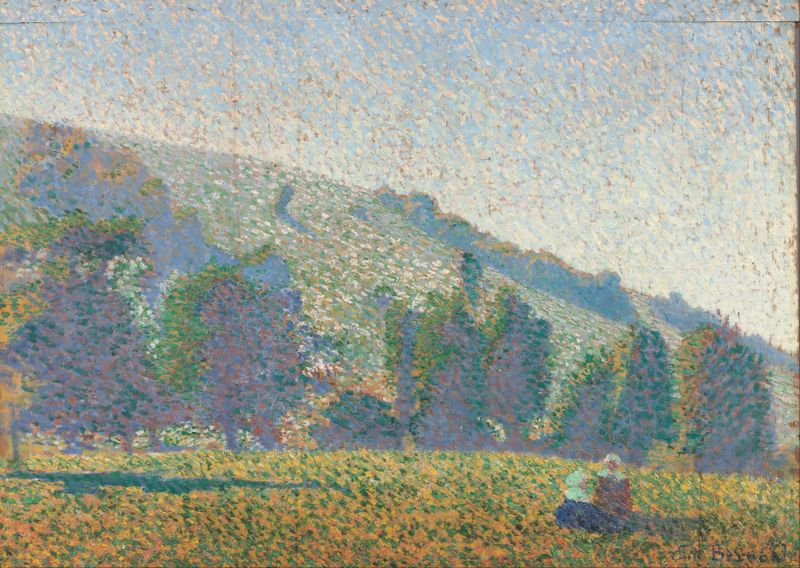
Did the painter know this moment would outlive them? The fleeting beauty of life stands still, encapsulated in a single stroke of paint, a whisper of eternity held in the frame. Look to the left at the gentle curves of the riverbank, where the soft blues and greens meet the figure of the woman. Her dress, a vibrant rush of color, contrasts with the muted hues of the landscape, drawing your gaze as she strolls gracefully beside the water. Notice the way the light dances on the surface, illuminating her path while casting shadows that elongate with the day's surrender to dusk. In this tranquil setting, the stillness belies an undercurrent of emotion.
The woman's solitary figure suggests introspection, perhaps a moment of contemplation on love or loss. The river, flowing freely yet ungraspable, mirrors the transient nature of existence, urging viewers to reflect on their own journeys and the moments that shape them. The interplay between the vibrant woman and the serene landscape evokes a sense of awe, hinting at the deep connection between humanity and nature. Emile Bernard painted this work in 1890 while living in Pont-Aven, a hub of the avant-garde art movement.
During this period, he was surrounded by fellow artists who embraced Post-Impressionism, seeking to express deeper emotional truths through color and form. The tranquil scene captures not just the beauty of a moment but also reflects the artist’s exploration of newfound artistic expressions, ensuring that this fleeting glimpse into life’s simplicity would resonate with viewers long after his time.
More Artworks by Emile Bernard
Browse all →
House among trees; Pont-Aven
Emile Bernard
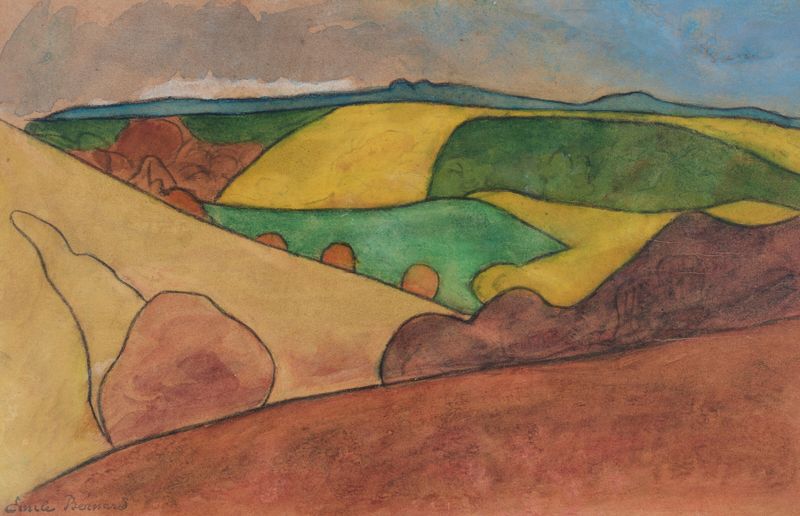
Paysage de Bretagne
Emile Bernard

Harvest by the Sea
Emile Bernard
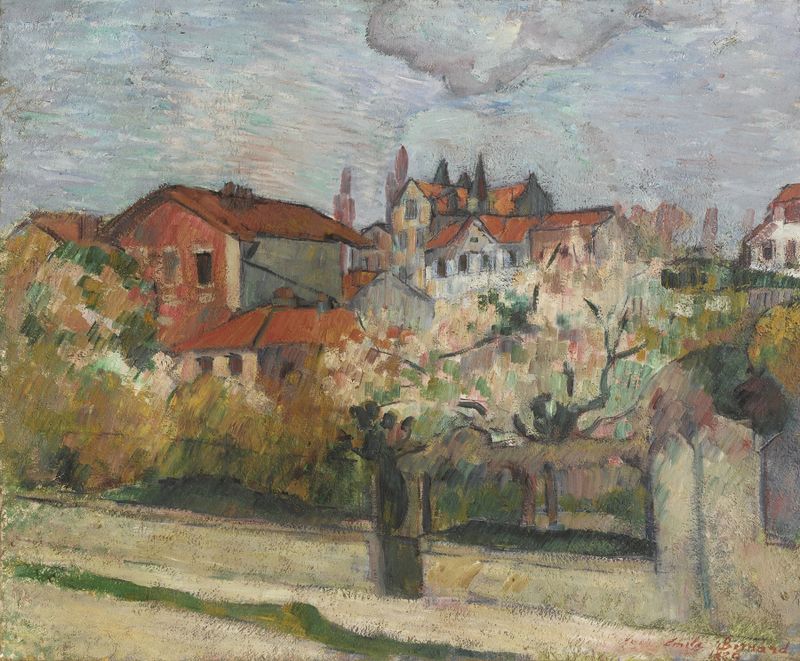
Jardin en fleur à Asinères
Emile Bernard
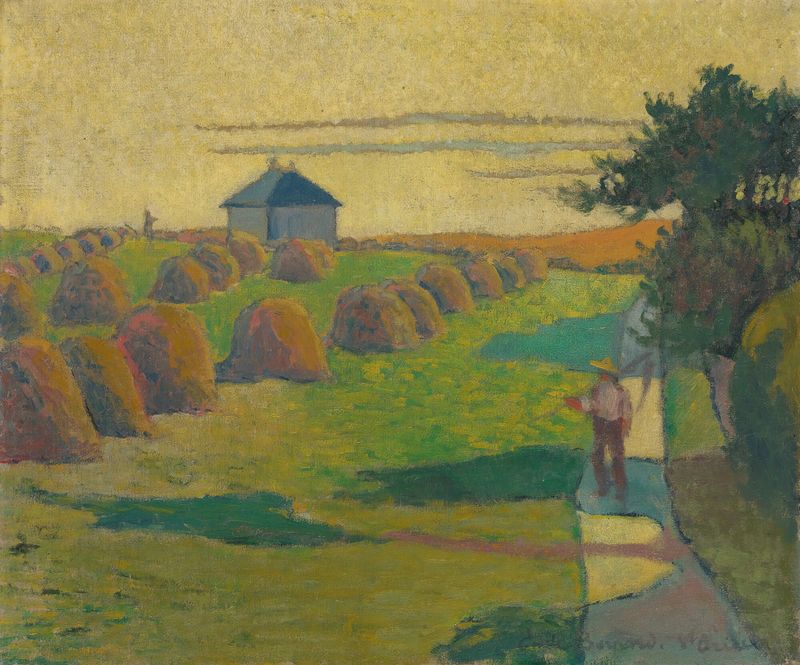
Saint-Briac
Emile Bernard
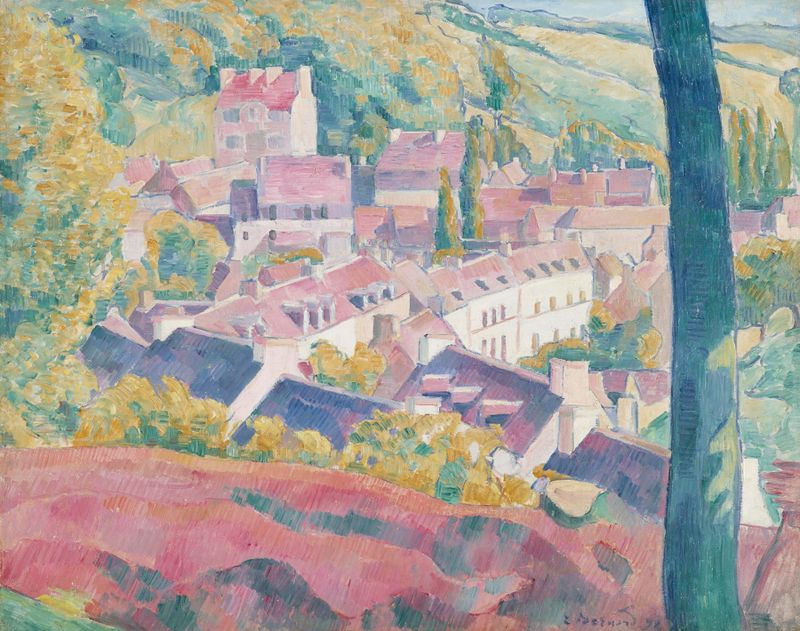
Pont-Aven Seen from the Bois d’Amour
Emile Bernard
Two Breton women in a meadow
Emile Bernard

Un Coin Du Bois D’amour A Pont Aven
Emile Bernard

Vue des toits
Emile Bernard

Landscape at Pont-Aven
Emile Bernard





