XIII. Ob. St. Veit — History & Facts
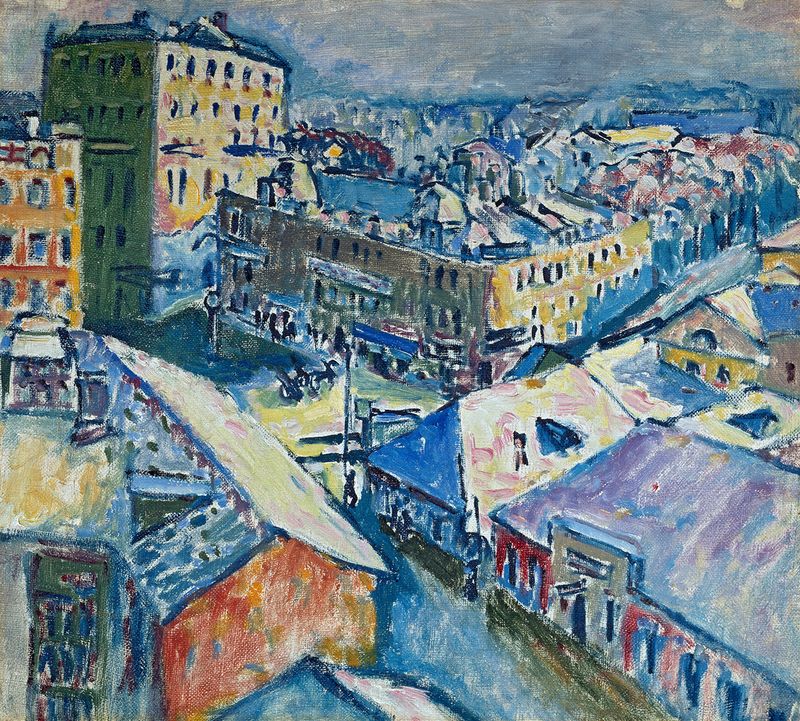
Can paint confess what words never could? In the hands of Oskar Laske, the answer is a resounding yes, as he captures the essence of movement with an emotional depth that transcends language. *XIII. Ob.
St. Veit* unfolds as a testament to the dynamic interplay between color and form, offering viewers an intimate glimpse into the vibrancy of life itself. Focus first on the swirling blues and greens that intertwine, drawing your gaze across the canvas in a rhythm that mimics the very act of motion. The energetic brushstrokes evoke a sense of urgency and transformation, while the juxtaposition of light and shadow creates an illusion of depth and space.
Notice how the colors pulse and vibrate, as if they are alive, entrancing you with their vitality and inviting exploration into the hidden nuances of each layer. As you delve deeper, subtle contrasts emerge—between chaos and harmony, stillness and flux. The splashes of warm hues pierce through the cooler tones, hinting at fleeting moments of joy amidst a backdrop of uncertainty. This tension reflects the complexities of human experience, suggesting that movement is not just a physical act, but an emotional journey filled with unspoken stories. Laske created this work in 1947, during a period of post-war reconstruction in Europe.
The art world was grappling with the aftermath of conflict, and artists sought new ways to express their realities. In this context, Laske’s exploration of movement can be seen as a response to the need for renewal and hope, as he harnessed the transformative power of paint to express the vitality of life amidst a world reshaped by tumult.
More Artworks by Oskar Laske
Browse all →
Faschingsumzug am Stock im Eisen Platz
Oskar Laske

Schönbrunn (Winter)
Oskar Laske
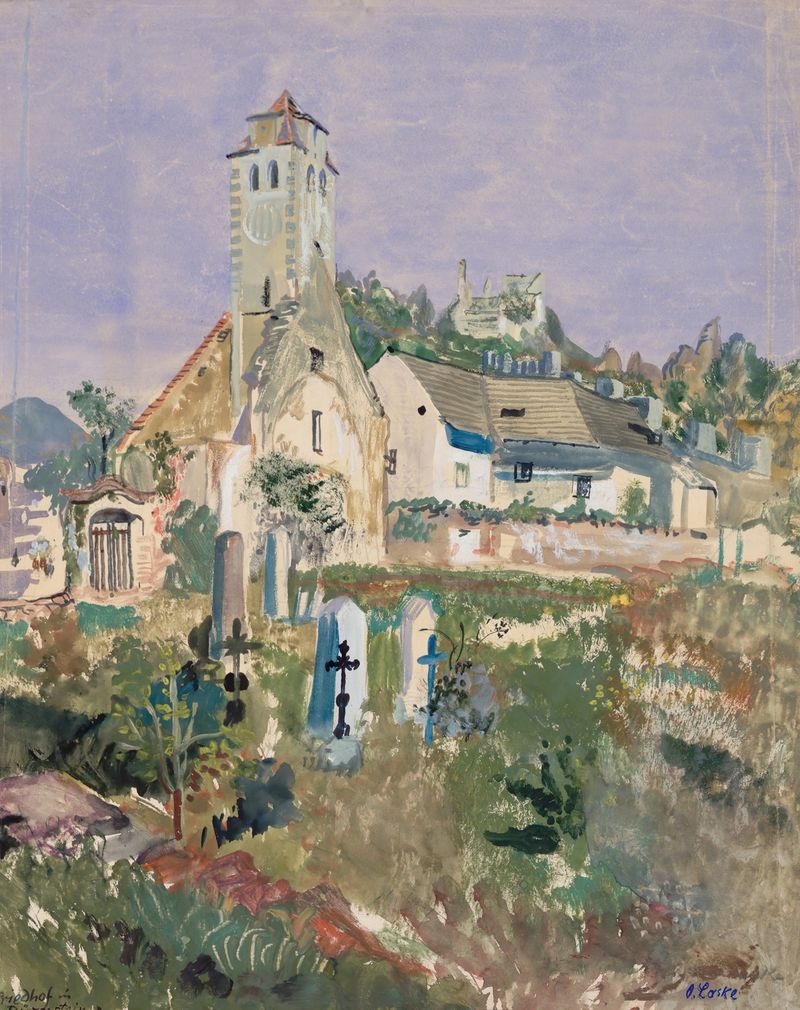
Friedhof in Dürnstein
Oskar Laske

Pratermotiv an der alten Donau
Oskar Laske

Frühjahrsnebel in Niederösterreich
Oskar Laske

Begräbnis des Wiener Bürgermeisters Dr. Karl Lueger
Oskar Laske

Maria Theresien-Denkmal mit Blick gegen das Burgtor
Oskar Laske
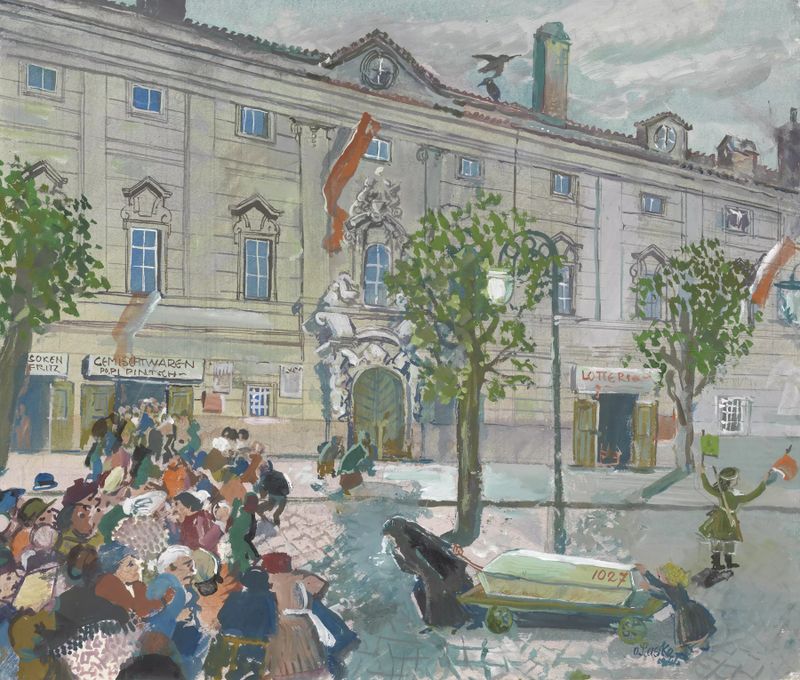
Wiener Straßenbild vom Mai 1945
Oskar Laske

Winterlandschaft in Pressbaum
Oskar Laske

Ansicht von Positano
Oskar Laske