
XIII. Roter Berg ; Ober St. Veit — History & Facts
In a world often overshadowed by turmoil, movement transforms into a silent yet powerful voice, resonating through the brushstrokes of a canvas. Draw your gaze to the vibrant interplay of reds and earthy tones that fill the canvas, inviting you to explore the pulsating energy of the landscape. Notice how the undulating forms suggest a rhythm in their very essence, as if the hills themselves are breathing. The movement captured is not merely visual; it evokes an emotional journey, bridging the gap between the viewer and a world that vibrates with life. Hidden within the harmonies of color and line lies a contrast between stability and fluidity.
The robust shapes ground the piece, while the flowing brushwork hints at the transience of nature. This duality speaks to the tension between permanence and the ephemeral, capturing a moment forever in motion yet anchored in the present. Each stroke tells a tale of resilience, urging one to contemplate the cycle of life and change that surrounds us. Oskar Laske created this piece in 1946, a time when the aftermath of World War II lingered heavily in Europe.
Residing in Vienna, he found himself amidst a cultural rebirth, as artists sought to redefine identity and meaning through their work. The urgency of expression during this period fueled his artistic vision, leading to a striking amalgamation of emotion and landscape that defines this work.
More Artworks by Oskar Laske
Browse all →
Faschingsumzug am Stock im Eisen Platz
Oskar Laske

Schönbrunn (Winter)
Oskar Laske
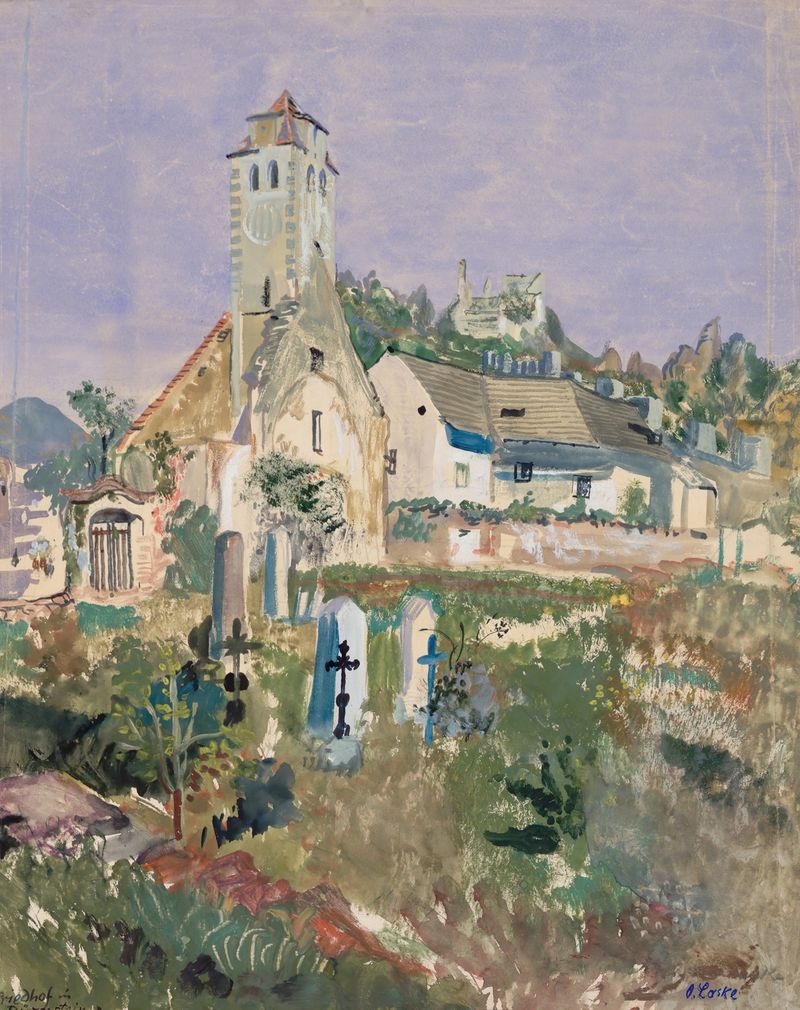
Friedhof in Dürnstein
Oskar Laske

Pratermotiv an der alten Donau
Oskar Laske

Frühjahrsnebel in Niederösterreich
Oskar Laske

Begräbnis des Wiener Bürgermeisters Dr. Karl Lueger
Oskar Laske

Maria Theresien-Denkmal mit Blick gegen das Burgtor
Oskar Laske
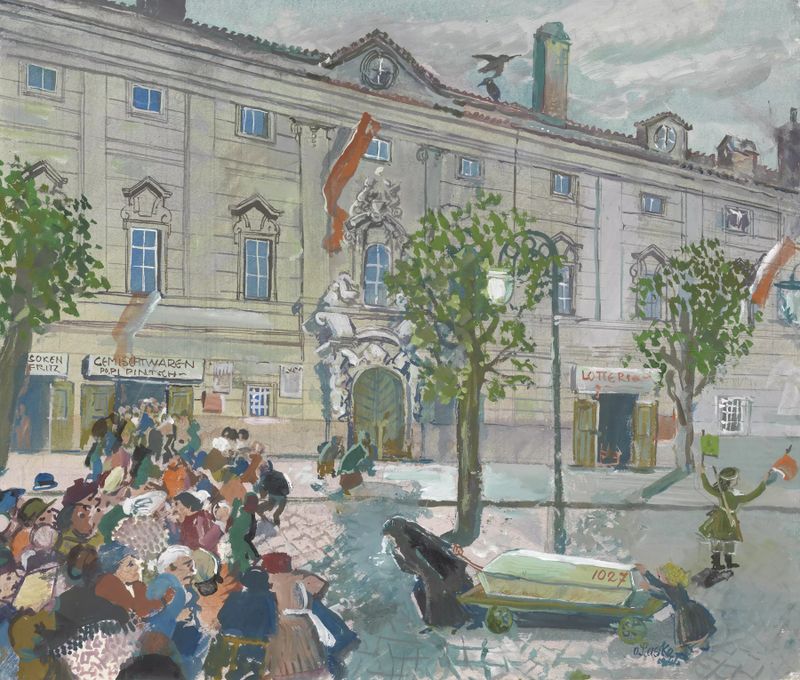
Wiener Straßenbild vom Mai 1945
Oskar Laske

Winterlandschaft in Pressbaum
Oskar Laske

Ansicht von Positano
Oskar Laske





