
XIII. Schönbrunn (Garten) — History & Facts
Where does light end, and longing begin? This question lingers like a whisper amid the vibrant brushstrokes of XIII. Schönbrunn (Garten), evoking a sense of yearning that permeates the air. The garden, a labyrinth of nature's splendor, becomes a canvas of emotional turmoil, dancing between tranquility and madness. Look to the left, where radiant sunlight spills over the lush foliage, illuminating the meticulous patterns of greenery and florals.
The artist’s deft use of vivid greens and shadows entices the eye, drawing you into a world where each leaf seems to breathe with life. Notice how the composition carefully balances light and dark, creating a tension that hints at deeper emotions lurking beneath the surface. The colors, saturated yet melancholic, evoke an almost surreal beauty that invites contemplation. As you explore further, subtle contrasts emerge—the calmness of the garden juxtaposed with the restless energy of the brushwork.
Tiny details, such as the swaying petals or the twisted branches, speak of the thin line between serenity and chaos. This duality captures the essence of longing; what is represented as peaceful beauty may also conceal an undercurrent of madness, a fleeting glimpse of the turmoil within the soul that yearns for something just beyond reach. In 1950, Oskar Laske found himself at a pivotal moment in his artistic journey, creating this piece amidst the backdrop of post-war Europe. The scars of conflict were still fresh, influencing artists to explore the depths of human emotion like never before.
Laske’s work reflected not just the beauty of nature but also the complexities of existence, merging the personal with the universal in a vibrant dialogue of colors and feelings.
More Artworks by Oskar Laske
Browse all →
Faschingsumzug am Stock im Eisen Platz
Oskar Laske

Schönbrunn (Winter)
Oskar Laske
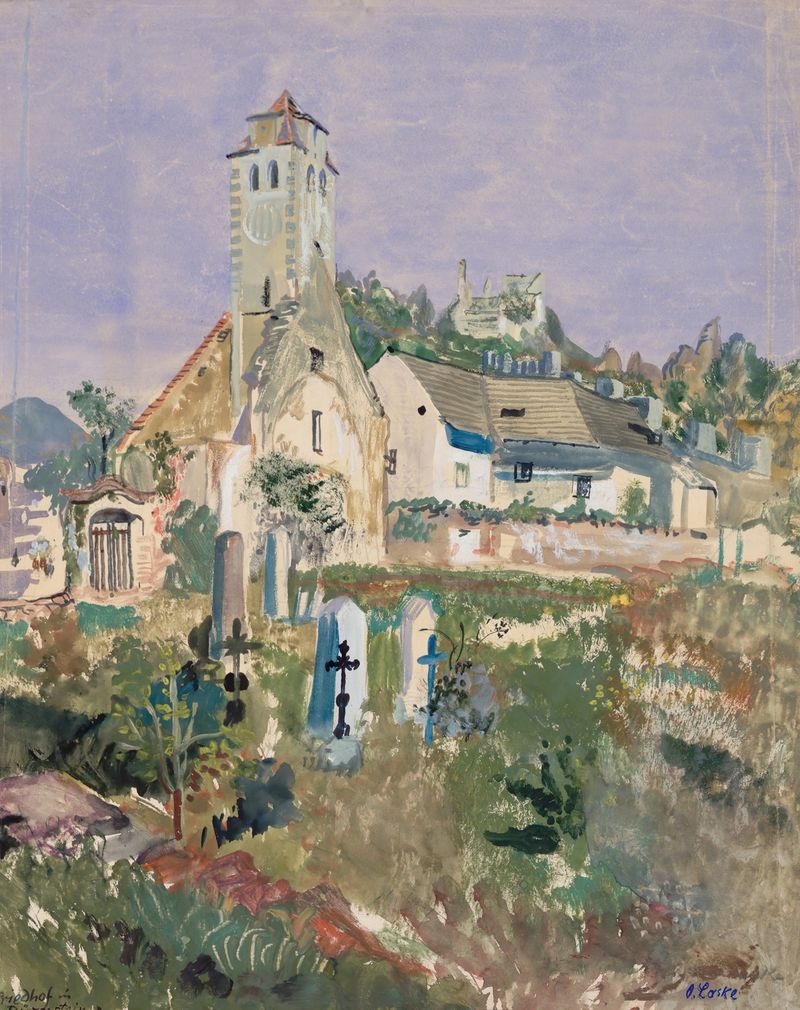
Friedhof in Dürnstein
Oskar Laske

Pratermotiv an der alten Donau
Oskar Laske

Frühjahrsnebel in Niederösterreich
Oskar Laske

Begräbnis des Wiener Bürgermeisters Dr. Karl Lueger
Oskar Laske

Maria Theresien-Denkmal mit Blick gegen das Burgtor
Oskar Laske
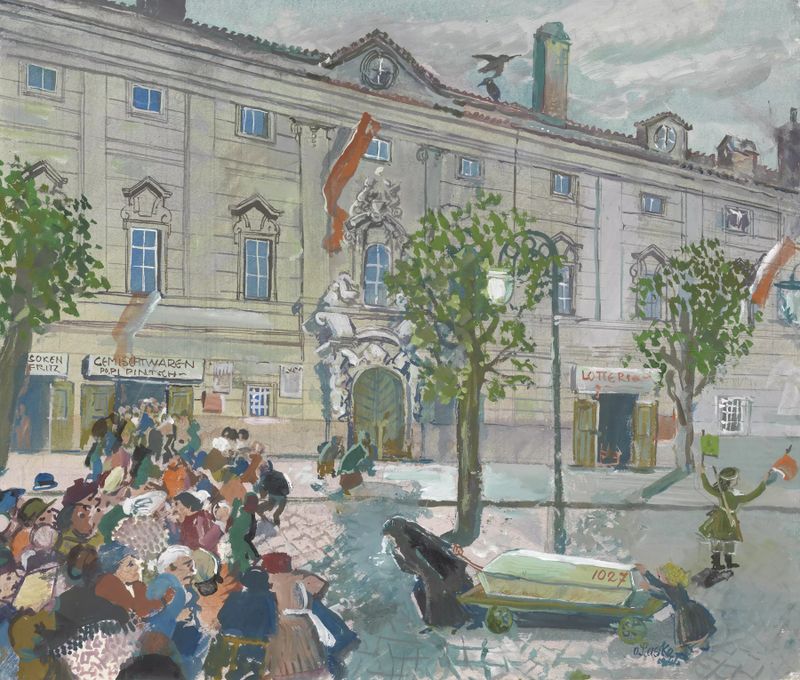
Wiener Straßenbild vom Mai 1945
Oskar Laske

Winterlandschaft in Pressbaum
Oskar Laske

Ansicht von Positano
Oskar Laske





