
XIII. Schönbrunn (Tiergarten) — History & Facts
When did color learn to lie? In the brushstrokes of XIII. Schönbrunn (Tiergarten), we find a haunting exploration of absence, where vibrant hues obscure the deeper void that lurks beneath every shade. Look to the foreground, where a lush tapestry of greens and browns invites you to step into a tranquil garden scene. The masterful application of paint creates a rich texture that seems to pulse with life, yet upon closer examination, the colors clash with an unsettling harmony.
Notice how the light dances through the foliage, casting playful shadows that simultaneously conceal and reveal the emptiness of the space, as if whispering secrets of nostalgia and loss. The juxtaposition of warmth and chill draws attention to the delicate balance between beauty and melancholy. Tiny figures appear, dwarfed by their surroundings, suggesting a sense of isolation amid the apparent liveliness. The vibrant colors hint at joy and serenity, yet there’s an undercurrent of restlessness, leaving the viewer to ponder the silence that permeates the scene—a silence that amplifies the emotional detachment of the figures within it. In 1949, Oskar Laske painted this work during a time of rebuilding in post-war Europe, when artists grappled with the remnants of conflict and the search for meaning.
Living in Vienna, he was part of a movement that sought to redefine beauty in a world scarred by trauma. This painting reflects that struggle, combining vibrant expression with an essential, haunting void—an echo of the era's complex relationship with hope and despair.
More Artworks by Oskar Laske
Browse all →
Faschingsumzug am Stock im Eisen Platz
Oskar Laske

Schönbrunn (Winter)
Oskar Laske
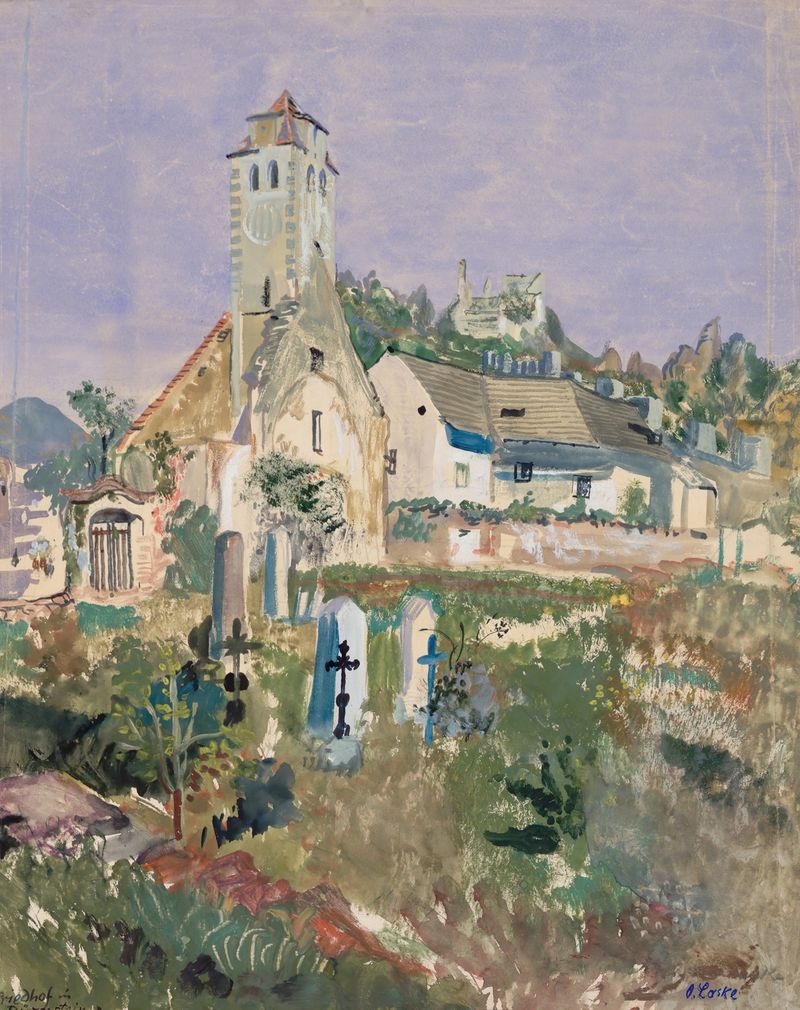
Friedhof in Dürnstein
Oskar Laske

Pratermotiv an der alten Donau
Oskar Laske

Frühjahrsnebel in Niederösterreich
Oskar Laske

Begräbnis des Wiener Bürgermeisters Dr. Karl Lueger
Oskar Laske

Maria Theresien-Denkmal mit Blick gegen das Burgtor
Oskar Laske
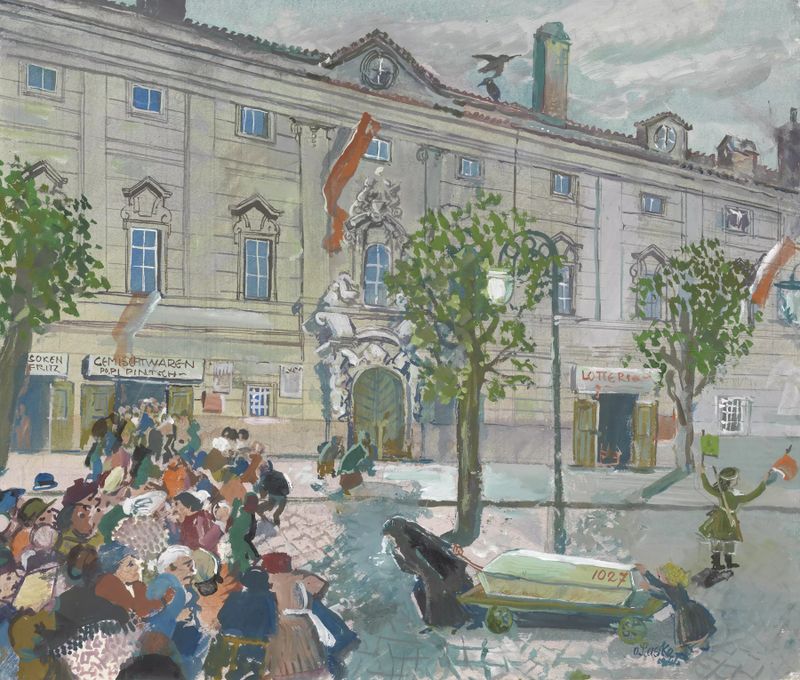
Wiener Straßenbild vom Mai 1945
Oskar Laske

Winterlandschaft in Pressbaum
Oskar Laske

Ansicht von Positano
Oskar Laske





