XIX. Heiligenstädter Straße (82-92) — History & Facts
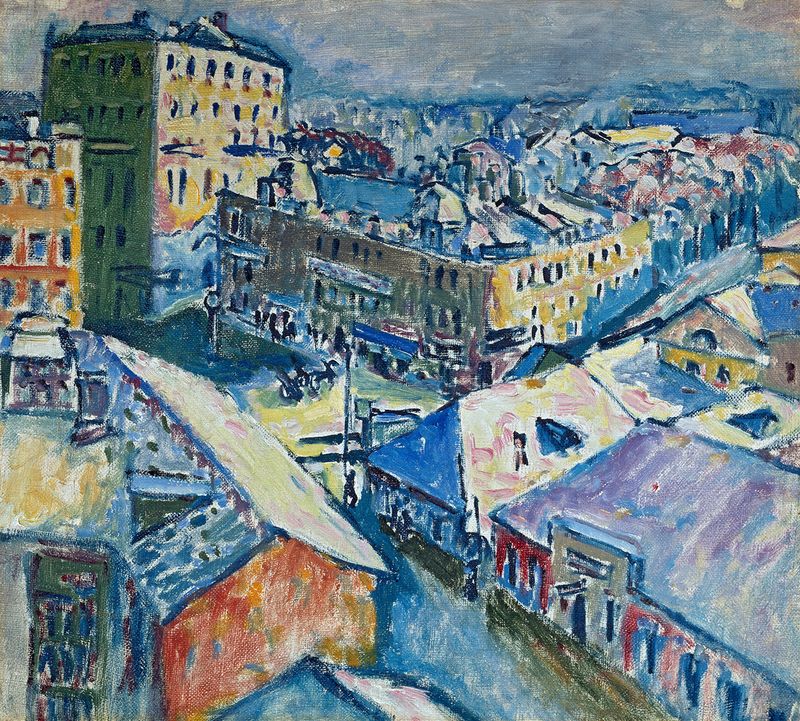
In the realm of abstraction, shadows wield tremendous power, whispering secrets of the unseen and evoking emotions that transcend the tangible world. Begin your exploration by looking to the right, where a cascade of muted hues converges in a dance of form and suggestion. Notice how deep blues and somber grays intertwine, creating a horizon that blurs the line between sky and earth. The textured strokes call to mind an urban landscape, perhaps a fleeting memory of Heiligenstädter Straße, where every brushstroke pulses with the energy of life.
The artist's technique shrouds the scene in an ethereal light, softening the edges and inviting the viewer to lose themselves in the ambiguity of shapes. As you delve deeper, consider the interplay of light and shadow, a metaphor for isolation in a world overshadowed by uncertainty. The dark areas seem to harbor a palpable tension, hinting at the stories left untold, while the lighter sections breathe a flicker of hope amidst the gloom. This duality mirrors the societal struggles of the time, evoking a sense of longing for connection amidst an overwhelming sense of solitude. In 1940, the artist created this piece during a turbulent period marked by the rise of totalitarian regimes in Europe.
Living in Vienna, Laske navigated the shifting tides of art and politics, grappling with both personal and collective disquiet. As abstraction gained momentum, he sought to capture the essence of his surroundings, transforming the chaos of his reality into a complex visual symphony that resonates even today.
More Artworks by Oskar Laske
Browse all →
Faschingsumzug am Stock im Eisen Platz
Oskar Laske

Schönbrunn (Winter)
Oskar Laske
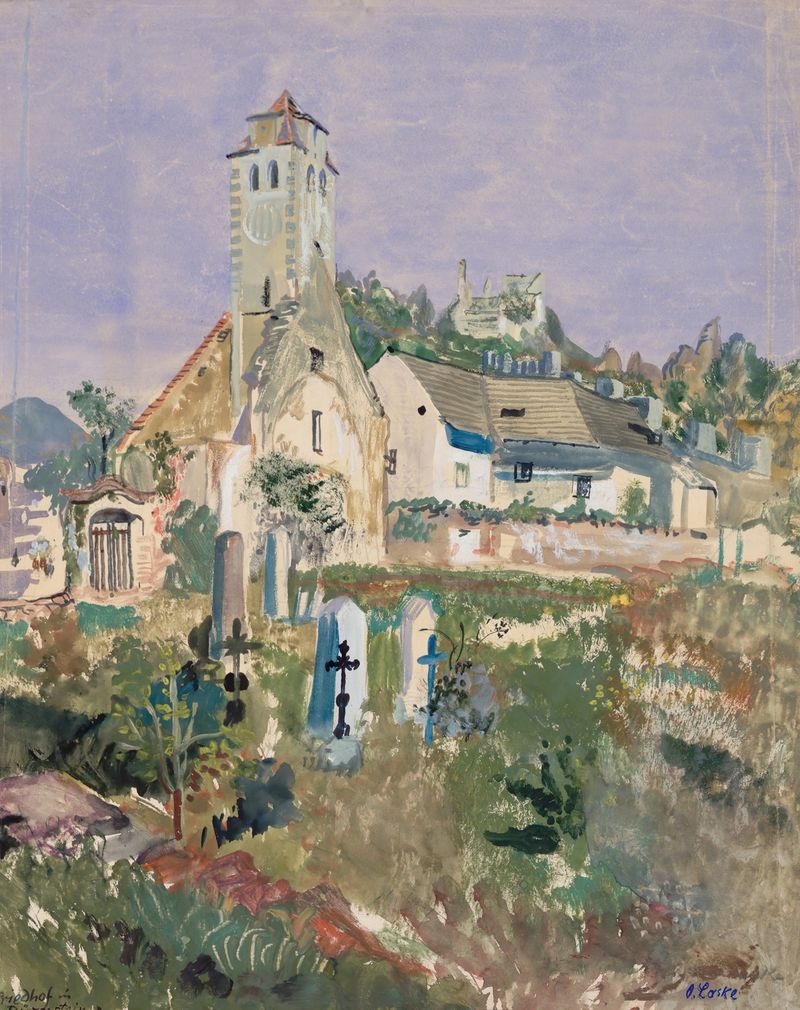
Friedhof in Dürnstein
Oskar Laske

Pratermotiv an der alten Donau
Oskar Laske

Frühjahrsnebel in Niederösterreich
Oskar Laske

Begräbnis des Wiener Bürgermeisters Dr. Karl Lueger
Oskar Laske

Maria Theresien-Denkmal mit Blick gegen das Burgtor
Oskar Laske
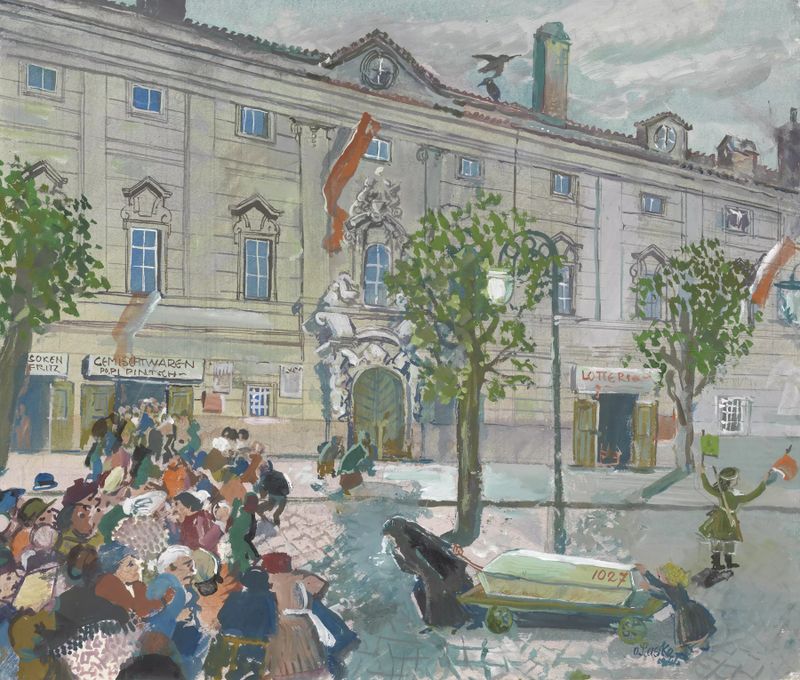
Wiener Straßenbild vom Mai 1945
Oskar Laske

Winterlandschaft in Pressbaum
Oskar Laske

Ansicht von Positano
Oskar Laske