Young Oak — History & Facts
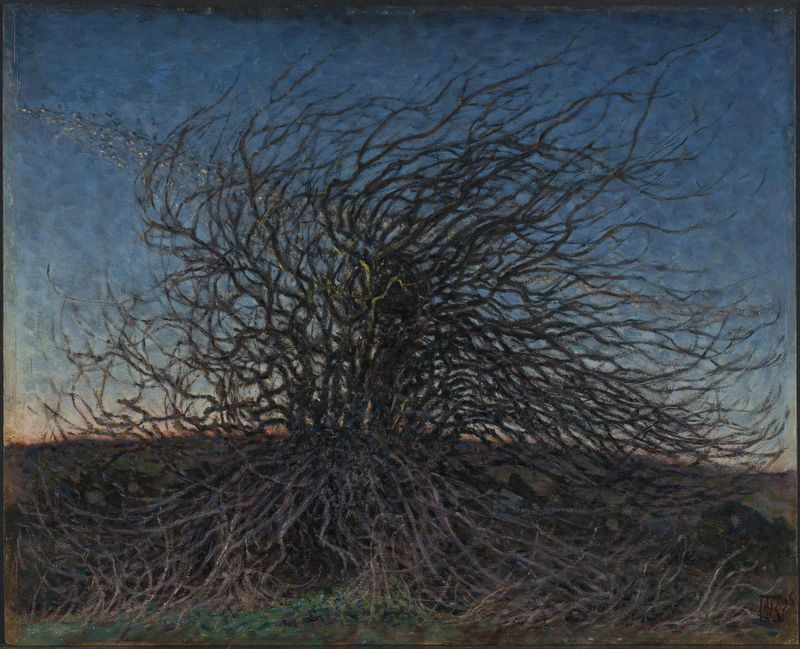
In the stillness of a solitary moment, the heart aches for what remains unsaid, revealing layers of melancholy inherent in nature. Look to the left at the towering young oak, its slender trunk reaching upwards, etched with deep grooves that whisper secrets of growth and time. Notice how the warm light filters through the delicate green leaves, casting a mosaic of shadows on the ground—a gentle reminder of the interplay between light and darkness. The soft earth tones envelop the scene, drawing the eye to the textured bark and the serene yet poignant surroundings, inviting you to linger in contemplation. The juxtaposition of the young oak against the vast, open space evokes a sense of solitude and resilience.
Each leaf seems to cradle its own story, while the quiet solitude of the setting amplifies the emotional weight of the scene. Here, nature becomes a mirror to human introspection, the simplicity of the oak revealing the complexities of life—growth, loss, and the passage of time intertwine with the silent confessions of the heart. Nils Kreuger painted Young Oak in 1902 during his time in Sweden, where he was deeply influenced by the natural landscapes around him. It was a period marked by a growing interest in impressionism, as artists sought to capture the essence of their environment.
Kreuger, often known for his atmospheric approach, reflected both the beauty and the bittersweet nature of life through his work, embracing the quiet narratives hidden within the frame.