
Young Woman — History & Facts
The first thing that catches the eye in Young Woman is the way light seems to gather on her skin and dress, as if she has been caught just turning toward us, half in shadow, half in a gentle glow. Her gaze is not fixed on the viewer but cast aside, lending her an air of inwardness or anticipation. The brushwork is loose and energetic around her dress, suggesting movement or a breeze, while her face and hands are handled with a more careful, luminous touch.
The background dissolves into darkness and leafy shapes, framing her as if she is emerging from a garden or a memory. The contrast between the creamy whites of her garment and the deep, earthy browns behind her pulls our attention insistently to her thoughtful expression. Painted around 1898, this work belongs to a moment when American artists like Abbott Handerson Thayer were blending academic portraiture with a new, searching informality. Portraits of young women in this period often served as private tributes or studies in ideal beauty, sometimes commissioned by families, sometimes painted from life in the artist’s circle.
Thayer, known for his interest in both spiritual purity and the natural world, often set his subjects against ambiguous, leafy backgrounds that blur the boundary between sitter and setting. Now in the collection of the Metropolitan Museum of Art, this painting is a quiet testament to a time when American art was searching for its own voice, poised between tradition and the modern. Look again at the hands—how carefully they are posed, how much they seem to hold back, as if the story is just about to begin.
More Artworks by Abbott Handerson Thayer
Angel
Abbott Handerson Thayer

Mount Monadnock
Abbott Handerson Thayer
Caritas
Abbott Handerson Thayer

Winter, Monadnock
Abbott Handerson Thayer
Mount Monadnock
Abbott Handerson Thayer
Mount Monadnock
Abbott Handerson Thayer
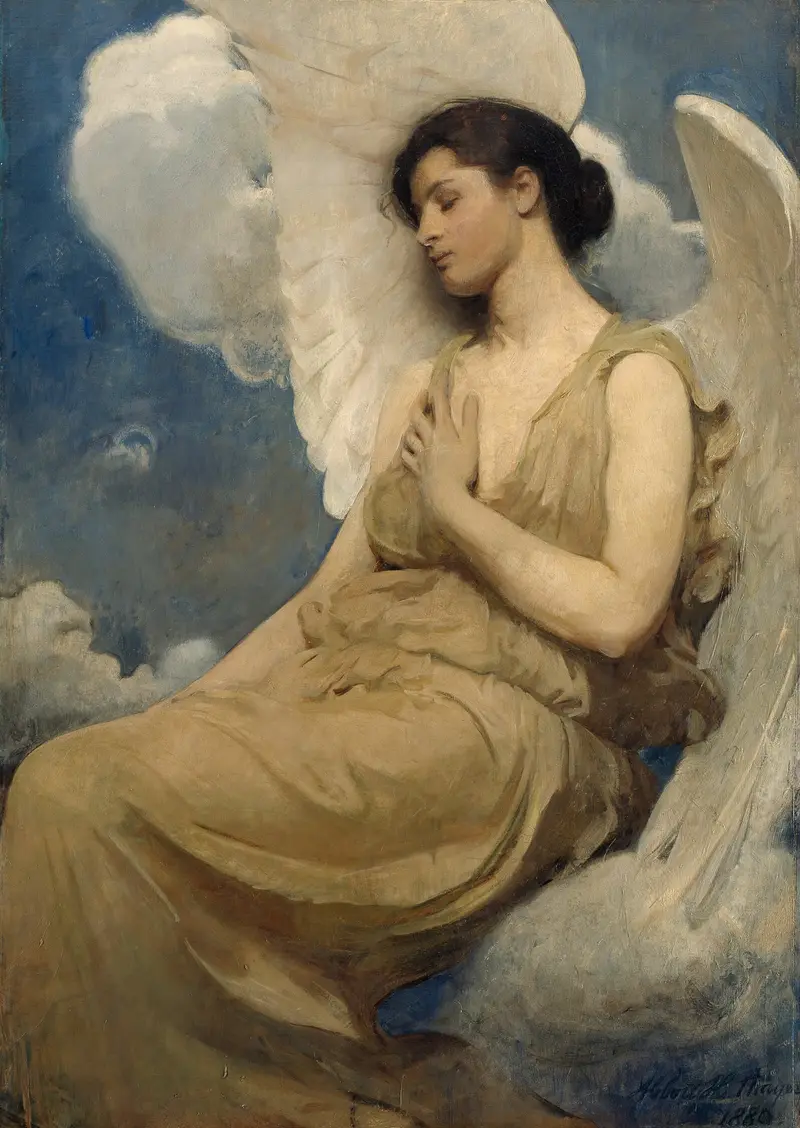
Winged Figure
Abbott Handerson Thayer
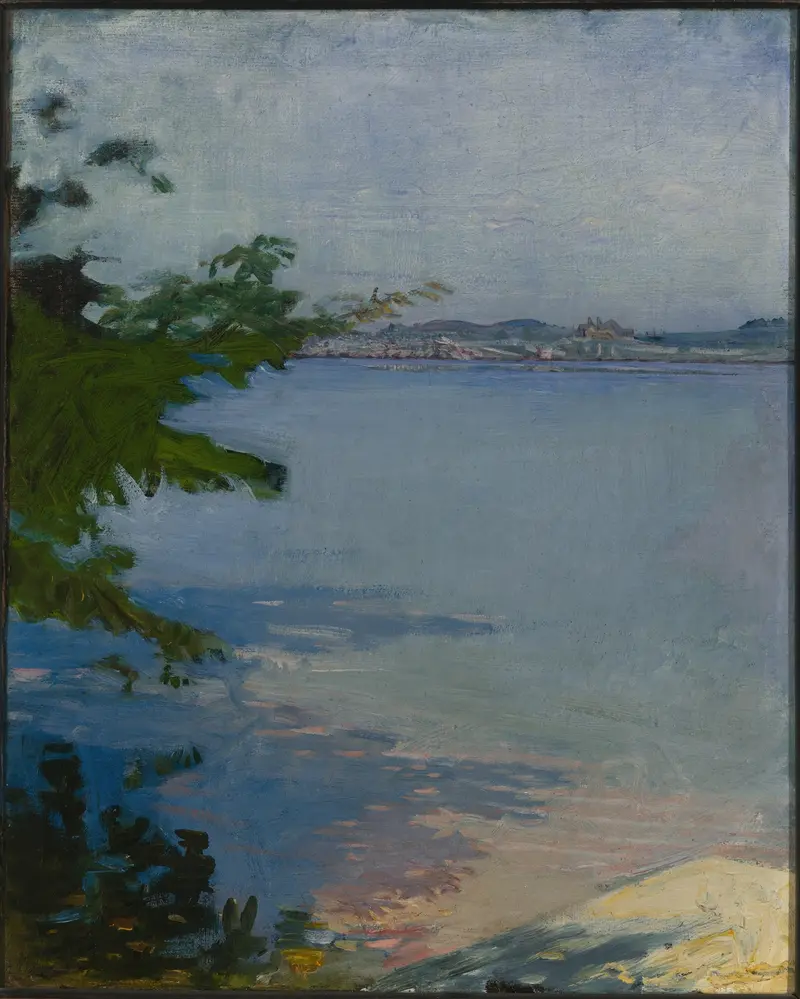
Dublin Pond, New Hampshire
Abbott Handerson Thayer
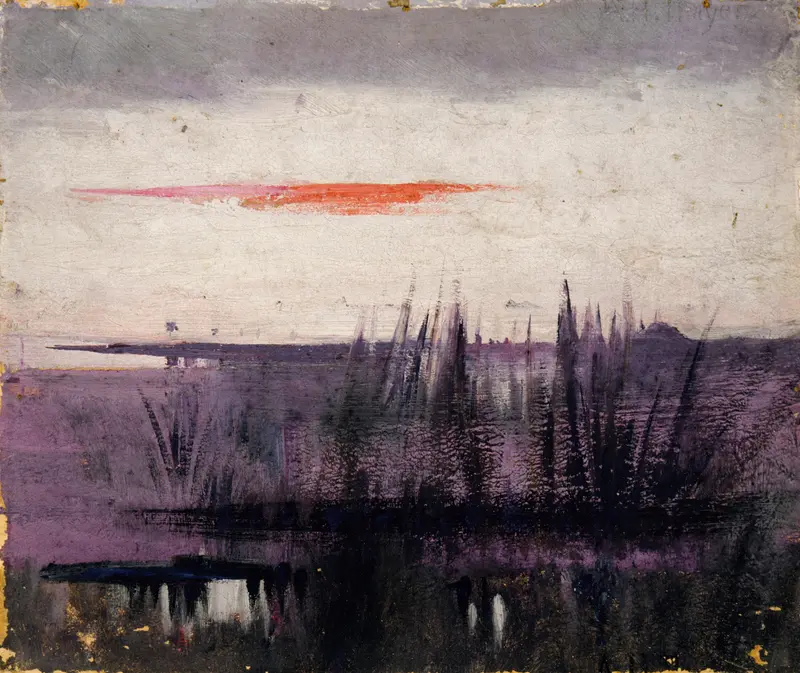
The Sky Simulated By White Flamingoes Study For Book, Concealing Coloration In The Animal Kingdom
Abbott Handerson Thayer
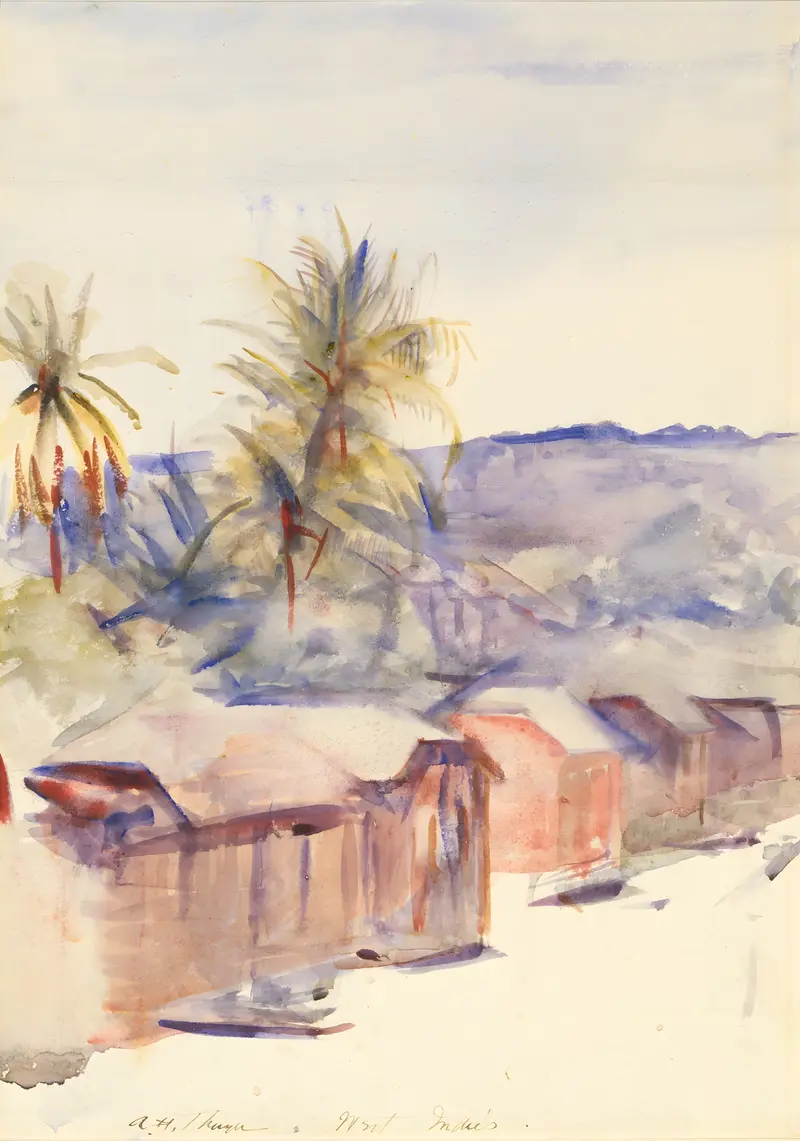
Village Street, Dominica
Abbott Handerson Thayer





