
Zuidelijk berglandschap — History & Facts
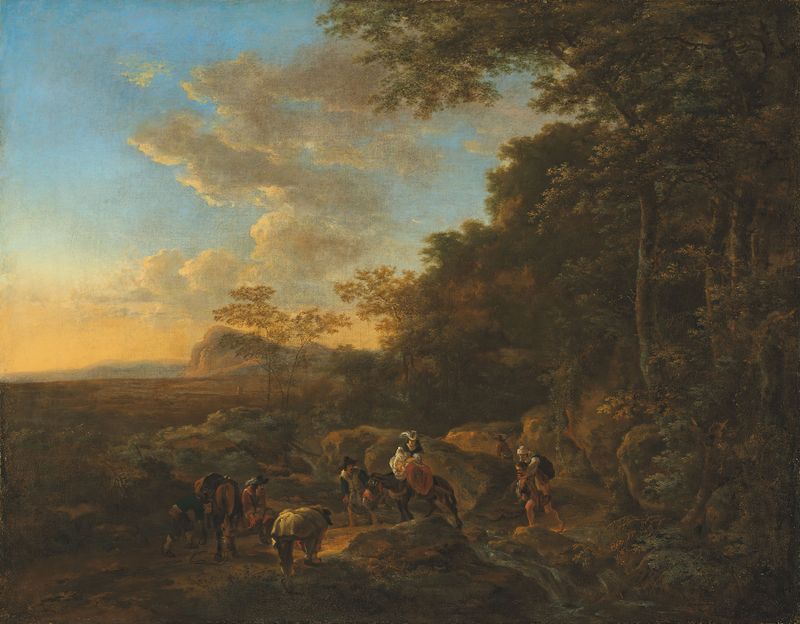
When did color learn to lie? In Zuidelijk berglandschap, a serene landscape unfolds, inviting viewers to reflect on the hidden narratives within its hues and forms. Look to the foreground, where a gentle river snakes through the verdant valley, mirroring the vibrant greens and deep blues of the surrounding hills. Notice how the light dances across the water’s surface, creating a shimmering reflection that blurs the line between reality and illusion. The clouds above, brushed in soft grays and whites, seem to cradle the distant peaks, adding depth and contrast to the peaceful scene.
The composition draws the eye from the tranquil water to the lofty mountains in the background, inviting contemplation. Beyond its serene beauty, the painting encapsulates an interplay of nature and human presence. The lone figure on the riverbank engages in an act of quiet introspection, hinting at themes of solitude and connection with the world. Flashes of sunlight breaking through the clouds suggest transient moments of clarity amidst uncertainty, while the rugged terrain contrasts with the smooth water, reflecting the tension between chaos and calm.
Such details breathe life into the landscape, offering glimpses into the emotional landscape of the human experience. Jan Both created this work during the golden age of Dutch landscape painting, between 1628 and 1652. Living in Italy for part of his career, he was deeply influenced by the luminous skies and dramatic terrains of the south. This painting reflects both his mastery of light and shadow as well as the growing interest in landscapes that not only depicted nature but also conveyed personal and collective emotions in an evolving art world.
More Artworks by Jan Both
Browse all →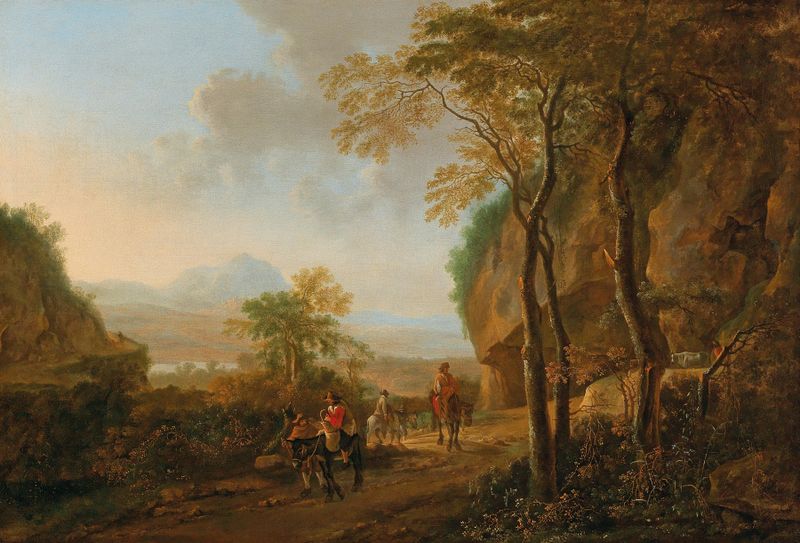
An Italianate landscape with travellers
Jan Both
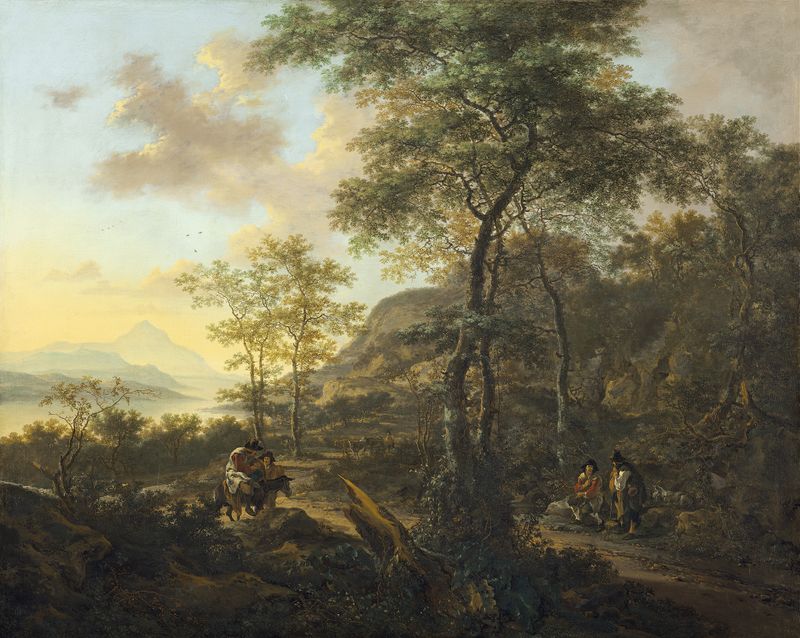
An Italianate Evening Landscape
Jan Both
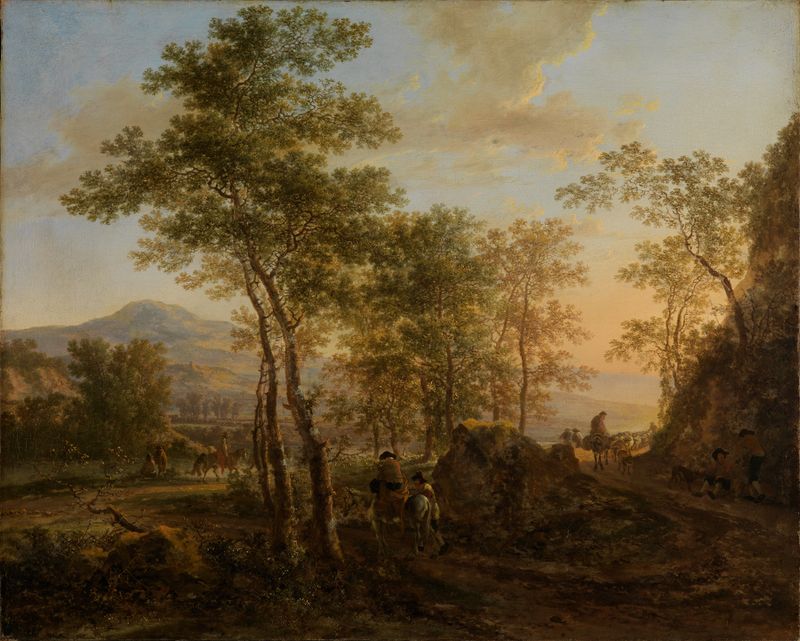
Italienische Landschaft am Abend
Jan Both
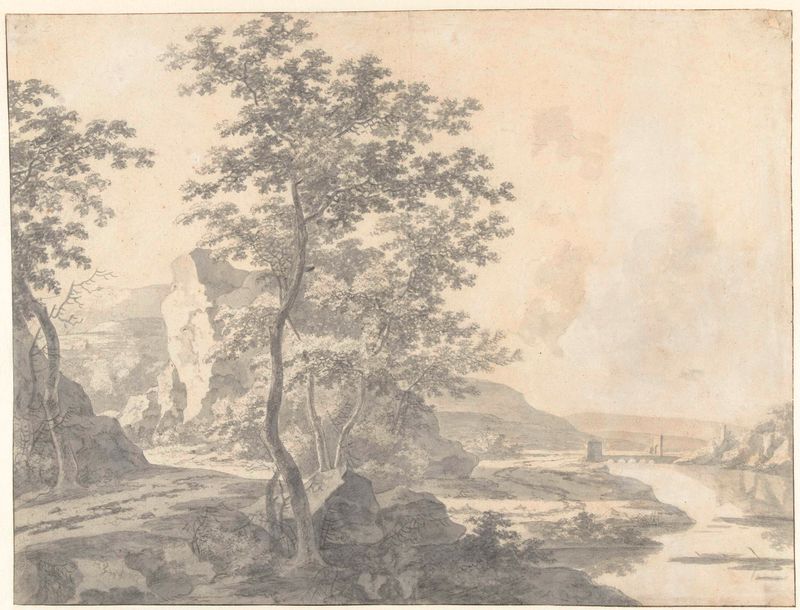
Italiaans landschap
Jan Both
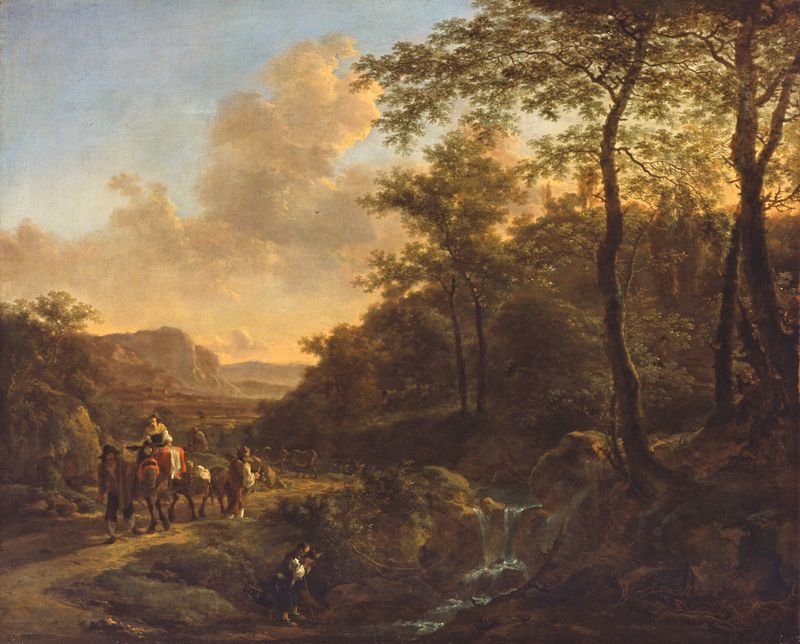
Scene of the Roman Campagna
Jan Both
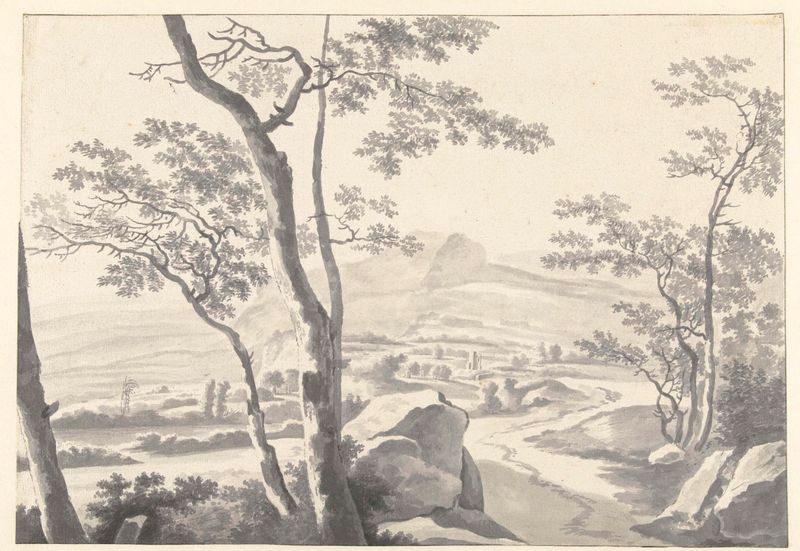
Landschap
Jan Both
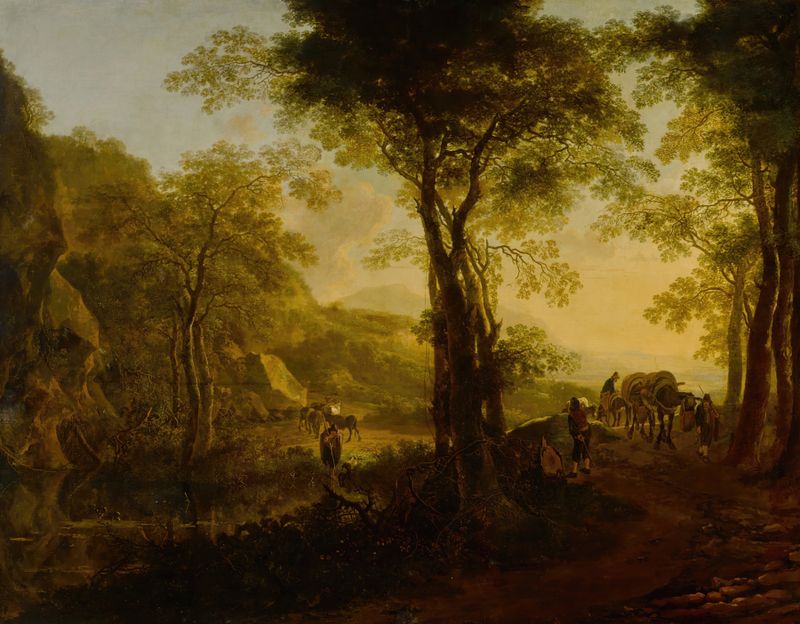
Italianate landscape at sunset, with travelers on a country road
Jan Both
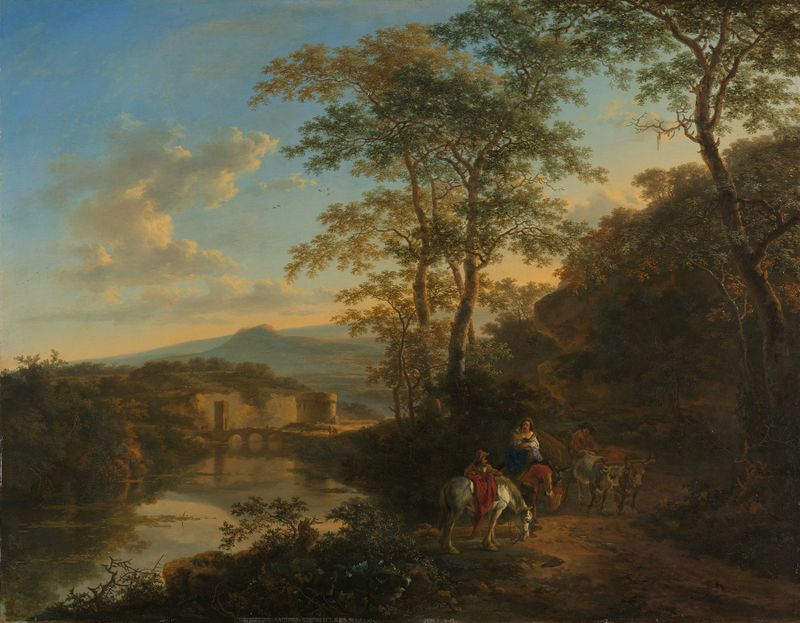
Italian Landscape with the Ponte Lucano over the Aniene River
Jan Both
A wooded landscape with travellers crossing a ford
Jan Both

Italian Landscape
Jan Both





