
009 — History & Facts
The first thing that seizes the eye in 009 by August Macke is the way the landscape seems to tilt and shimmer, as if the earth itself is caught in a moment of transformation. The hills and fields are fractured into translucent panes of color, each one bleeding softly into the next—yellows, greens, and violets arranged like shards of stained glass. The road angles forward, drawing the viewer into the scene, while two pale structures stand at a crossroads, their geometry echoing the angular forms of the hills behind.
The brushwork is loose but deliberate, suggesting a world both familiar and newly invented, where the boundaries between objects are less important than the play of light and color across the surface. Painted in 1914, this work belongs to a moment when artists across Europe were reimagining the landscape, breaking it down into its elemental forms. August Macke, associated with the Expressionist and Der Blaue Reiter circles, was fascinated by the emotional power of color and the rhythms of nature. Works like this were rarely made for grand patrons; they were often painted for the artist’s own exploration, or for a small circle of collectors attuned to the new visual language.
The image comes to us via The Yorck Project’s ambitious effort to gather and preserve “10,000 Masterpieces of Painting,” a reminder that history has kept few traces of many such experiments. Look again at the painting’s fractured hills and luminous sky—the world as it might appear in the first light of invention.
More Artworks by August Macke
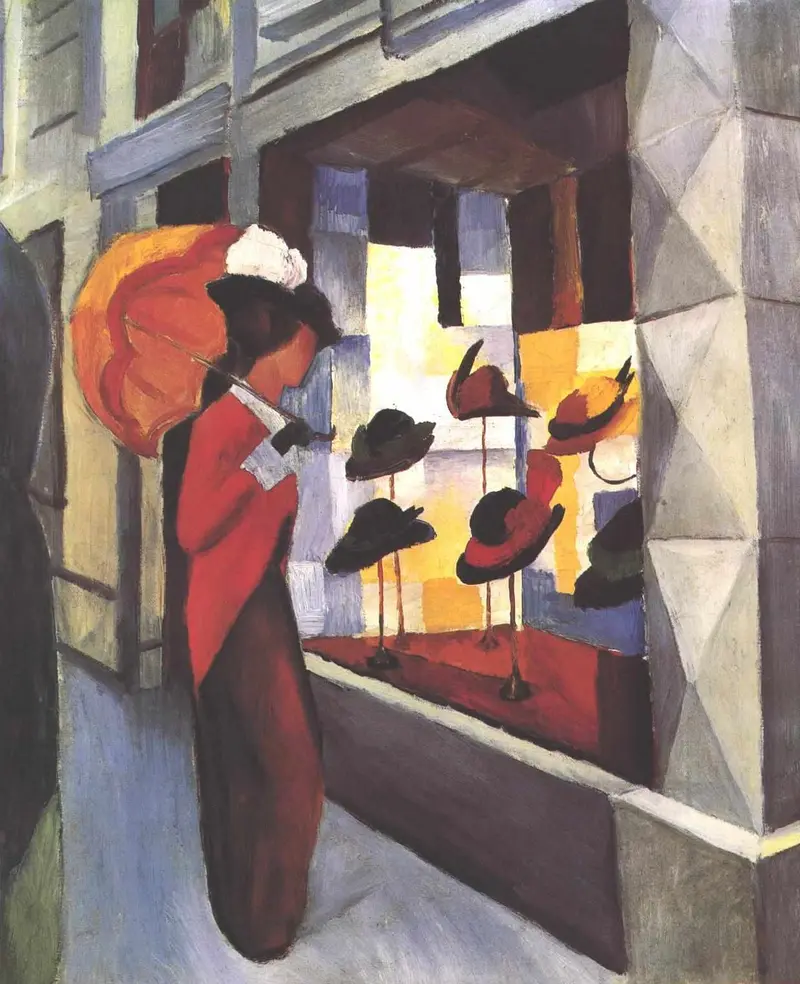
Woman with a Parasol in Front of a Hat Shop
August Macke

Street with Church in Kandern
August Macke
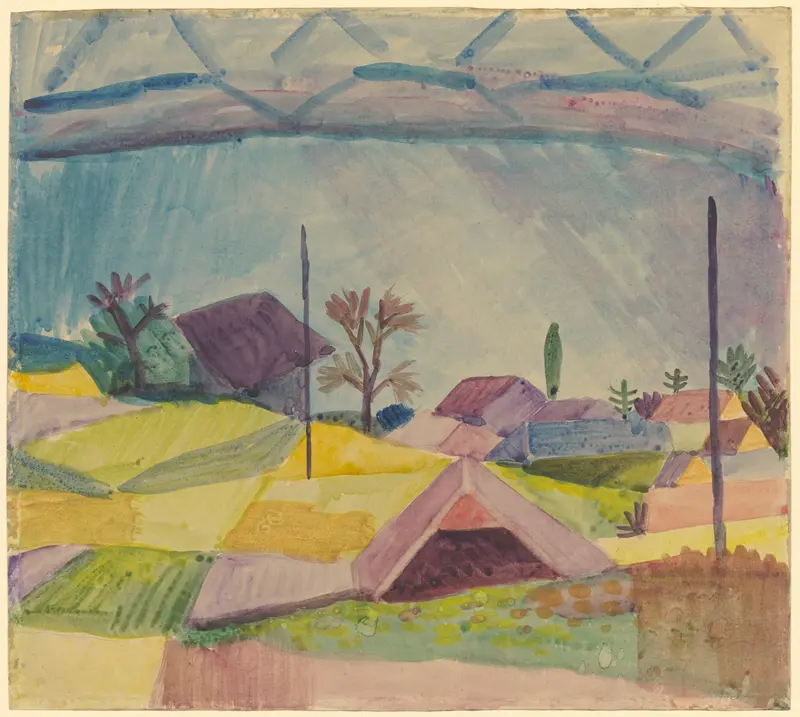
View of Hilterfingen
August Macke

Paar im Nachen
August Macke
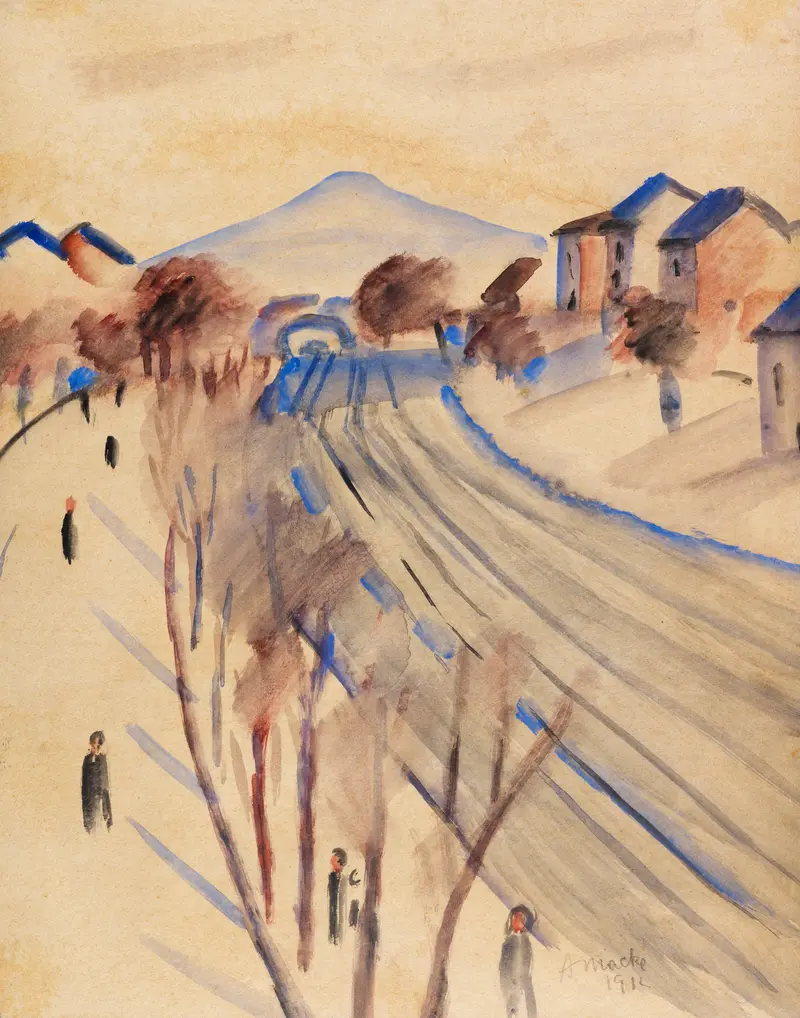
Ölberg mit Bahngleisen II
August Macke
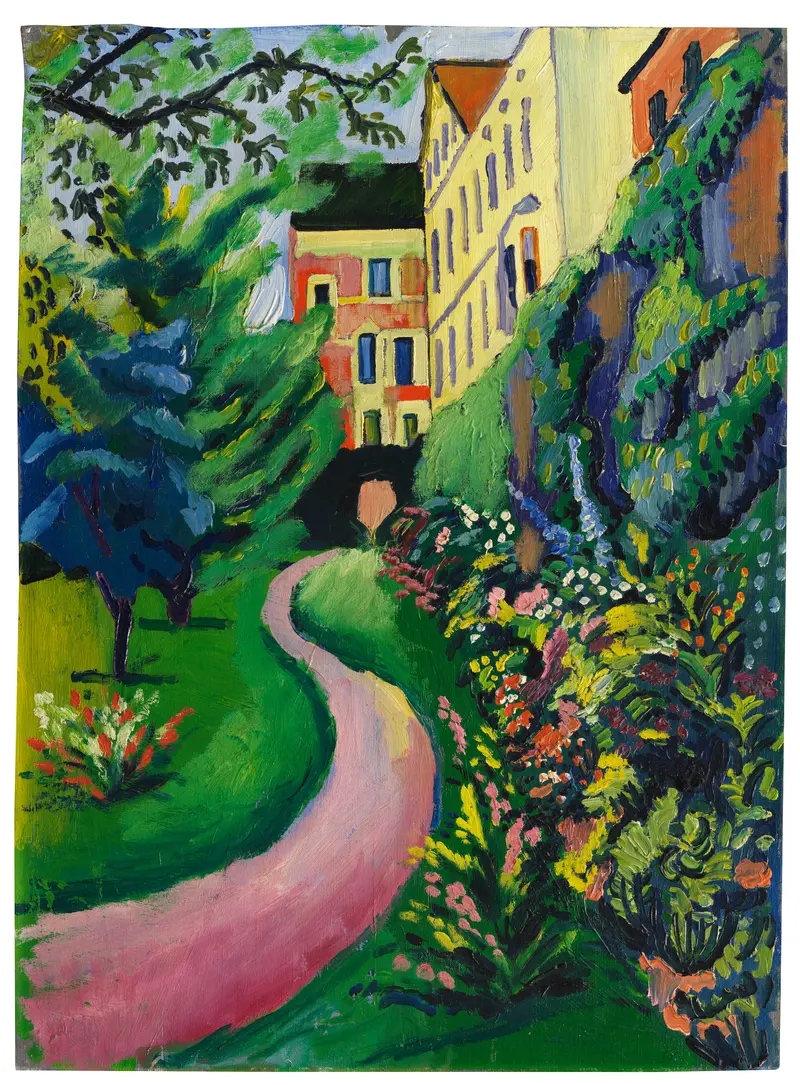
Unser Garten mit blühenden Rabatten
August Macke
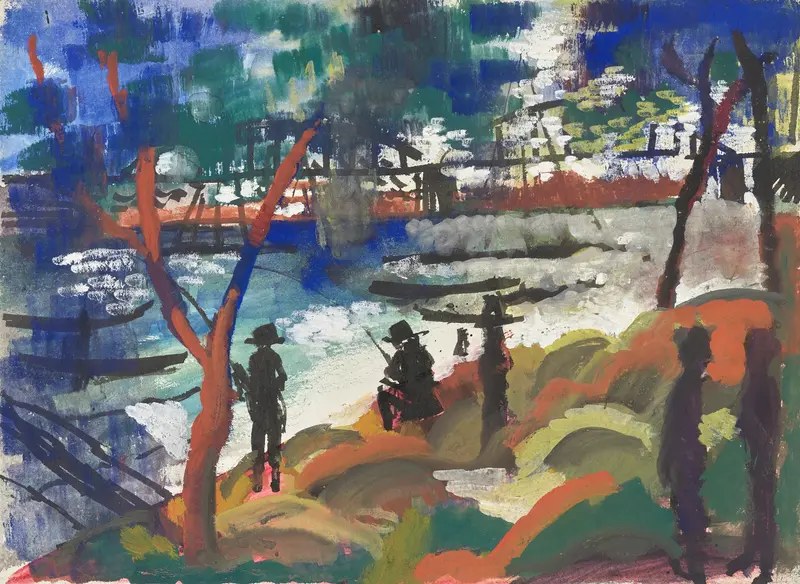
Angler am Fluss
August Macke
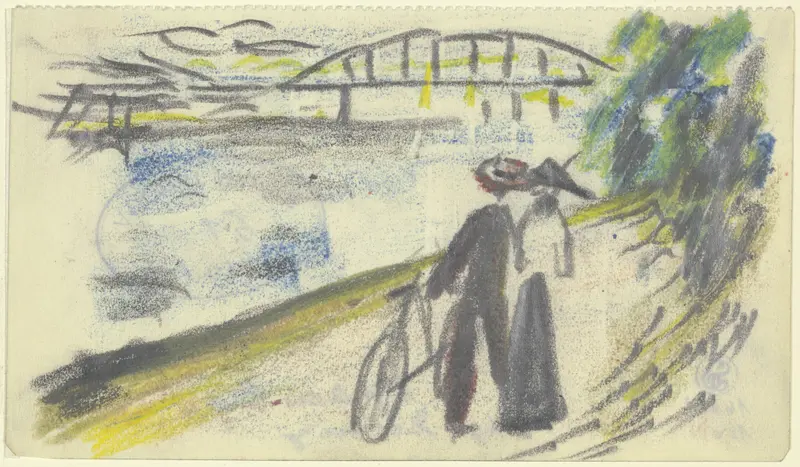
Path at the Rhine
August Macke
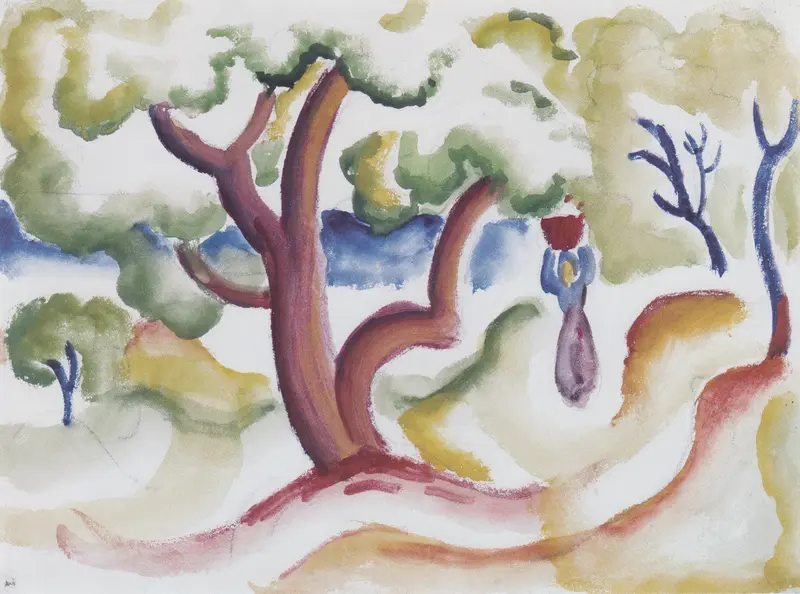
Frau mit Krug unter Bäumen
August Macke
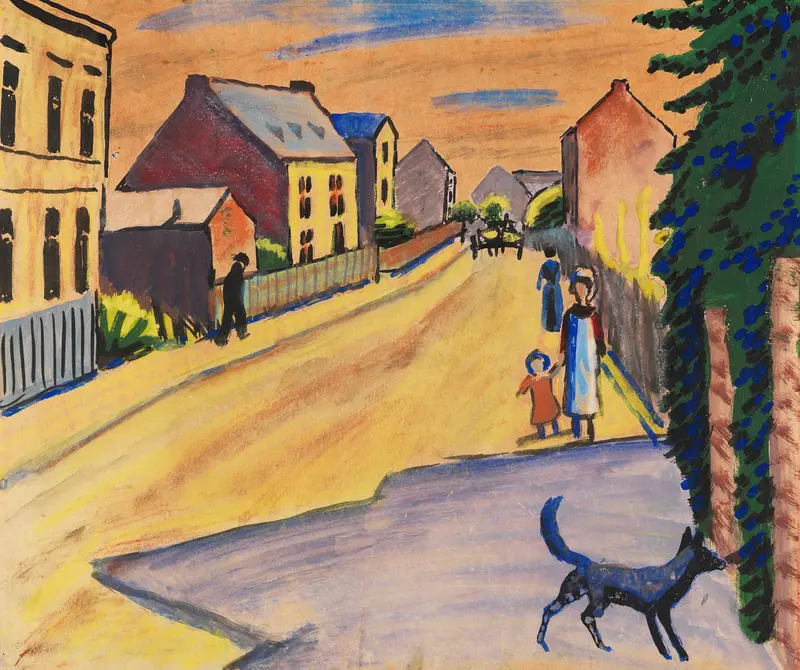
Sonnige Straße mit Hund
August Macke
More Landscape Art

The Starry Night
Vincent van Gogh

View of Delft
Johannes Vermeer

Water Lilies
Claude Monet

The Grand Canal, Venice, looking north-west from the Ca' Corner to the Ca' Contarini degli Scrigni, with the campanile of Santa Maria della Carità
Canaletto

Windsor Castle
Canaletto

The Grand Canal looking North-East from the Palazzo Dolfin-Manin to the Rialto Bridge
Canaletto