
A Bridge In Venice — History & Facts
Could beauty survive in a century of chaos? This question lingers as you gaze upon the world captured within the canvas, a vibrant hymn to the delicate balance between serenity and turmoil. Focus first on the shimmering bridge, the central artery connecting two sides of a bustling scene. Prendergast employs a kaleidoscope of color—bright yellows, deep blues, and soft pinks—to evoke life and movement. Notice how the figures, painted in loose, expressive brushstrokes, seem to dance across the surface, their carefree gestures almost drowning in the riot of hues that surround them.
The play of light creates an inviting glow, inviting the viewer to step closer and lose themselves in the moment. Yet, beneath this exuberant façade, veiled tensions emerge. The bridge itself, a symbol of connection, stands as a stark contrast to the looming shadows in the corners of the canvas, hinting at the madness brewing in the world beyond this idyllic setting. The figures appear almost oblivious, suggesting a dissonance between the personal joy on display and the societal unrest that is beginning to creep into the late 19th century.
This juxtaposition reflects on the fragility of beauty amid encroaching chaos, raising questions about what is truly enduring. In 1899, Maurice Prendergast was immersed in the vibrant art scene of Boston, drawing inspiration from the Impressionists and their celebration of urban life. The world was on the brink of modern upheaval, with technological advancements and shifting societal norms. It was during this tumultuous period that Prendergast painted this bridge, capturing a fleeting moment of joy while hinting at the underlying madness waiting just beyond the vibrant scenes of leisure.
More Artworks by Maurice Prendergast
Browse all →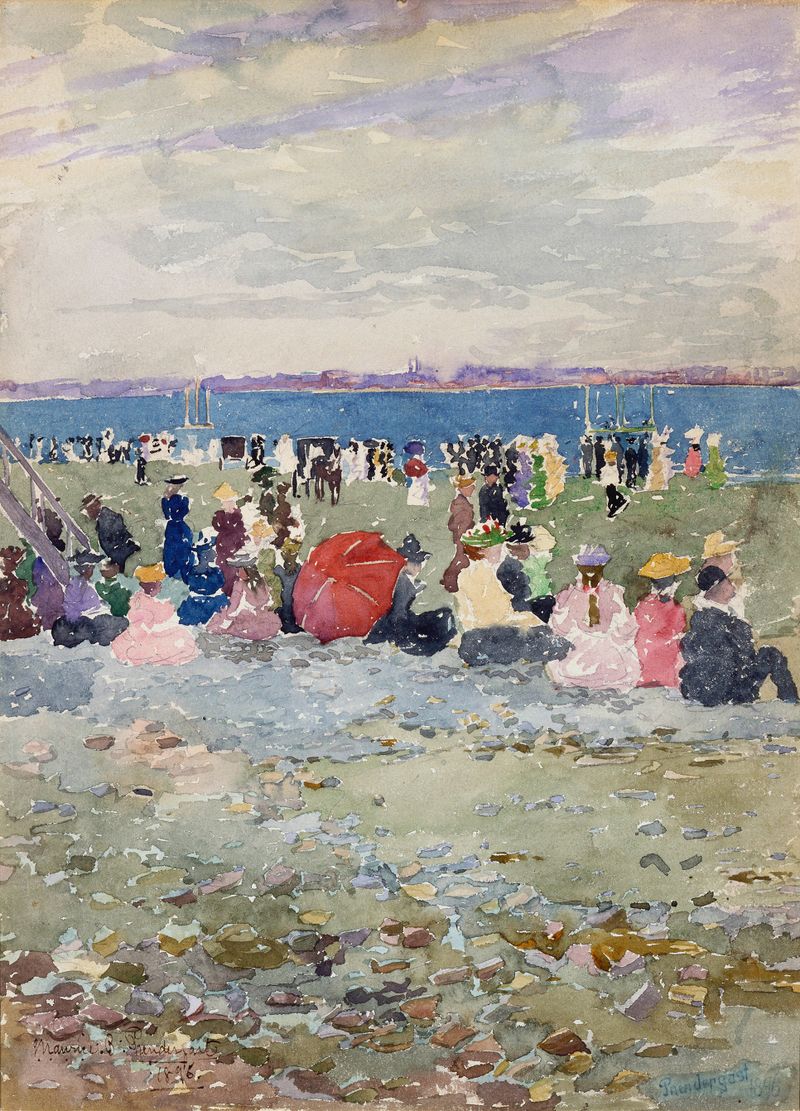
Revere Beach
Maurice Prendergast
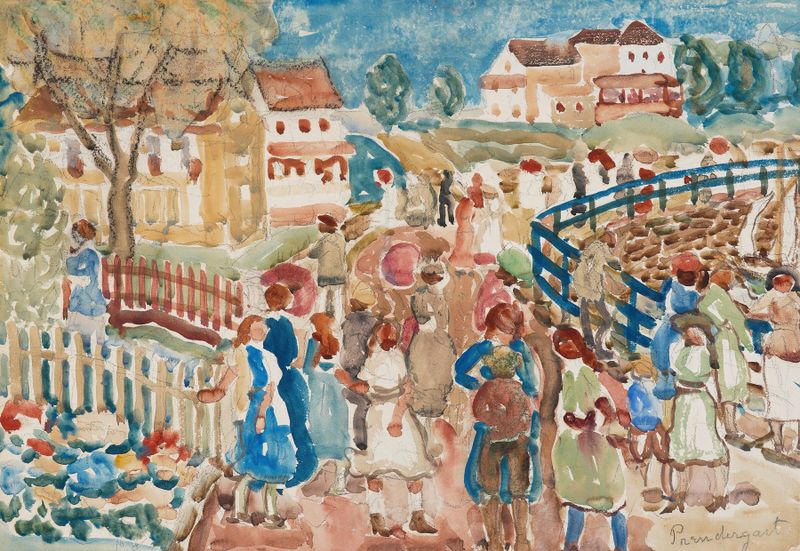
Country Lane, Rockport
Maurice Prendergast
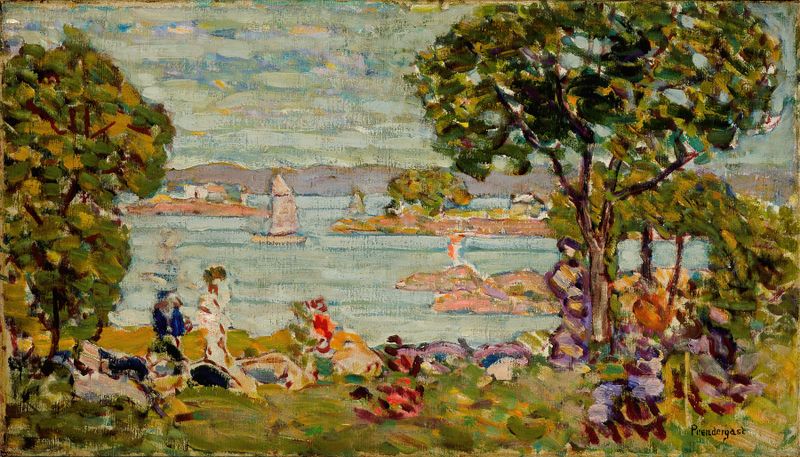
Cove, Maine
Maurice Prendergast
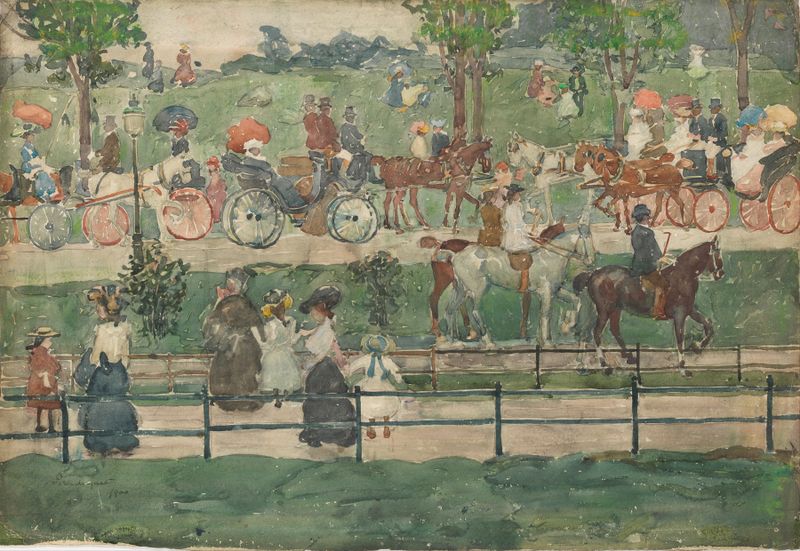
Central Park
Maurice Prendergast
Snowy Day, Boston
Maurice Prendergast
Excursionists, Nahant
Maurice Prendergast
Figures on a Beach
Maurice Prendergast
Park Street Church, Boston
Maurice Prendergast
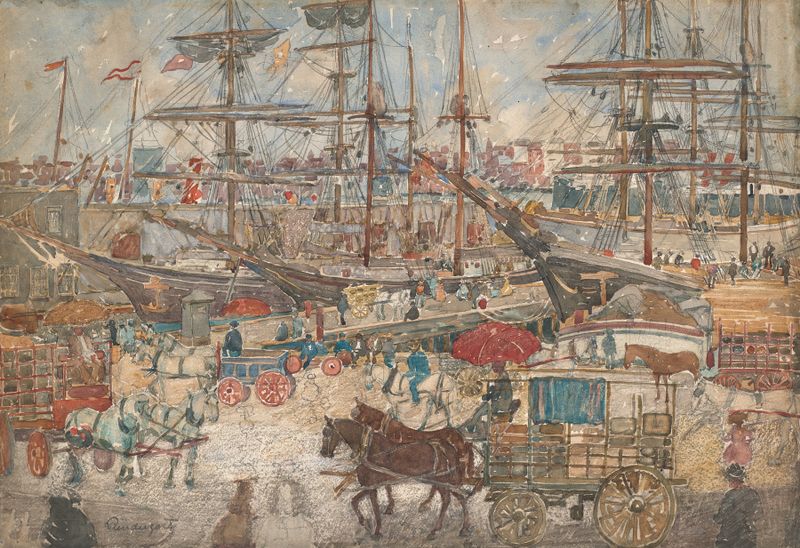
Docks,East Boston
Maurice Prendergast
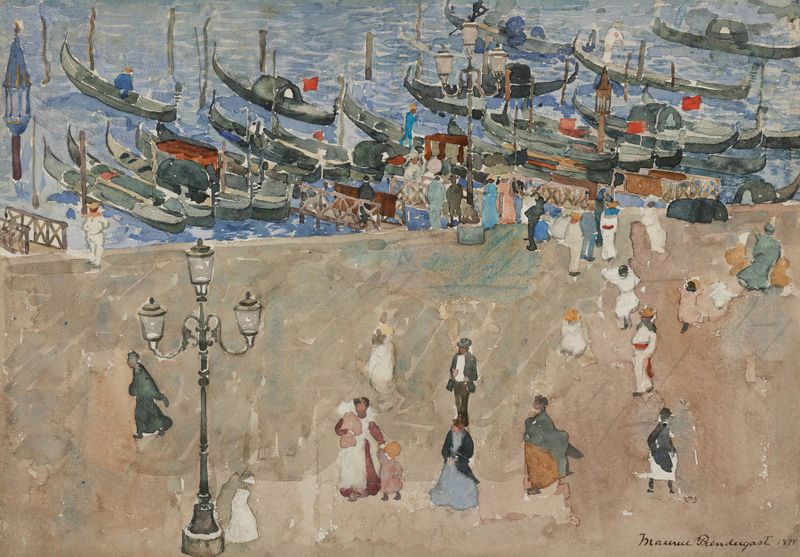
Gray Day, Venice
Maurice Prendergast





