
A capriccio of partially ruined baths with people swimming — History & Facts
What if silence could speak through light? In A capriccio of partially ruined baths with people swimming, memory whispers from every brushstroke, inviting us to reflect on the passage of time and the remnants of joy amidst decay. Look to the center where the interplay of light and shadow dances across the water's surface. The figures of swimmers, both vibrant and ghostly, glide through the azure, their movements almost ethereal against the backdrop of the ancient ruins. Notice how the warm hues of sunlight irradiate the scene, fostering a sense of nostalgia while hinting at a bygone era.
Joli’s meticulous attention to architectural details draws the eye to the crumbling arches, framing the playful interactions below. Delve deeper into the contrasts woven within the painting: the vibrancy of the swimmers standing in stark relief to the weathered stone, symbolizing resilience against the relentless passage of time. The juxtaposition of leisure and ruin invites contemplation on the fragility of enjoyment, as laughter echoes through remnants of a lost splendor. Each figure becomes a vessel of memory, reflecting not just the joy of the moment but the weight of history that envelops them. Antonio Joli painted this piece in 1758, during a time when he was immersed in the flourishing artistic culture of 18th-century Italy.
Living in Venice, he was influenced by both the Rococo style and the emerging Neoclassical movement. The world around him buzzed with intellectual exploration, yet his works often evoked a sense of wistfulness, capturing the harmonious balance between beauty and decay.
More Artworks by Antonio Joli
Browse all →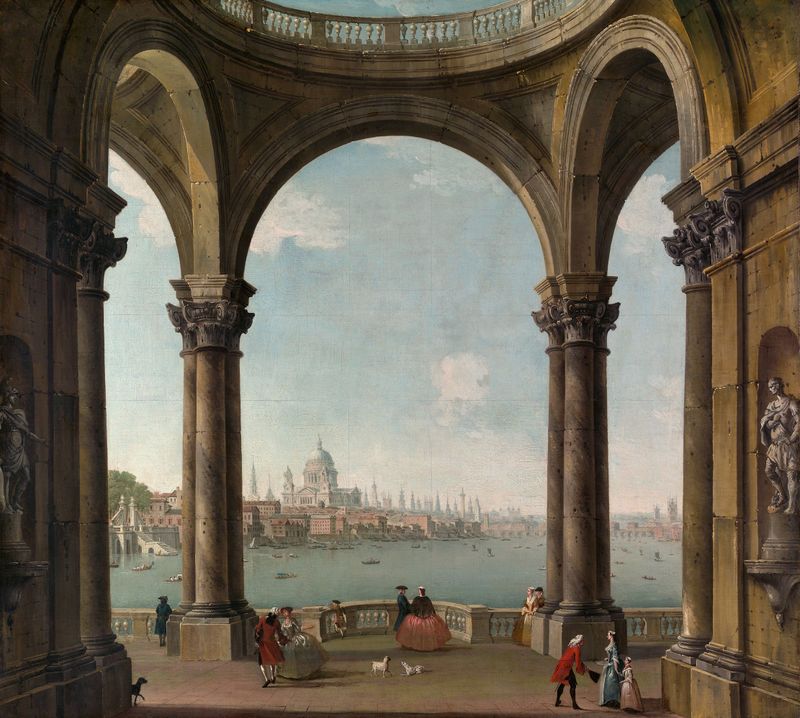
Capriccio with St. Paul’s and Old London Bridge
Antonio Joli
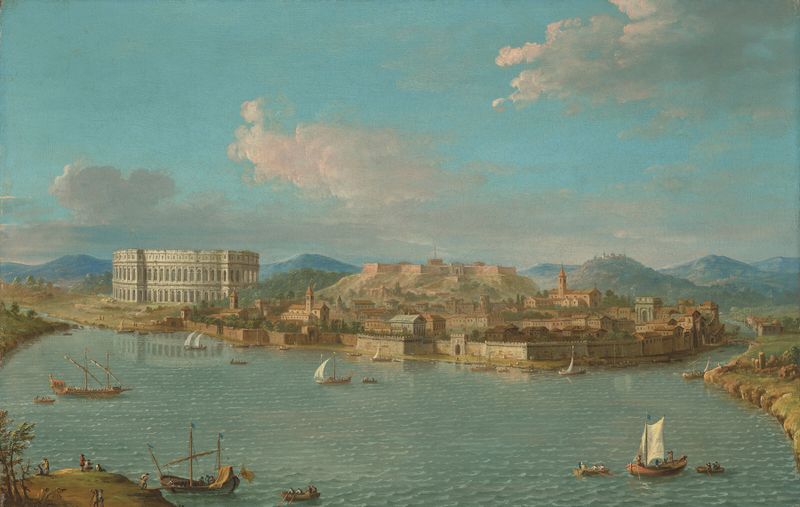
Pula, with the Pula Arena
Antonio Joli
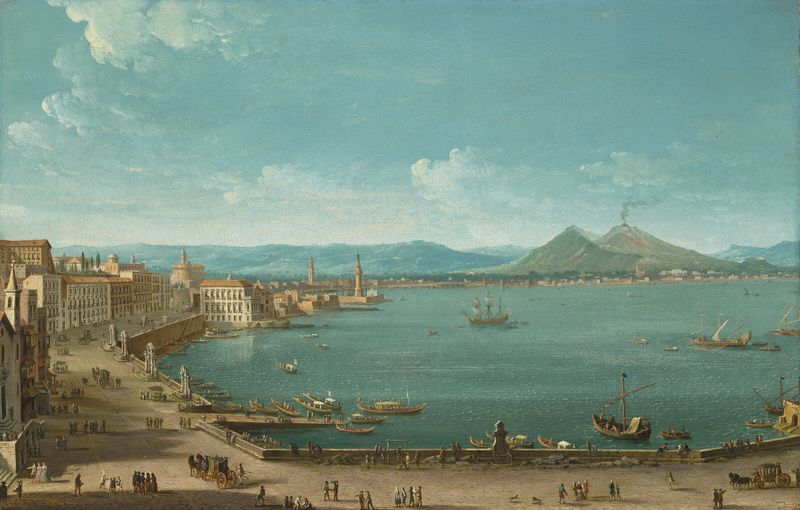
Naples with the Bay of Santa Lucia and Vesuvius beyond
Antonio Joli
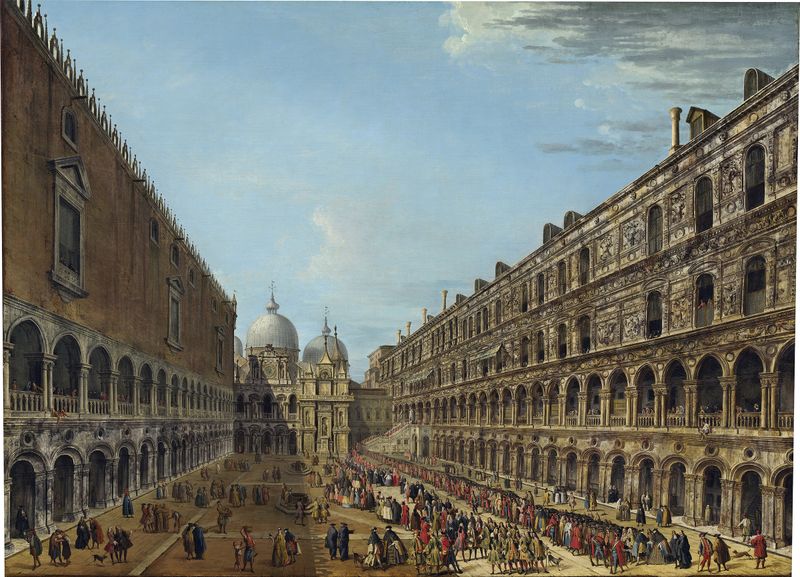
Procession in the Courtyard of the Ducal Palace,Venice
Antonio Joli
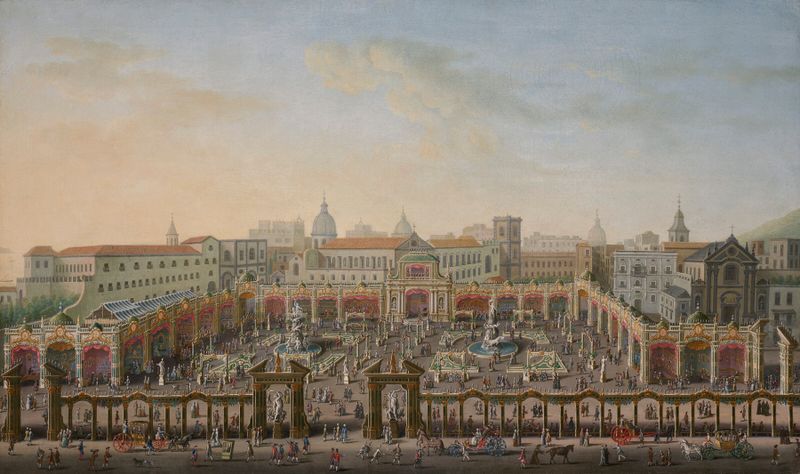
Naples, Piazza Trieste e Trento with a fair viewed from a balcony of the Palazzo Reale
Antonio Joli
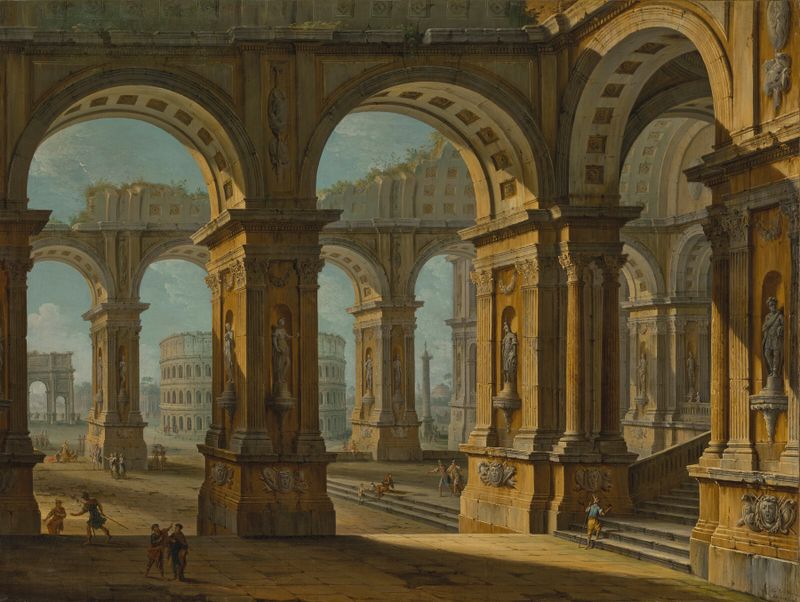
A capriccio of Rome with the Colusseum and Arch of Titus
Antonio Joli
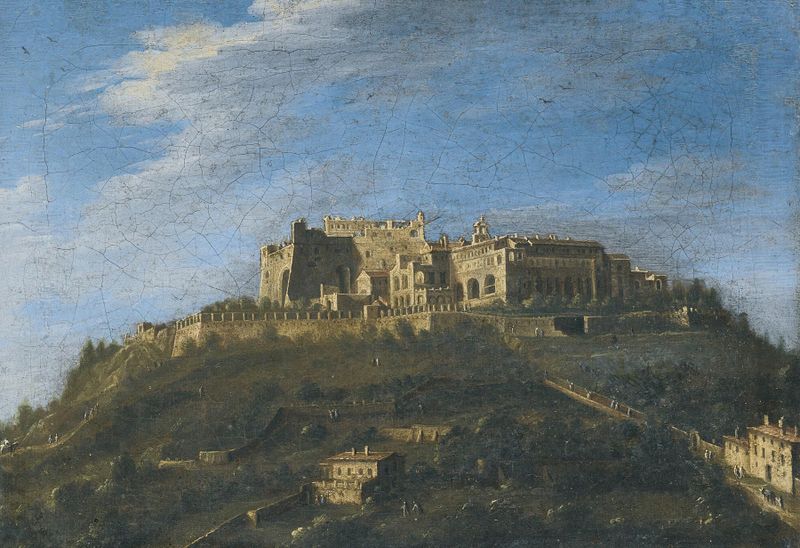
Monastery Di San Martino, Naples
Antonio Joli
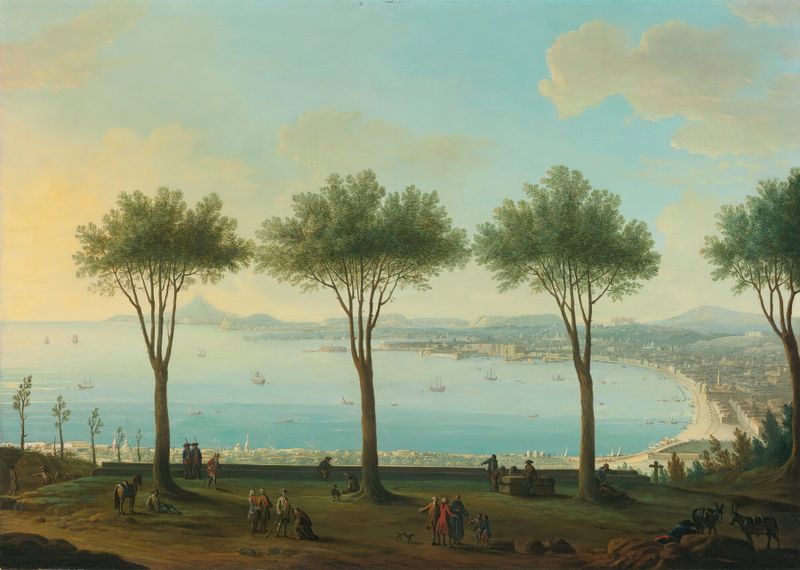
View Of The Bay Of Naples From The South (Possibly Poggioreale), Looking North With A King Of The Bourbon Family, Possibly Ferdinand Iv, In The Foreground
Antonio Joli
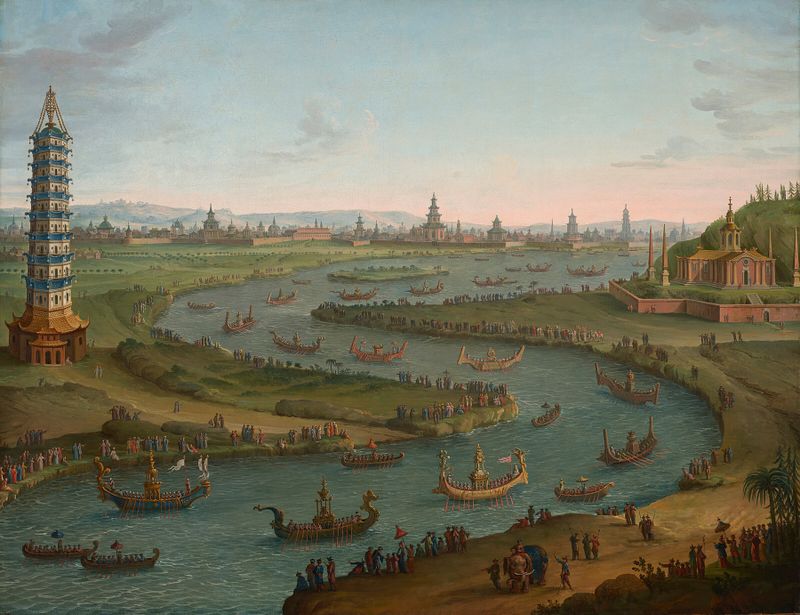
A capriccio with the French Ambassador approaching the King of Siam’s Palace in a state barge, in October 1685
Antonio Joli
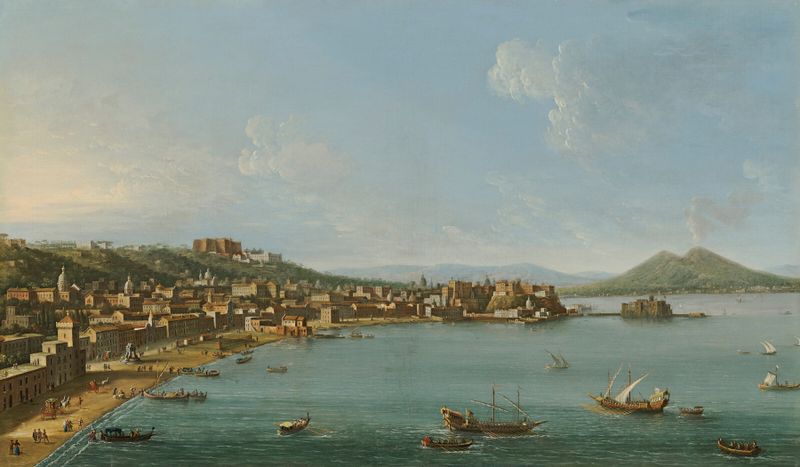
Naples, a view of the Riviera di Chiaia, from the north-west, with Vesuvius beyond
Antonio Joli





