
A Castle on a River — History & Facts
Who listens when art speaks of silence? In A Castle on a River, the quietude of the landscape invites introspection, suggesting that emptiness can hold as much weight as the most vibrant scene. Focus on the serene waters that flow languidly across the canvas. The gentle reflections of the castle upon the river create a mirror-like quality that draws the eye to the center. Notice how the soft palette of greens and blues, punctuated by delicate strokes of white, evokes a sense of calmness.
The castle, both grandeur and isolation, stands sentinel against a backdrop of fading light, its stone walls seemingly whispering tales of the past. The juxtaposition between the sturdy structure and the fluidity of the water conveys emotional tension. The castle, though formidable, is rendered almost vulnerable by its mirrored likeness, suggesting the ephemeral nature of all things. The surrounding landscape, sparse and tranquil, enhances the feeling of solitude, prompting one to reflect on the silence pervading the scene.
Here, emptiness is not void; it breathes life into the composition, urging the viewer to contemplate the spaces between. Paul Sandby created this work during a period marked by artistic exploration in the late 18th century. His focus on landscapes emerged as a defining characteristic in British art, amidst the Romantic movement's growing emphasis on nature. It was a time when artists sought to capture not just the physical world, but the emotional resonance that such scenes could evoke, laying the groundwork for future generations to explore the profound impact of emptiness in their work.
More Artworks by Paul Sandby
Browse all →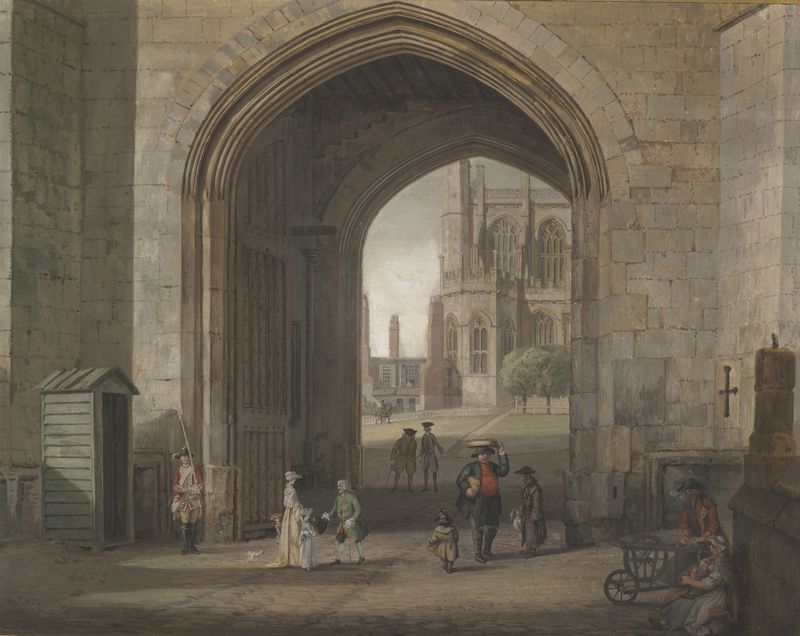
The Tower Gate at Windsor Castle
Paul Sandby

A Distant View of Maidstone, from Lower Bell Inn, Boxley Hill
Paul Sandby
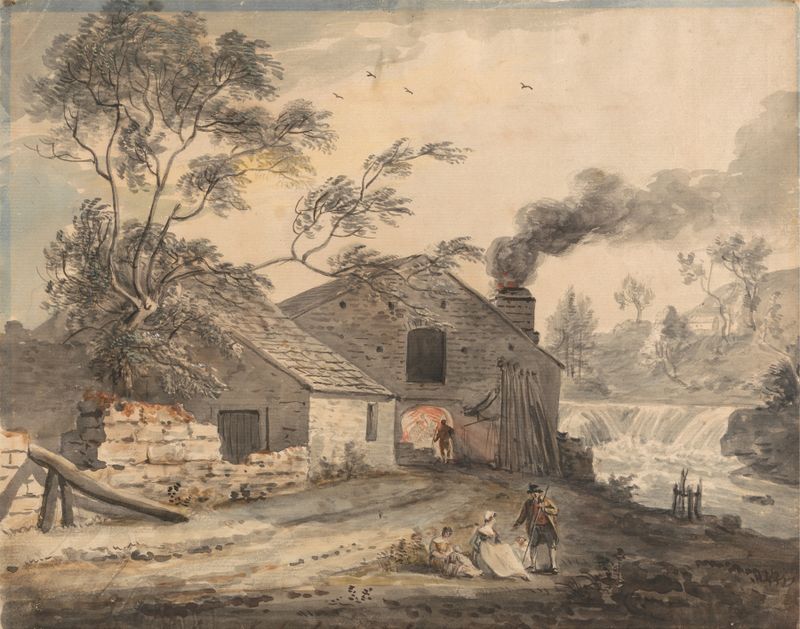
Iron Forge on the River Kent, Westmorland
Paul Sandby
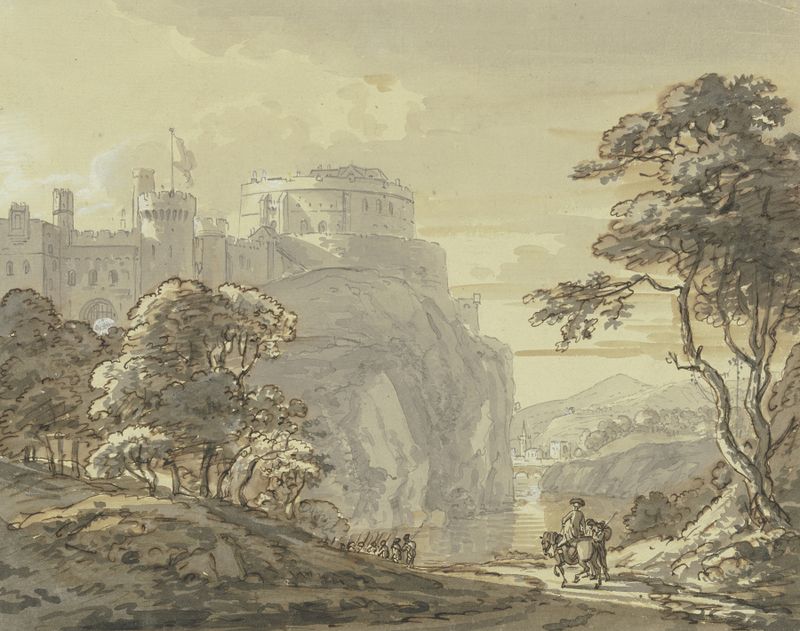
View of Windsor Castle
Paul Sandby

Hackwood Park, Hampshire
Paul Sandby

Roslin Castle, Midlothian
Paul Sandby
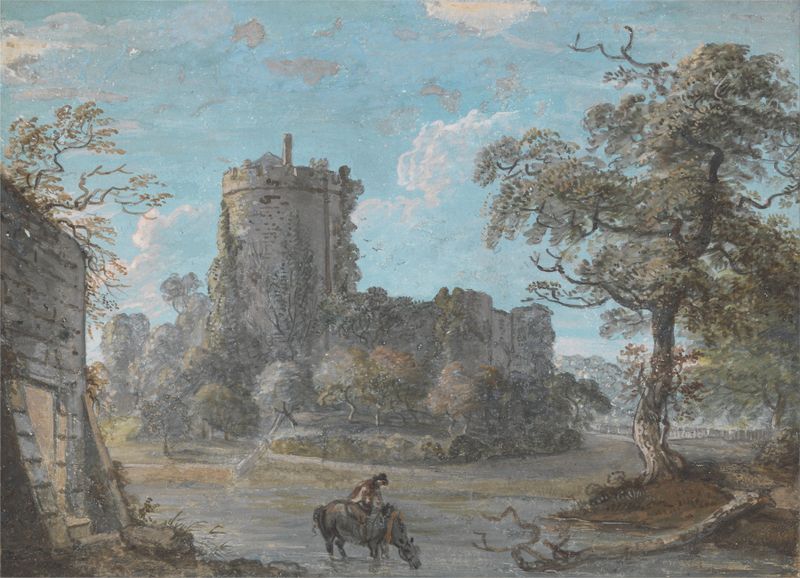
The Entrance to Chepstow Castle
Paul Sandby
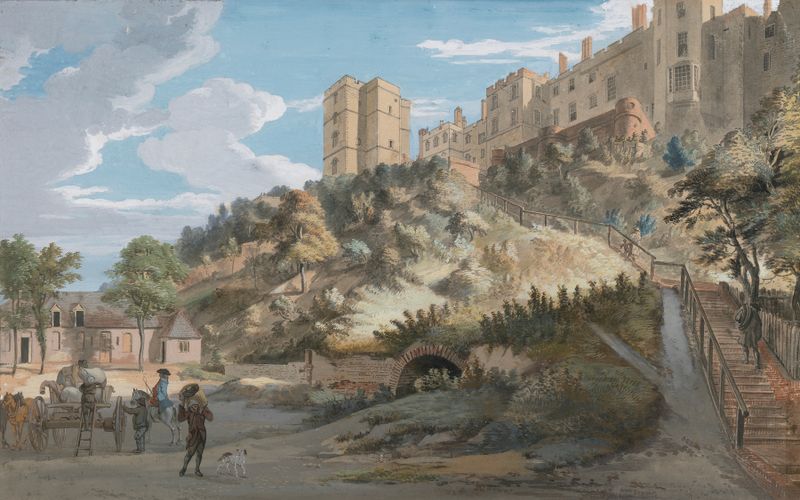
The Hundred Steps and Winchester Tower, Windsor Castle, Berkshire
Paul Sandby

Brook End, Essex
Paul Sandby
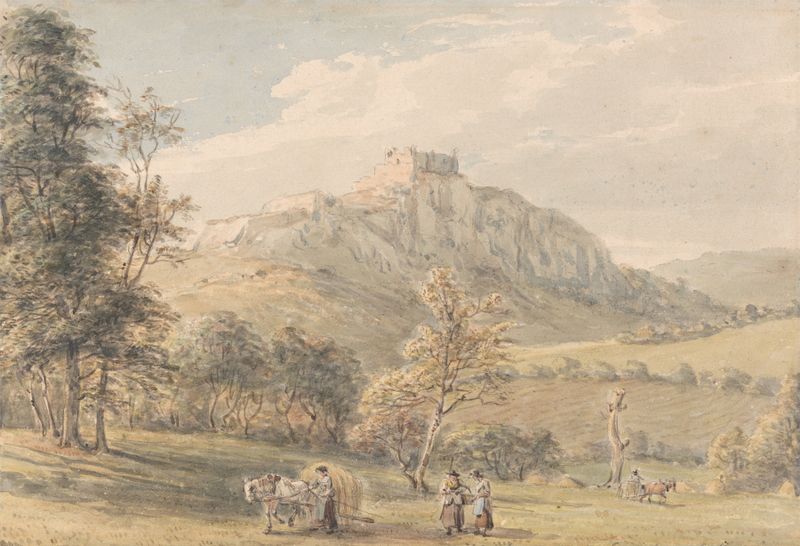
Carreg Cennen Castle
Paul Sandby





