
A fox hunting a mallard. — History & Facts
What grips the viewer first is the tension—caught in the split second where the fox’s jaws snap just behind the mallard’s outstretched wings. The animal’s fur bristles with anticipation, every muscle coiled and ready, while the duck launches itself from the water’s edge, wings flaring in a desperate bid for escape. The light, filtered through tangled branches above, falls unevenly across the scene: it highlights the fox’s russet coat and glints off the duck’s iridescent feathers, drawing the eye to the drama at the heart of the painting.
The dense reeds and twisted tree roots are not mere background; they are obstacles and cover, shaping the chase and heightening the sense of wild urgency. This is not a tranquil landscape, but a stage for survival, where every detail—the flash of teeth, the startled cry—serves the story of predator and prey. Painted by Adolf Mackeprang between 1851 and 1911, this work belongs to a tradition of animal painting that flourished in Northern Europe during the nineteenth century. Such images were often prized by collectors for their realism and the way they brought the untamed world into the drawing room, celebrating both the beauty and brutality of nature.
The era saw a growing fascination with natural history and the observation of wildlife, as well as the rise of sporting art among the bourgeoisie. While history has kept few traces of this particular painting’s journey, its presence in the collection of bruun-rasmussen.dk today is a reminder of how even lesser-known works can capture the pulse of an age—and invite us to linger over the moment when everything hangs in the balance.
More Artworks by Adolf Mackeprang

Vixen with puppy at the edge of the forest
Adolf Mackeprang
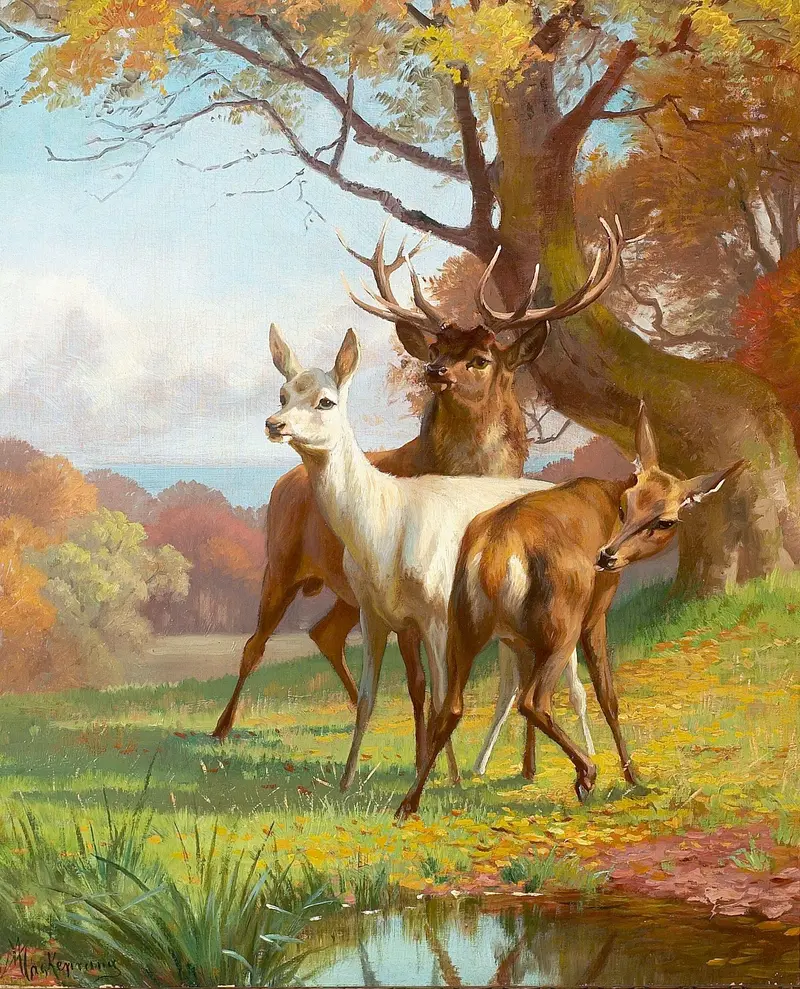
Forest scene with red deer.
Adolf Mackeprang
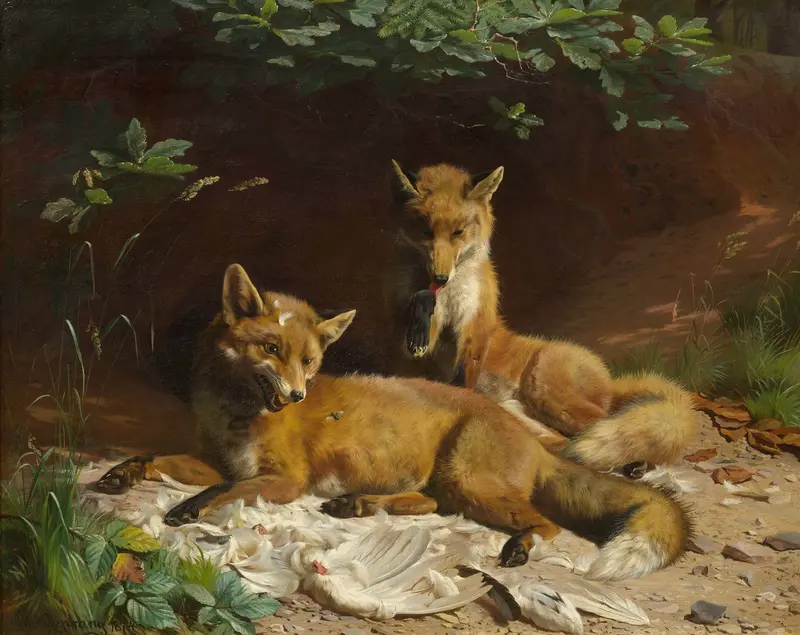
Two foxes
Adolf Mackeprang
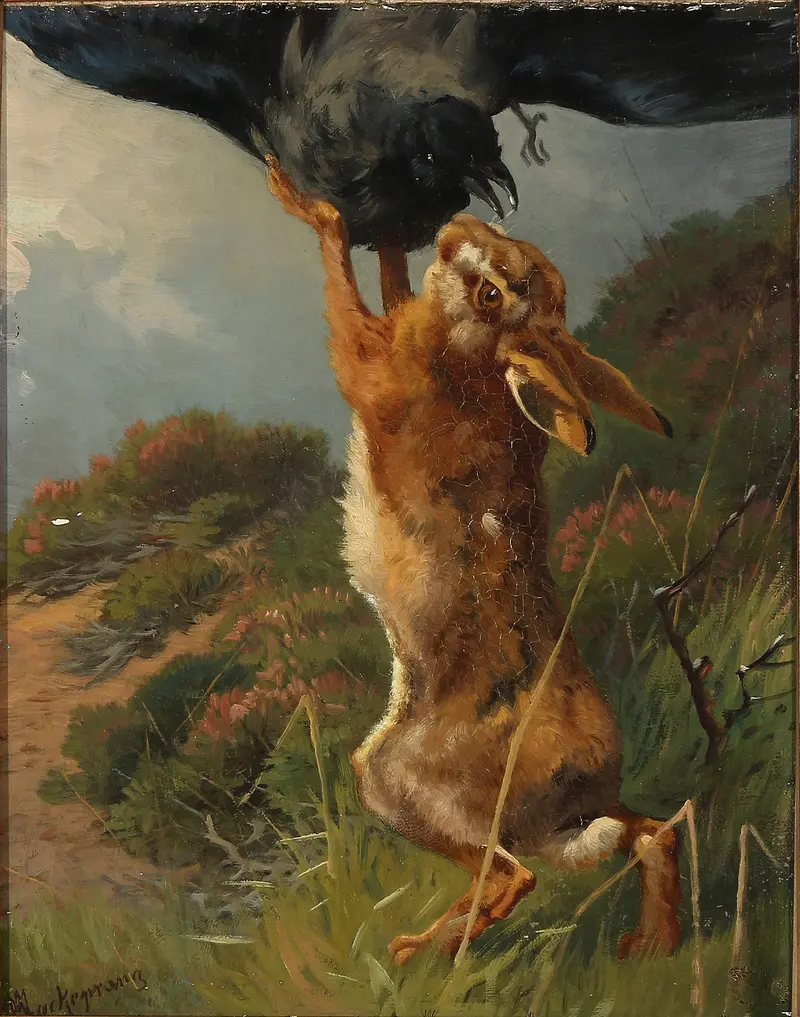
Young hare attacked by a crow
Adolf Mackeprang
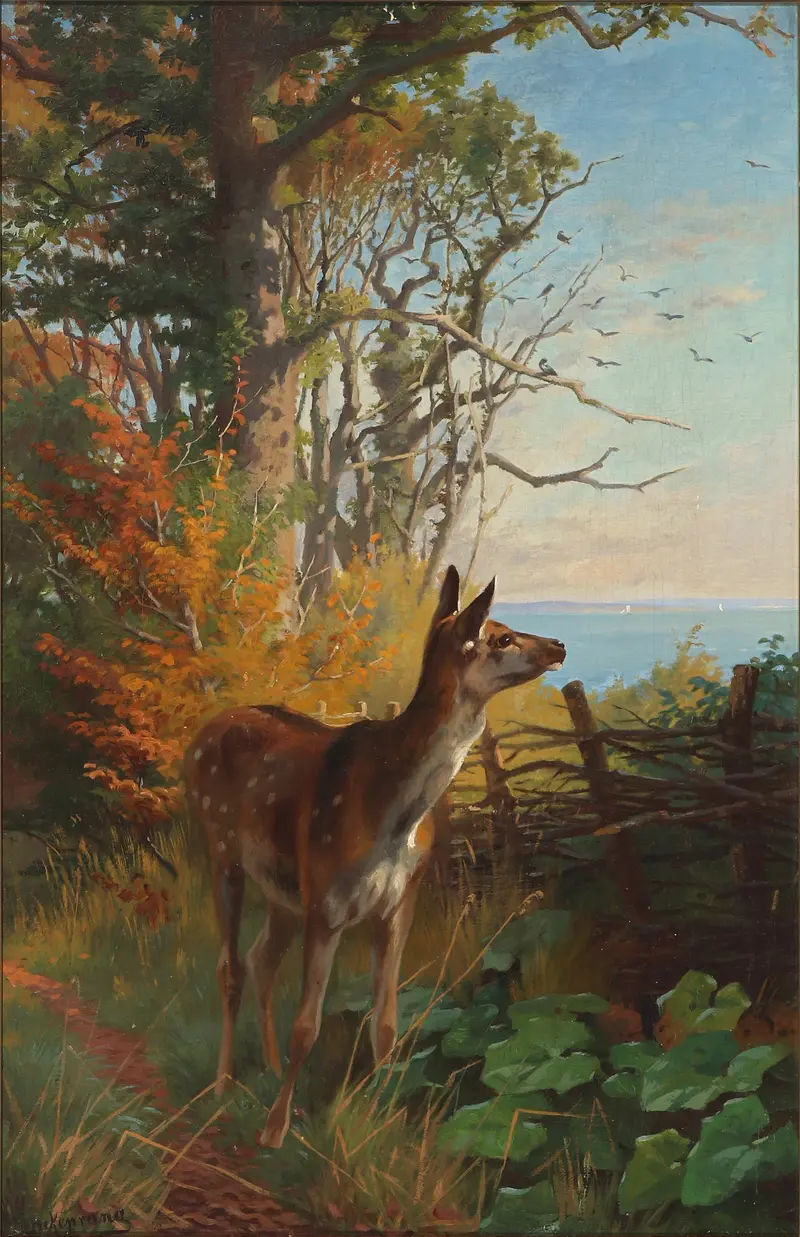
A deer in the forest
Adolf Mackeprang
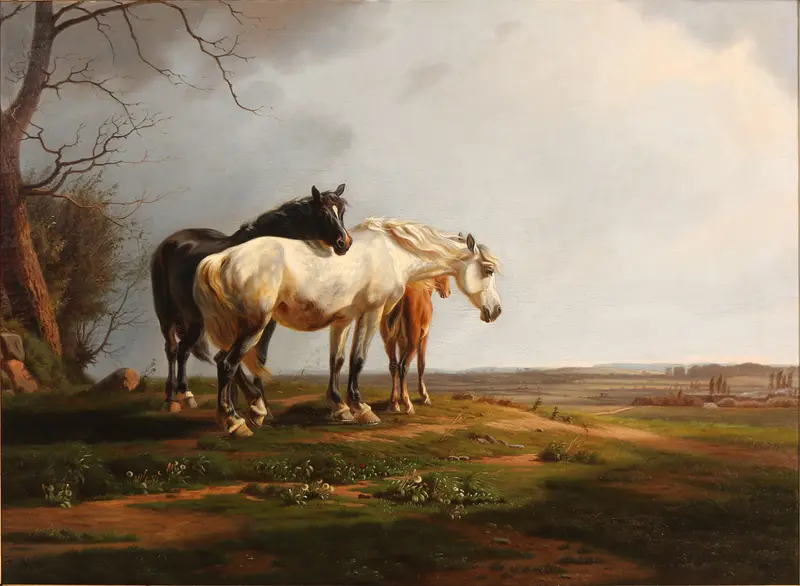
A flock of horses in a field in the sun
Adolf Mackeprang
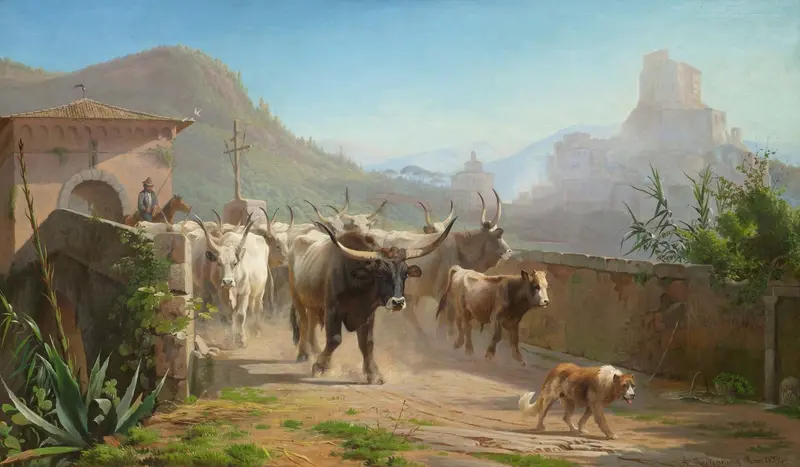
Cattle drive in Italy
Adolf Mackeprang
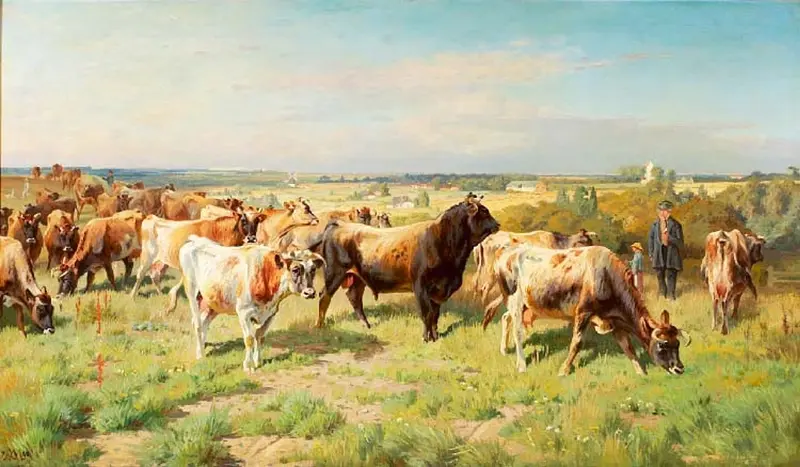
Cattle in the fields.
Adolf Mackeprang

Dogs chasing through a forest.
Adolf Mackeprang
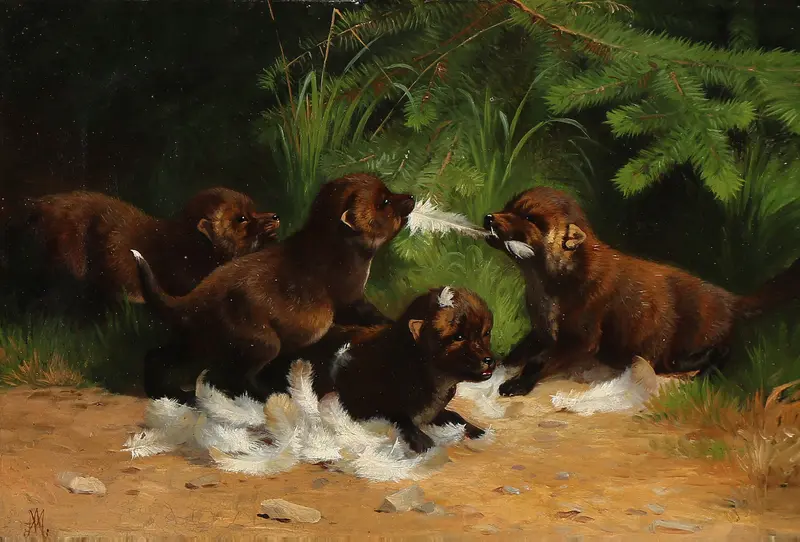
Forest scene with fox pubs fighting over the remains of a bird.
Adolf Mackeprang





