
A House near a Bridge — History & Facts
The yearning for connection and understanding lingers in the stillness of a landscape that speaks volumes without uttering a word. Look to the left where a modest house nestles against the backdrop of a great, expansive landscape, its roof gently sloping under the weight of the sky. The artist’s delicate brushwork captures the soft hues of twilight—muted greens, browns, and grays—that blend seamlessly, inviting viewers to explore the harmony amid solitude. Notice how the bridge, a slender arch over the water, draws the eye, creating a tension between the serenity of the house and the flowing river beneath it. This juxtaposition elicits a profound emotional resonance, hinting at themes of isolation juxtaposed with the promise of connection.
The bridge symbolizes potential journeys and relationships yet to be explored, while the house stands as a reminder of what is familiar and known, perhaps even confining. A lone figure may be seen in the distance, their posture reveals a longing gaze toward the horizon, suggesting an internal dialogue between the heart’s desires and the constraints of one’s environment. In the 17th century, while Antwerp thrived artistically, Antonie Waterloo painted this piece, reflecting the burgeoning interest in landscapes as a focal point of emotional expression. During this period, the artist navigated personal challenges and the evolving artistic landscape of his time, moving away from Baroque excess toward a more subtle, introspective approach that celebrated nature’s quietude.
More Artworks by Antonie Waterloo
Browse all →
Gezicht op het dorp Soest
Antonie Waterloo

Hagar comforted by the Angel
Antonie Waterloo

Waldbach, der über Felsen stürzt, über die eine Holzbrücke führt
Antonie Waterloo
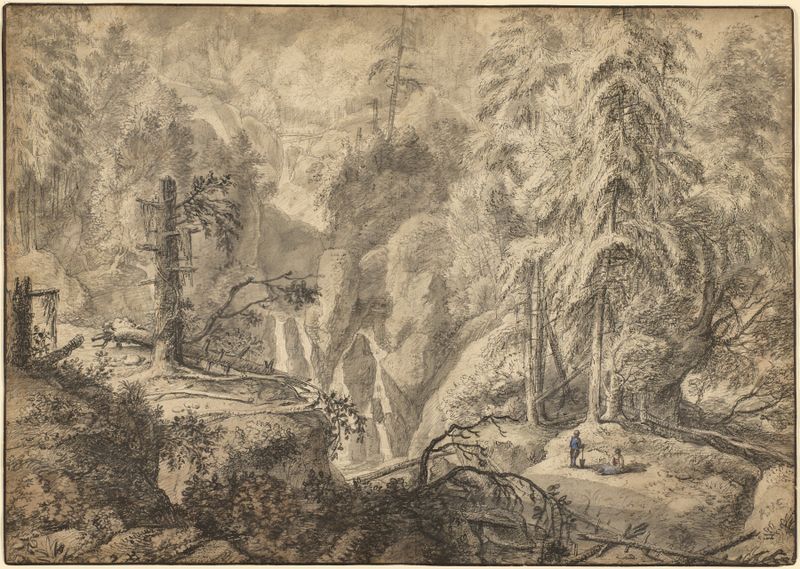
Mountain Landscape, Peasants in a Clearing near a Waterfall
Antonie Waterloo
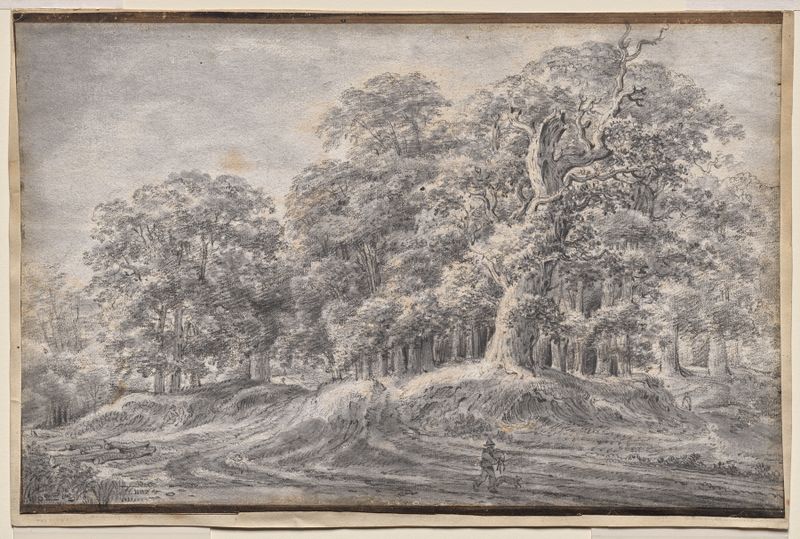
A Track on the Edge of a Wood with a Peasant Carrying Sheep
Antonie Waterloo
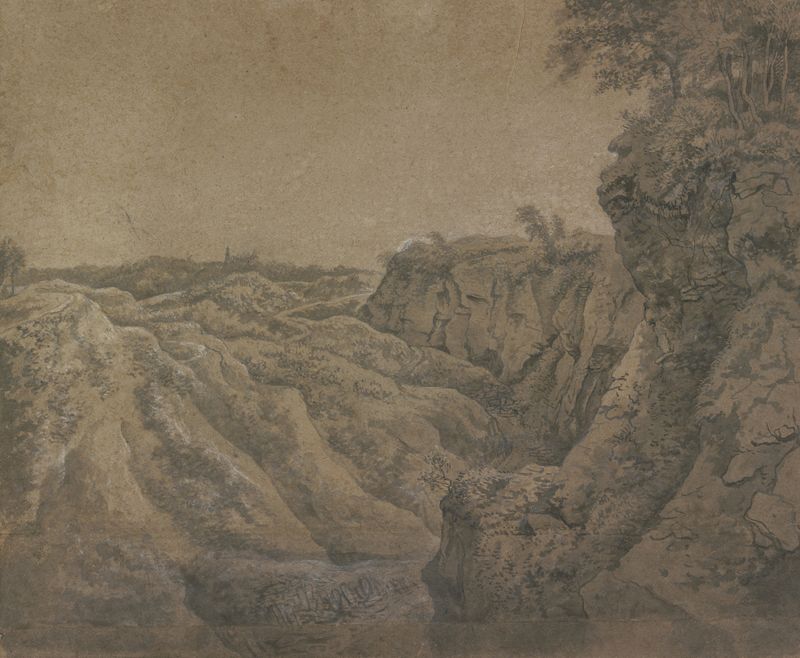
Landscape with a View of Bentheim Castle in the far Distance
Antonie Waterloo
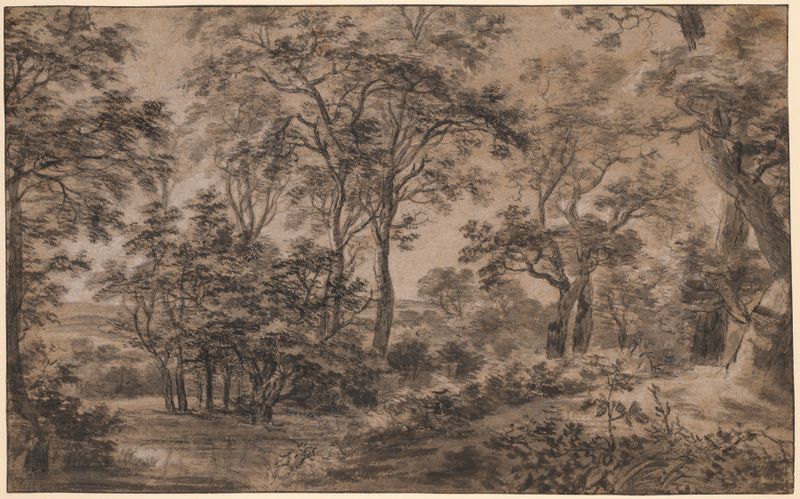
Wooded Landscape
Antonie Waterloo
Elijah Fed by the Ravens
Antonie Waterloo
River Landscape with a Castle in the Distance
Antonie Waterloo

Trees and cottages in hilly landscape
Antonie Waterloo





