A. J. Jansen - The Ship Rotterdam — History & Facts
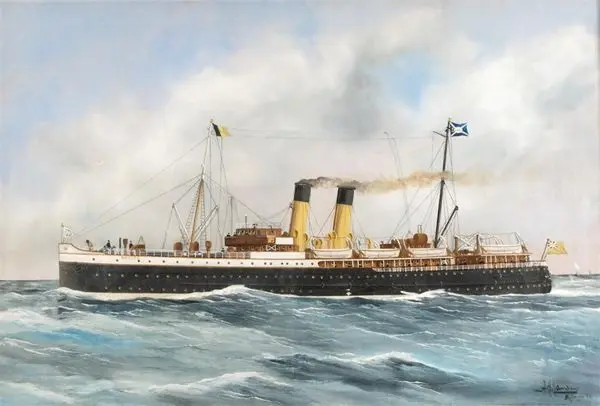
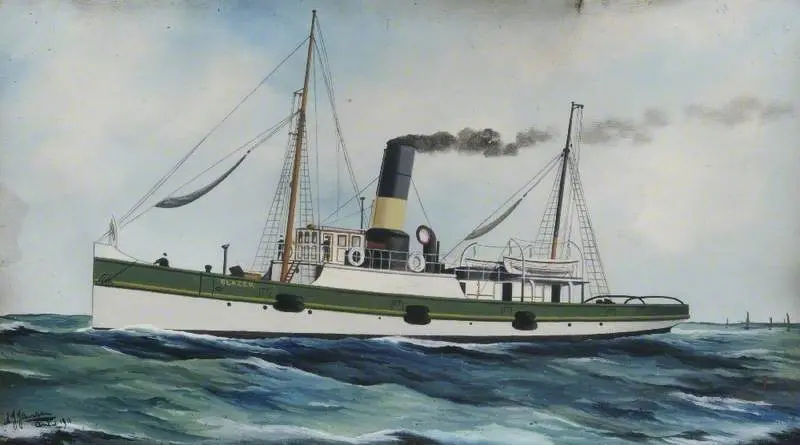
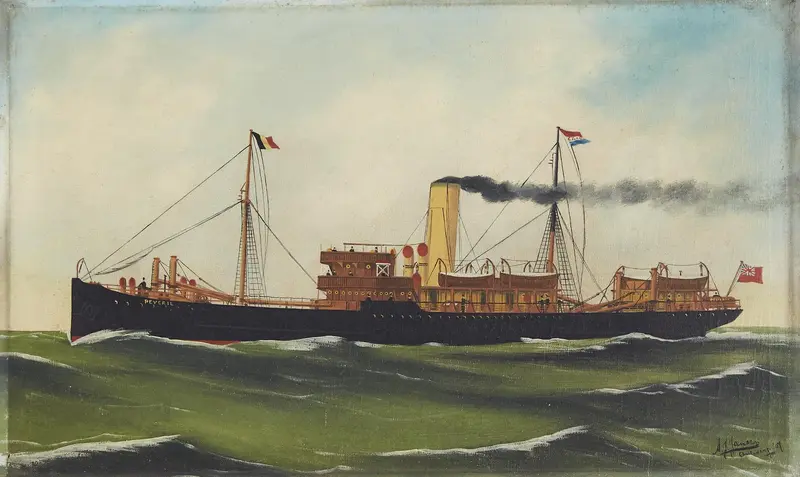
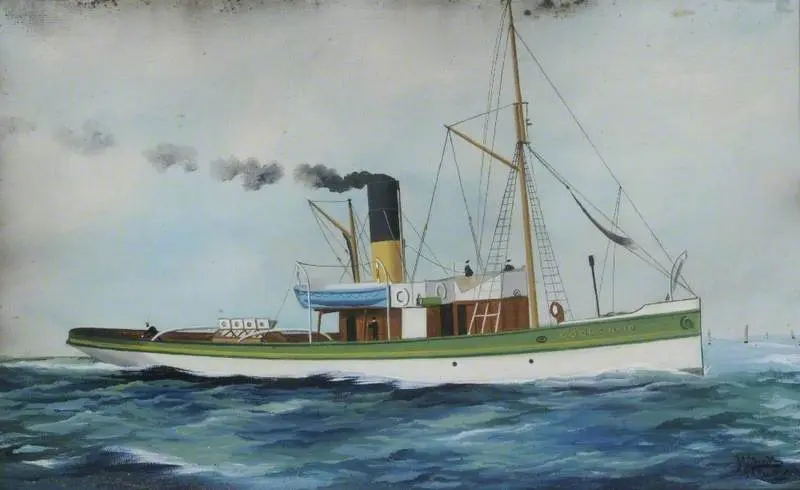
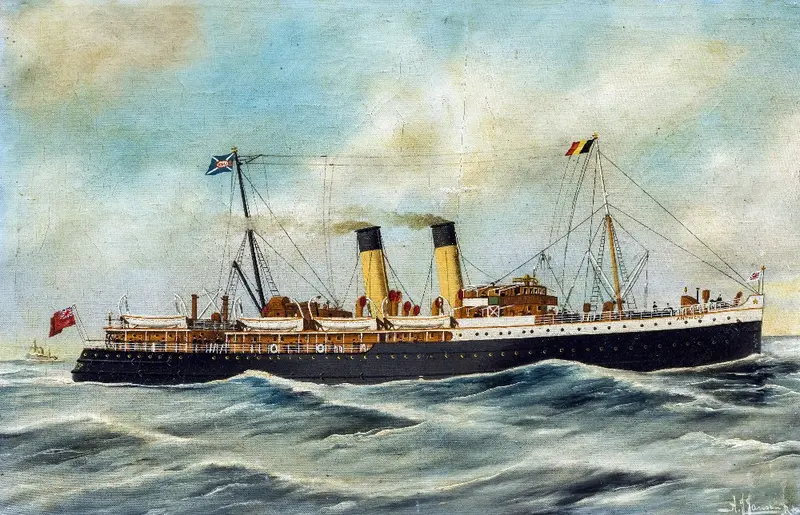
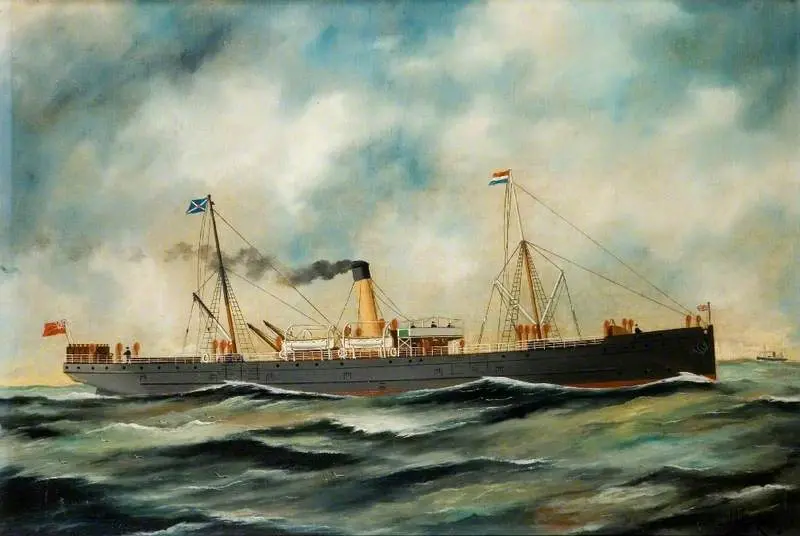
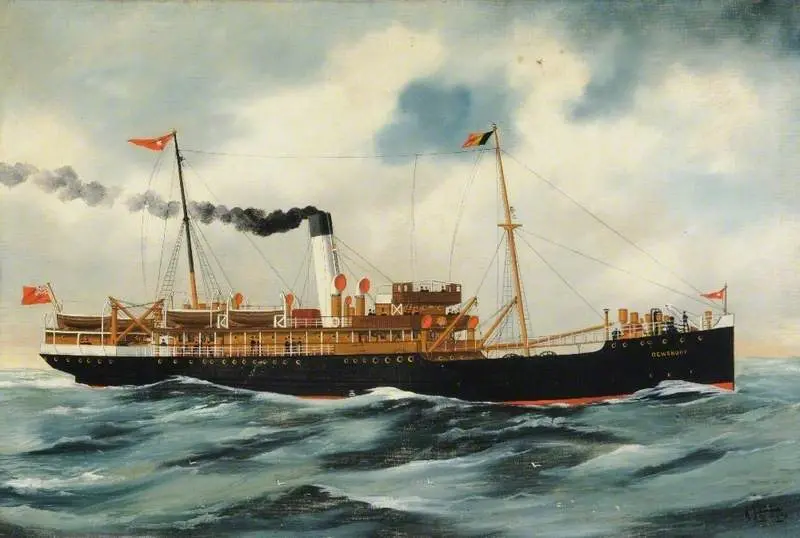
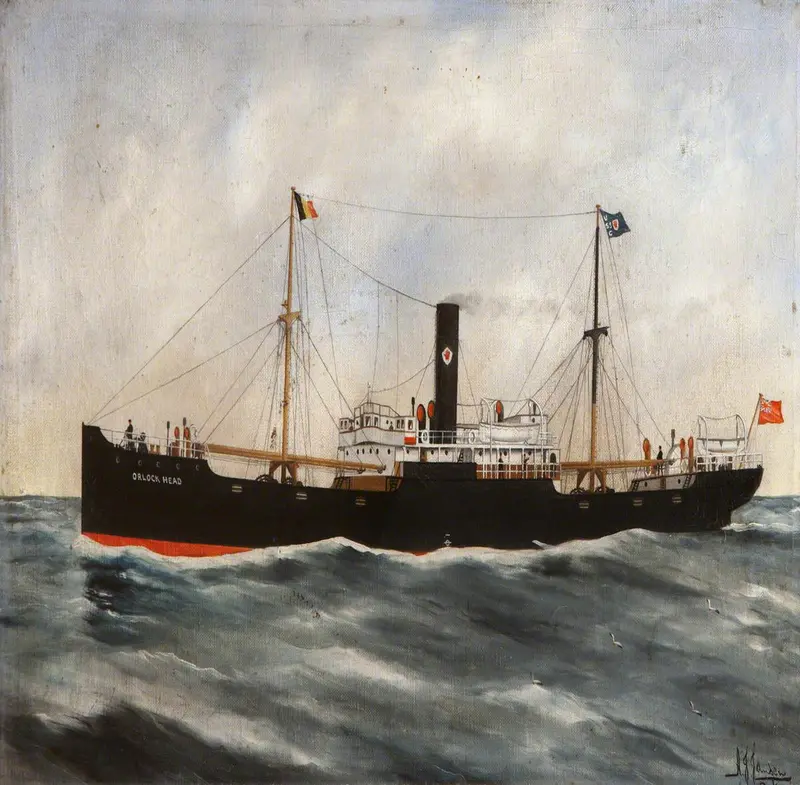
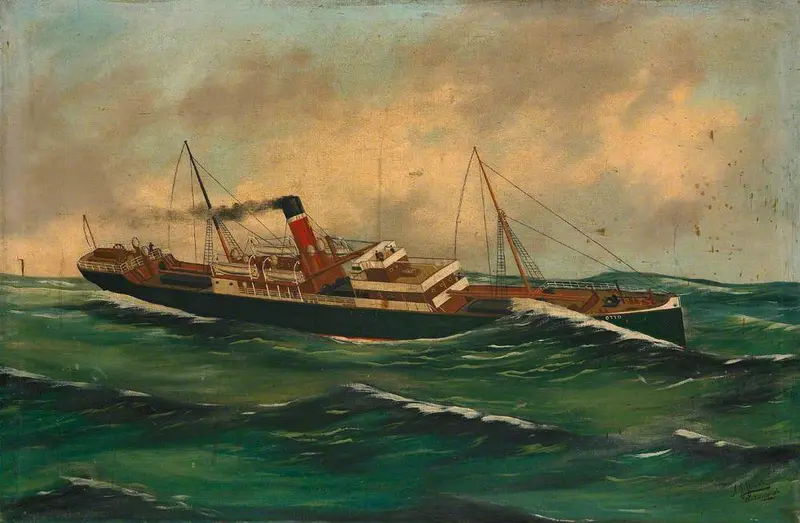
What first draws the eye in The Ship Rotterdam by A. J. Jansen is the proud silhouette of the steamship itself, slicing through a restless sea under a sky heavy with weather.
The vessel’s black hull and upright funnel, trailing a plume of smoke, speak of an age when steam and steel had begun to conquer the oceans. Dutch flags flutter at both prow and stern, staking a national claim to this feat of engineering. The artist’s careful attention to the rigging, lifeboats, and the subtle glint of light on wet decks invites the viewer to imagine the lives and cargoes carried across these waters.
The low horizon gives the sky a brooding presence, but it is the ship that commands the scene, a testament to human ambition and the promise of distant ports. Painted around 1915, this work belongs to a period when maritime portraiture was both a record and a celebration of modernity. Such paintings were often commissioned by shipping companies, captains, or shipbuilders, eager to commemorate their vessels at the height of their powers. The era was marked by rapid advances in ship design and the expansion of global trade routes, with steamships like the one depicted here symbolizing progress and national pride.
Little is recorded about A. J. Jansen or the specific fate of this painting, now documented on Artnet, but the image itself stands as a window into the world of early twentieth-century Dutch maritime enterprise.
The next time you look, notice how the ship seems to move forward, pulling both the viewer and the era it represents into the future.