Dutch R.M.S.Antwerp — History & Facts
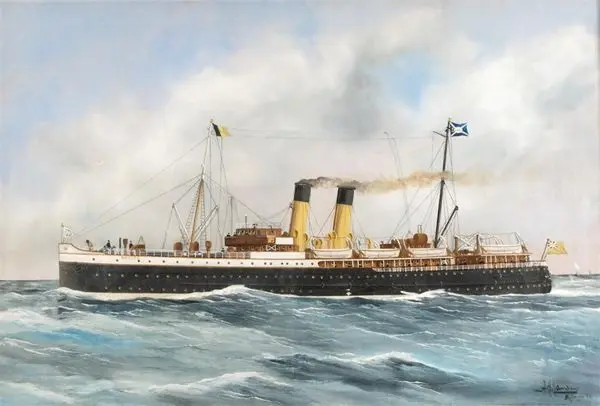
What first catches the eye in Dutch R.M.S. Antwerp by A. J.
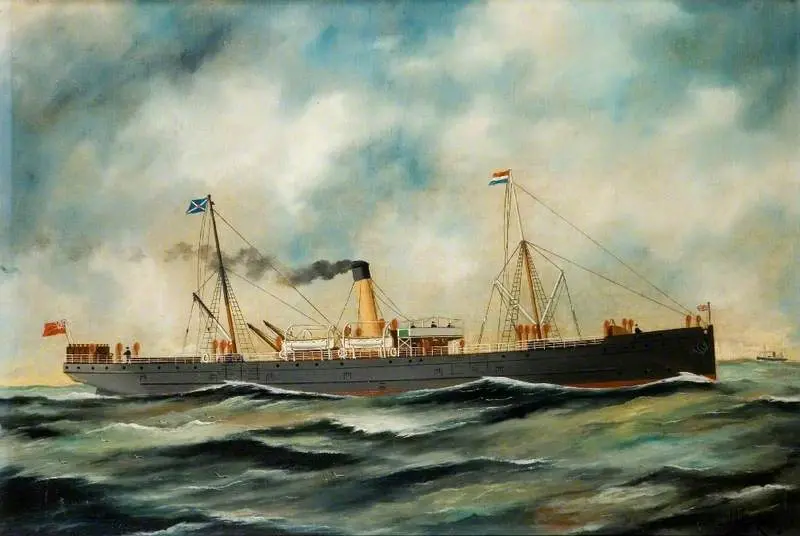
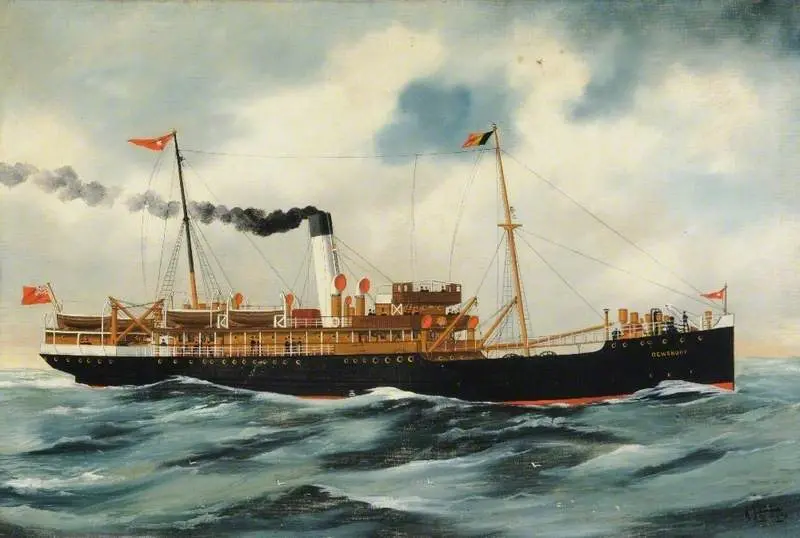
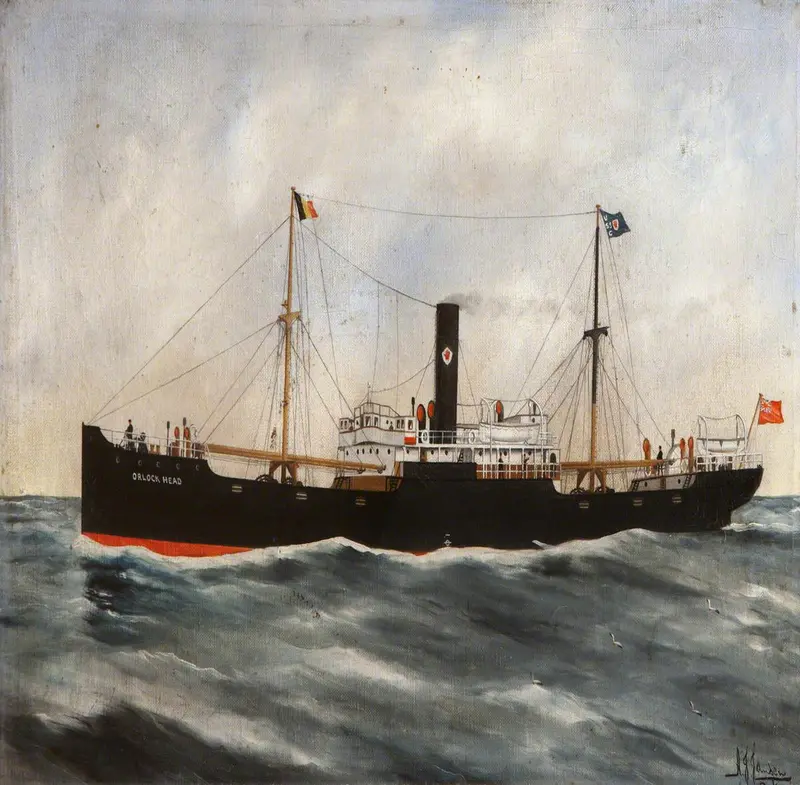
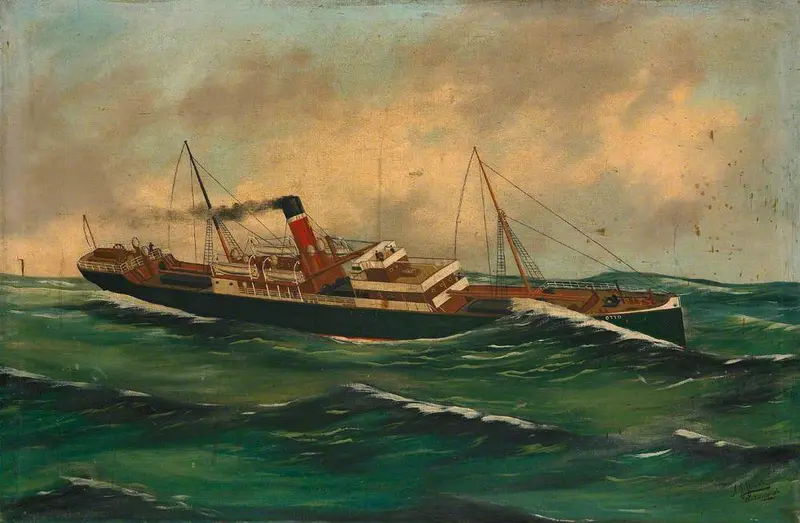
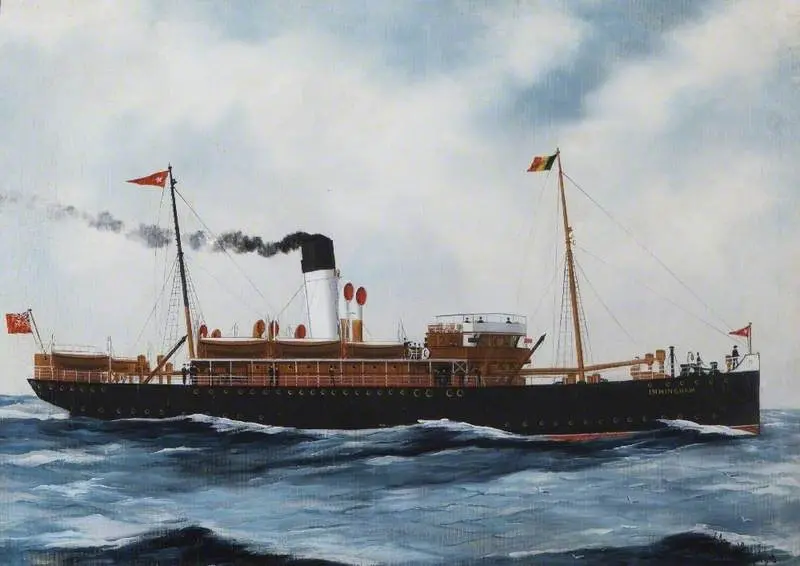
Jansen is the ship’s proud silhouette, cutting cleanly across a restless sea under a sky brushed with pale clouds. The vessel’s black hull and bright cream superstructure are crisply outlined, giving the ship a sense of purpose and dignity. Flags flutter at the mastheads, signaling identity and allegiance—each one a coded message to those who know how to read them.
The artist places the horizon low, letting the sky and the ship dominate, while the angled perspective draws the viewer’s gaze along the vessel’s length, from the foaming bow to the distant stern. The careful rendering of lifeboats, rigging, and smokestacks speaks to the importance of these details, not just for accuracy, but as emblems of reliability and modernity. Painted in 1943, this work belongs to a tradition of maritime portraiture that flourished in the age of steam and empire, when shipping lines commissioned images of their proudest vessels for offices, publicity, or captains’ cabins. Such paintings were both records and advertisements, celebrating the technical achievement and international reach of their subjects.
The world that produced Dutch R.M.S. Antwerp was one of shifting borders and uncertain seas, where ships like this were lifelines between nations. History has kept few traces of A.
J. Jansen or this particular ship’s journey, but the painting survives as a testament to the era’s faith in progress and the romance of ocean travel. Stand before it and imagine the stories carried across those painted waves.