The Steamship Bruges — History & Facts
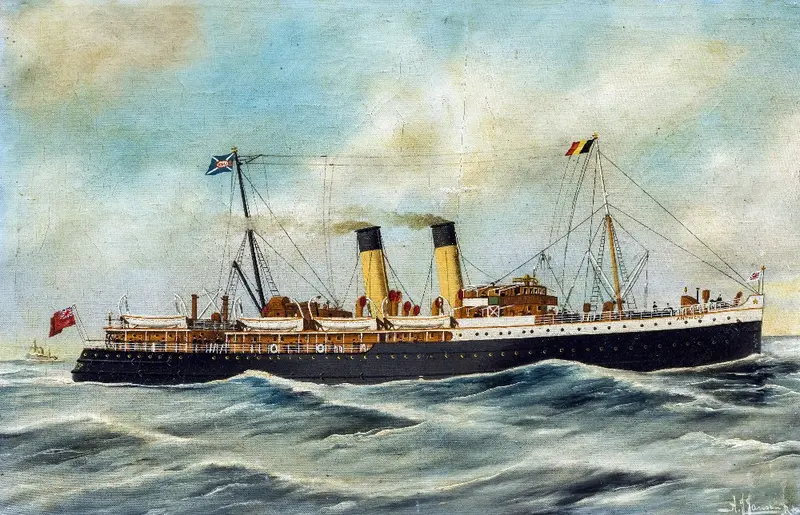
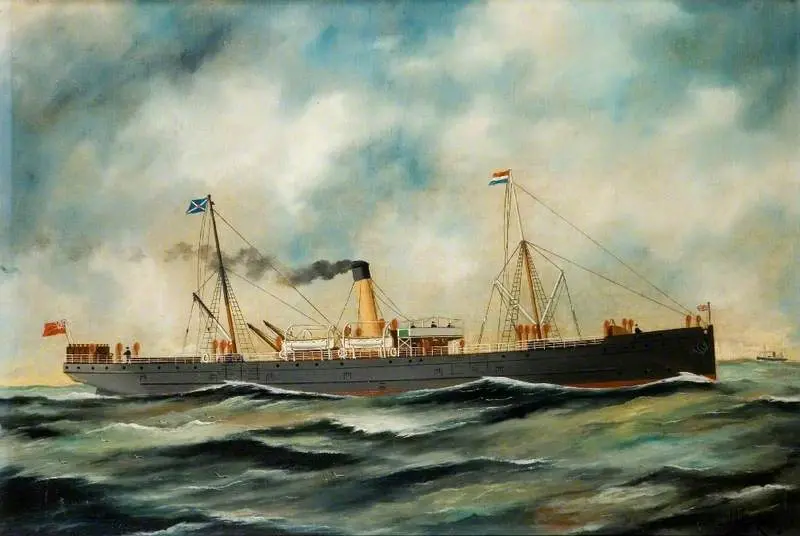
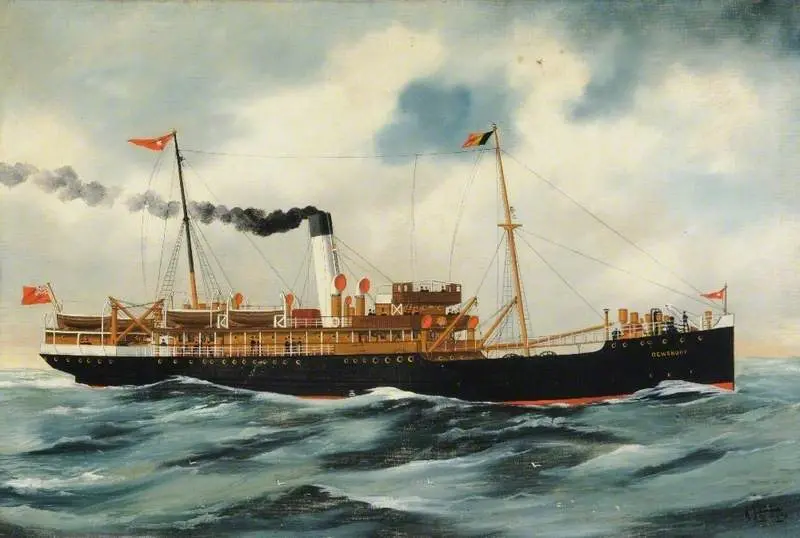
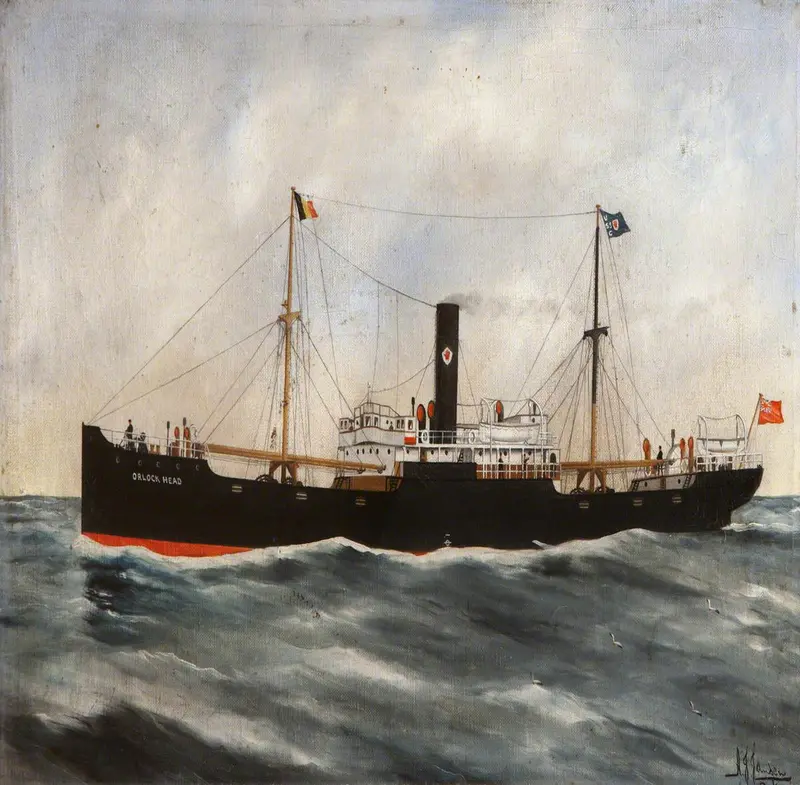
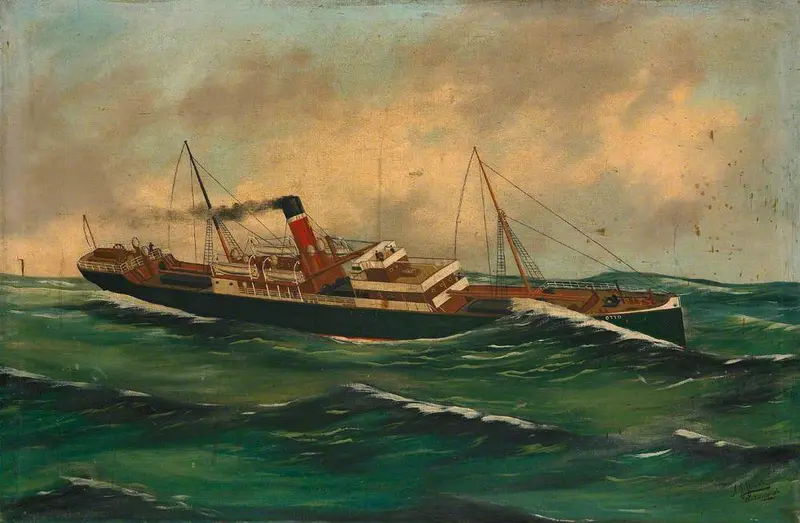
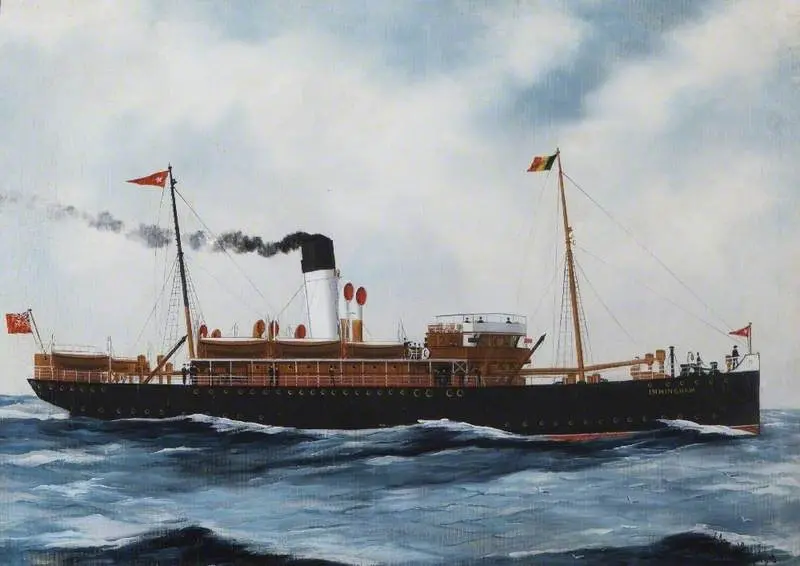
What first grips the eye in The Steamship Bruges is the sense of purposeful motion: the vessel cuts across a restless, blue-grey sea, its twin yellow funnels trailing ribbons of smoke that stretch diagonally into the sky. The ship’s hull is rendered with crisp precision, its black and white banding giving it a sense of weight and presence, while flags snap at the prow and stern, signaling identity and allegiance. The artist, A.
J. Jansen, draws attention to the ship’s mechanical heart—pipes, rigging, and lifeboats are all meticulously detailed, inviting the viewer to linger over the machinery that powered the world’s commerce in 1925. The low horizon cedes most of the canvas to a luminous, cloud-streaked sky, emphasizing the ship’s isolation and the vastness of its journey.
There is no drama of storm or rescue here—only the steady, industrial confidence of the early twentieth century at sea. Painted in 1925, this work belongs to a tradition of maritime portraiture that flourished alongside the age of steam. Shipowners and shipping lines often commissioned such paintings to commemorate new vessels or mark important voyages, and artists like Jansen responded with works that balanced technical accuracy and a sense of occasion. In the interwar years, the steamship was both a symbol of progress and a lifeline for trade and migration, and paintings like this one served as proud records of modern achievement.
Little is recorded about The Steamship Bruges itself, but its presence in an online collection today reminds us how these images once anchored the hopes and ambitions of a world in motion—inviting us to imagine the stories of those who sailed on her decks.