Goole No.10 — History & Facts
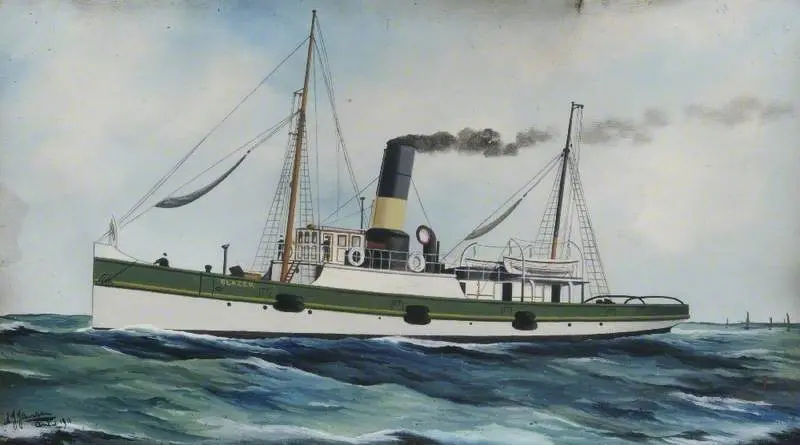
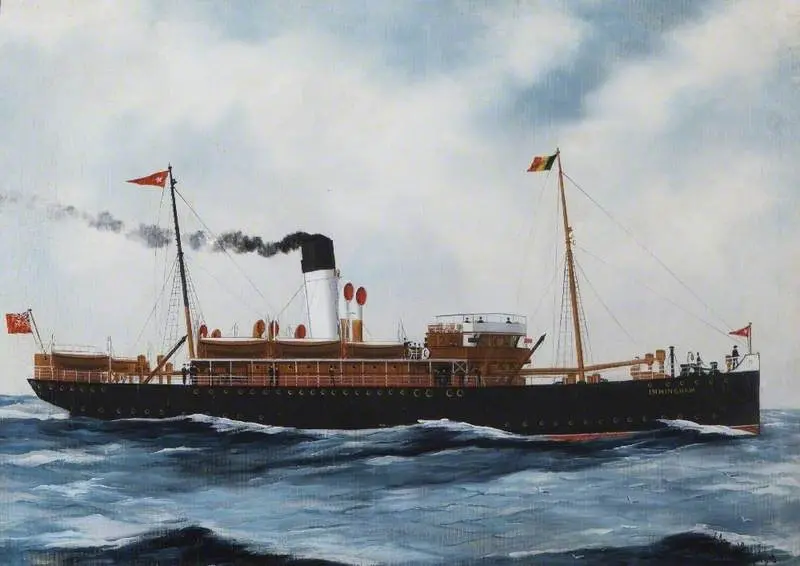
A plume of smoke trails behind the tug as it cuts cleanly through choppy blue water, the hull’s crisp lines and the ship’s name, Goole No.10, picked out with a precision that feels almost ceremonial. The artist, A. J.
Jansen, gives the vessel a sense of quiet dignity: the green band along the hull, the ochre funnel, and the taut rigging all speak to a pride in the working ships of an industrial age. The sea is painted with broad, rhythmic strokes, lending movement and weight, while the sky above is pale and open, dotted with smudges of smoke. Every element seems designed to honor the tug’s sturdy presence, from the careful rendering of the deck fittings to the subtle play of light along the waterline. This is a portrait of a machine built for purpose, a product of 1911’s world of steam and steel.
Such paintings were often commissioned by shipping companies or proud captains to commemorate new launches or mark years of service, and they capture a moment when the British maritime industry was at its height. The Goole No.10 belonged to the Hull and Goole Steam Towing Company, a reminder of the fleets that kept ports humming and commerce flowing. History has kept few traces of A.
J. Jansen’s career, but works like this—dated 1911—stand as evidence of a time when even the most utilitarian of ships could inspire a careful, almost affectionate record. Look again at the ship’s name, painted with such clarity: it is both a label and a tribute.