
A Lancashire River — History & Facts
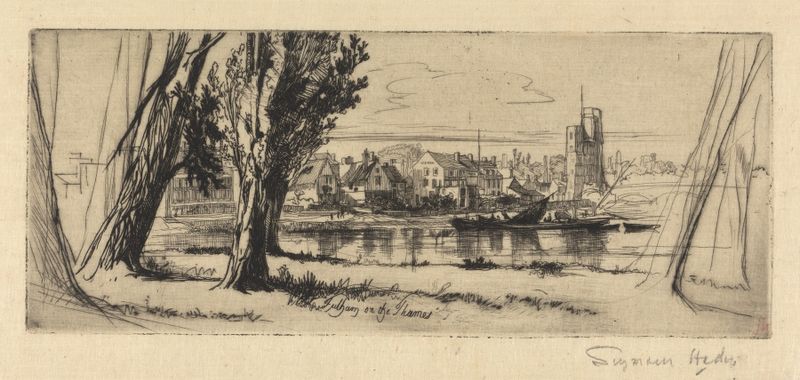
When did color learn to lie? In the delicate interplay of light and shadow, nostalgia dances across the canvas, beckoning viewers into a world where memories linger like mist hovering over water. Look to the left at the shimmering surface of the river, where Haden's meticulous etching captures the gentle undulations of the water. The soft, muted greens and browns invoke a sense of tranquility, while hints of sky-blue reflect the fleeting moments of a sun-drenched afternoon. Notice how the trees, depicted in intricate detail, frame the scene, their branches arching like outstretched arms, embracing the solitude of the winding waterway. Beneath the picturesque surface lies a poignant tension between the serene beauty of nature and the passage of time.
The river, which flows endlessly, symbolizes the constant march of life, while the quiet surroundings evoke a sense of longing for simpler days. The interplay of light and shadow creates a fleeting sense of intimacy, reminding us that while the moment is ephemeral, the emotional resonance endures. In 1881, Francis Seymour Haden was immersed in the vibrant artistic milieu of England. At that time, he was an established figure in the etching world, pushing the boundaries of traditional techniques.
As industrialization began to alter the landscape of his beloved countryside, this work reflects both a celebration of nature’s beauty and an elegy for a world on the brink of change.
More Artworks by Francis Seymour Haden
Browse all →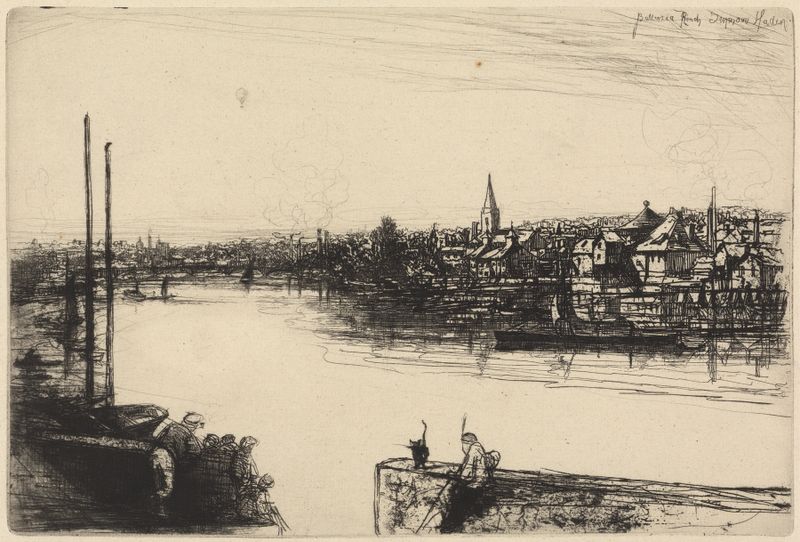
Battersea Reach
Francis Seymour Haden

Nine Barrow Down
Francis Seymour Haden
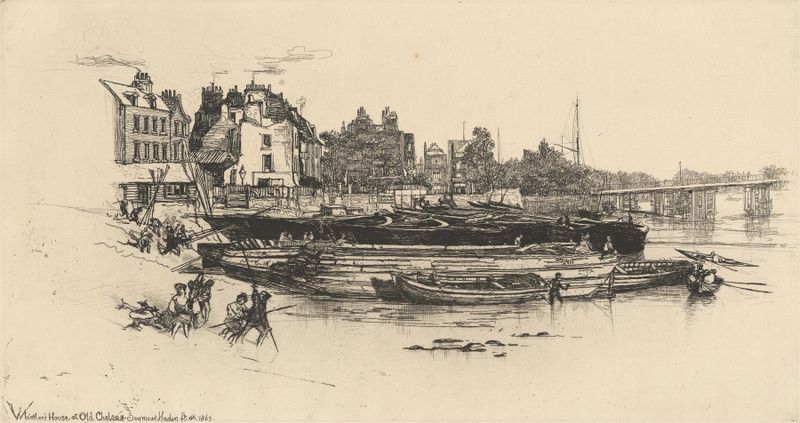
Whistler’s House at Old Chelsea
Francis Seymour Haden

The Mill-Wheel
Francis Seymour Haden
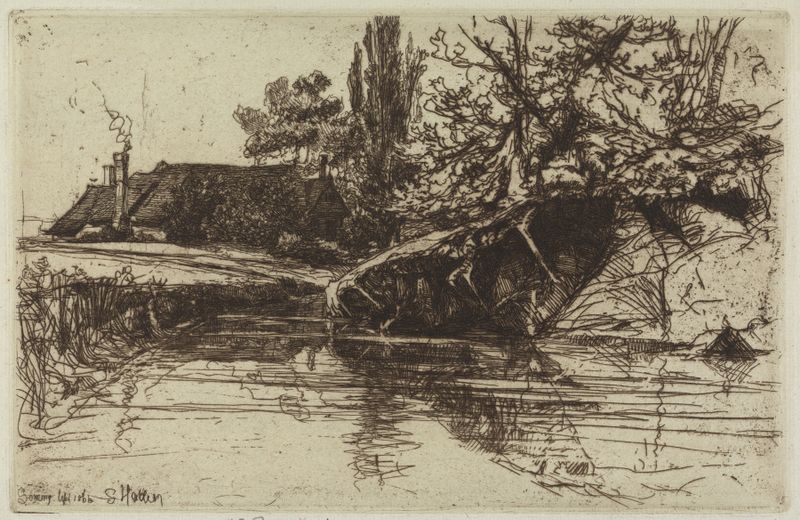
The Moat House
Francis Seymour Haden

By Twickenham
Francis Seymour Haden

Newcastle Emlyn
Francis Seymour Haden
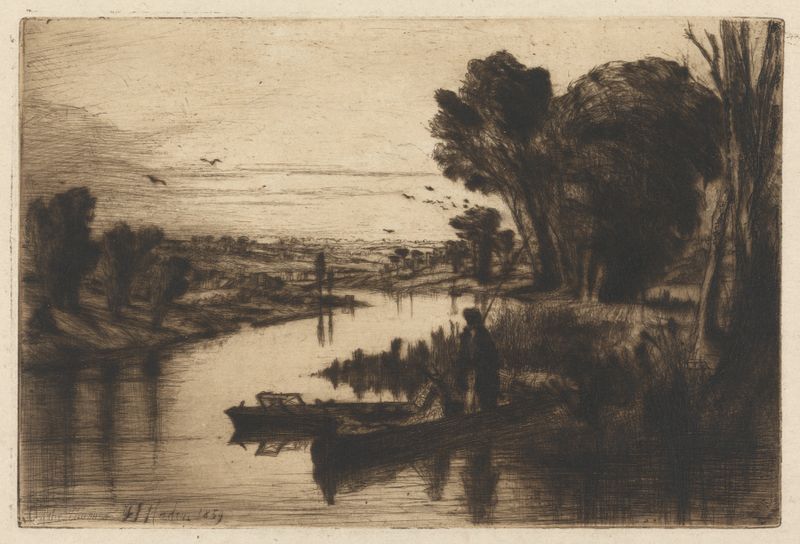
On the Thames
Francis Seymour Haden

Kidwelly Castle
Francis Seymour Haden
Fulham on the Thames
Francis Seymour Haden





