
A landscape — History & Facts
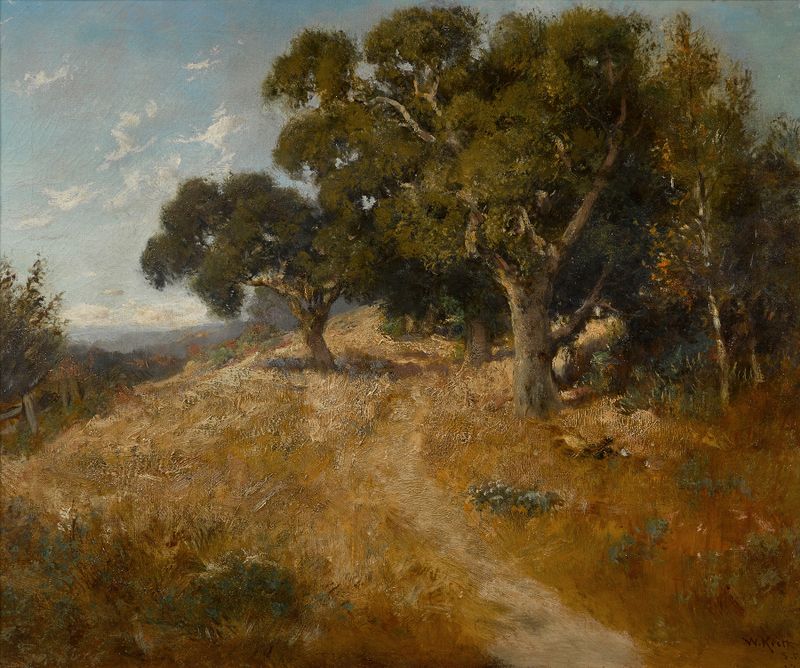
In the stillness of visual perception, the viewer is invited to traverse the delicate boundary of reality and illusion. Focus on the sweeping horizon that dominates the canvas, where soft greens and muted browns converge in a harmonious blend. The gentle strokes of the brush create a layered texture, inviting the eye to wander into the distance, where distant mountains cradle the sky. Notice how the light dances upon the foliage, casting shadows that suggest both depth and tranquility, a fleeting moment captured in time. Yet, within this serene expanse lies a tension between the visible and the unseen.
The ethereal quality of the sky hints at a narrative beyond the landscape, suggesting the passage of time and the weight of solitude. The symphony of colors evokes nostalgia, contrasting the vibrancy of nature's palette with the quiet whisper of the unseen. Each brushstroke seems to hold a story, a memory that lingers just out of reach, urging contemplation. In 1900, William Keith, a pivotal figure in American landscape painting, created this work during a period of personal reflection.
Living in California, he was influenced by the burgeoning art movements of his time, marked by an increasing interest in capturing the essence of nature. This painting reflects his pursuit of atmospheric effects and deep emotional resonance, embodying the artistic exploration of beauty and perception characteristic of that era.
More Artworks by William Keith
Browse all →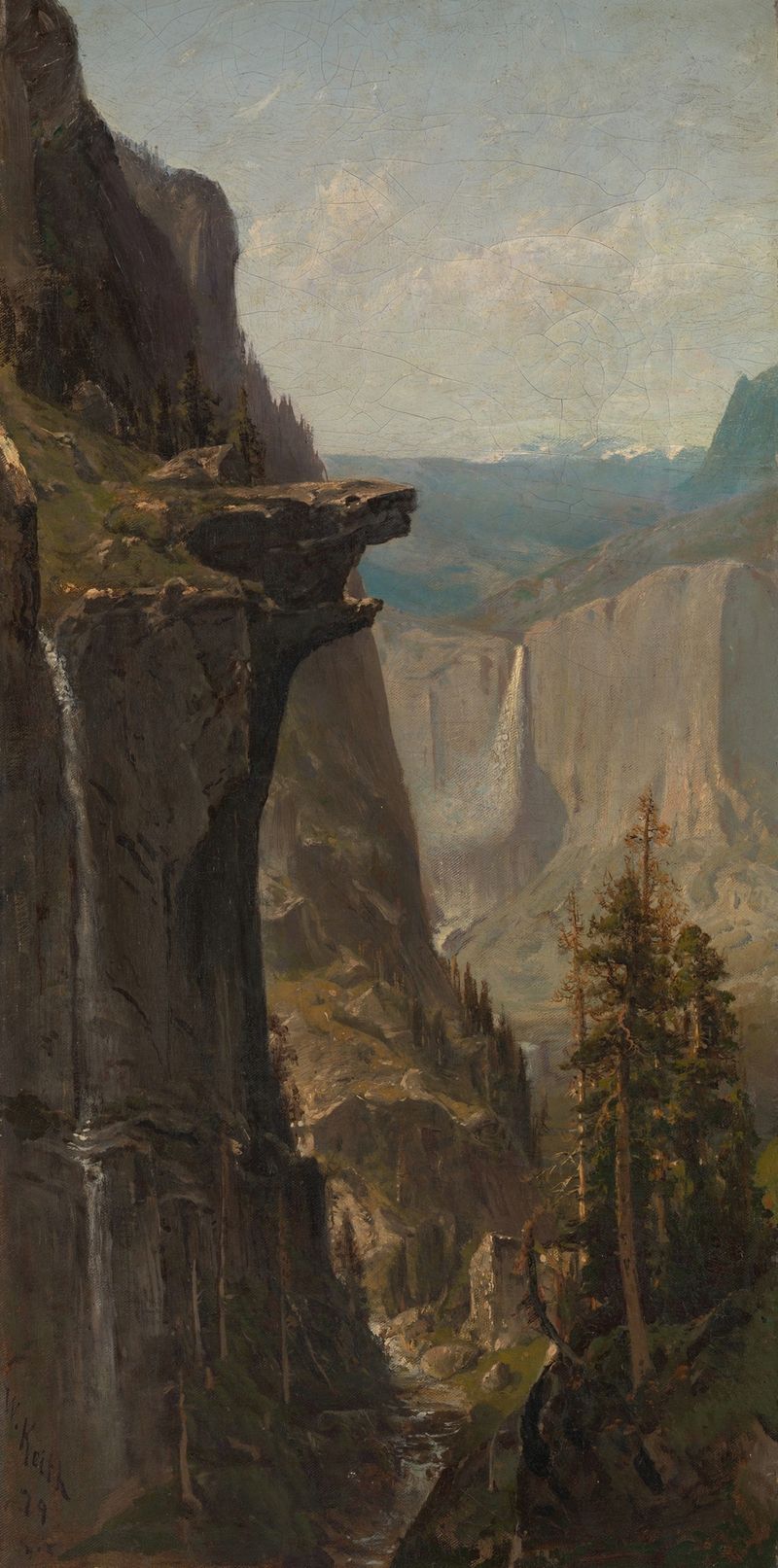
Yosemite Falls, from Glacier Point
William Keith

Half Dome, Yosemite
William Keith
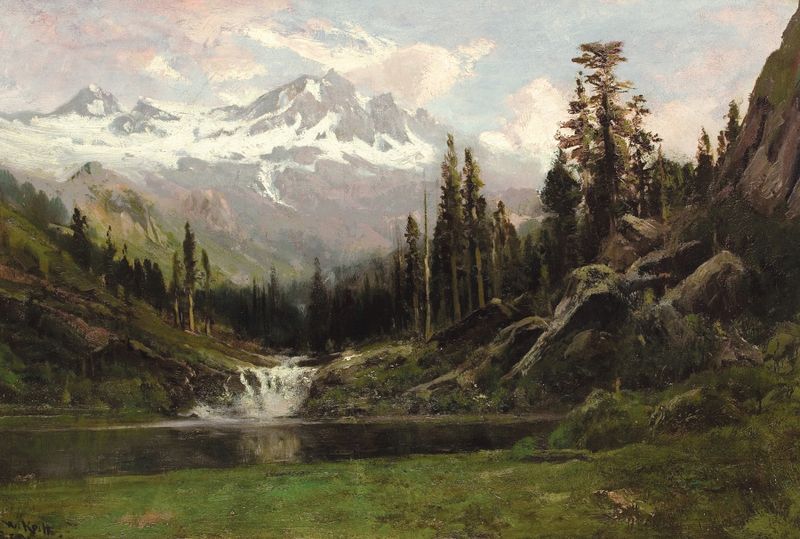
View of Mount Shasta
William Keith
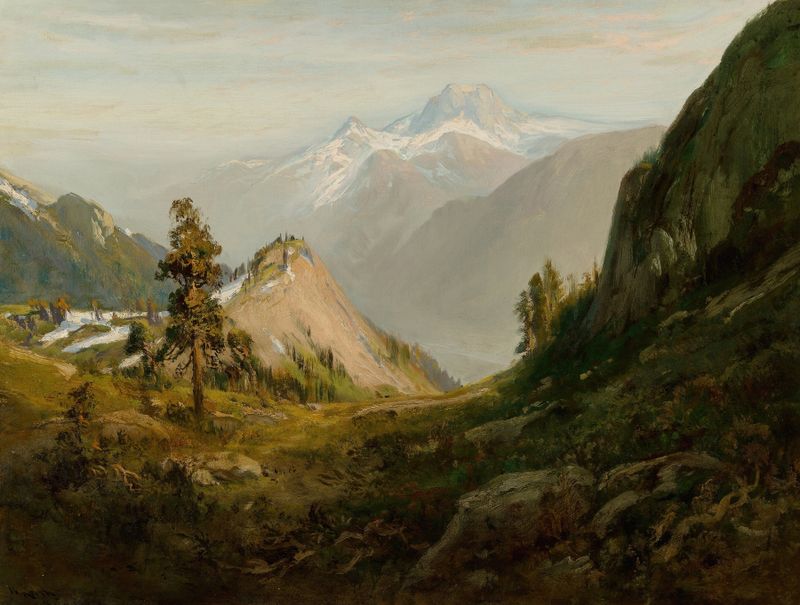
Where Gold was Found in California
William Keith

Mount Tamalpais from the North West
William Keith

Yosemite Valley
William Keith
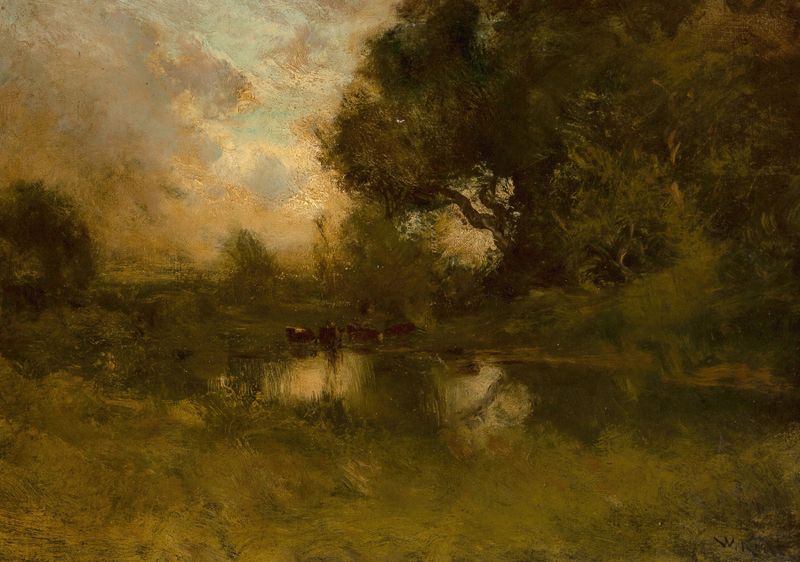
Napa Creek
William Keith
Path through California oaks
William Keith

Landscape
William Keith

Landscape Painting
William Keith





