
A landscape with figures on a frozen river — History & Facts
Where does light end, and longing begin? In the delicate balance of nature and humanity, whispers of destiny unfold across a frozen expanse. Look to the center of the canvas, where myriad figures traverse the icy river, their stark silhouettes contrasted against a pale winter sky. The muted palette, dominated by shades of blue and gray, evokes a sense of chill, while soft touches of warmth from their clothing suggest the resilience of life amidst the cold. Notice how the light dances on the smooth ice, creating an ethereal glow that highlights the figures’ interactions, as laughter and camaraderie radiate from this frozen landscape. Yet, beneath this seemingly serene tableau, a deeper tension simmers.
The frozen river, a barrier and a passage, embodies both the stillness of winter and the inevitability of change. The distant trees stand silent, their bare branches stretching towards the heavens, hinting at a longing for spring and rebirth. Each figure, caught in their moment of joy, simultaneously frames the weight of destiny that lies waiting beneath the surface of the ice. In 1839, the artist painted this piece during a time when Romanticism was gaining traction in Europe.
Living in the Netherlands, he was influenced by the natural beauty surrounding him and the evocative power of landscape art. This period marked a shift toward exploring emotional depth in everyday scenes, reflecting a growing fascination with the relationship between humanity and nature, as well as the introspective journey of the soul.
More Artworks by Hendrik Gerrit ten Cate
Browse all →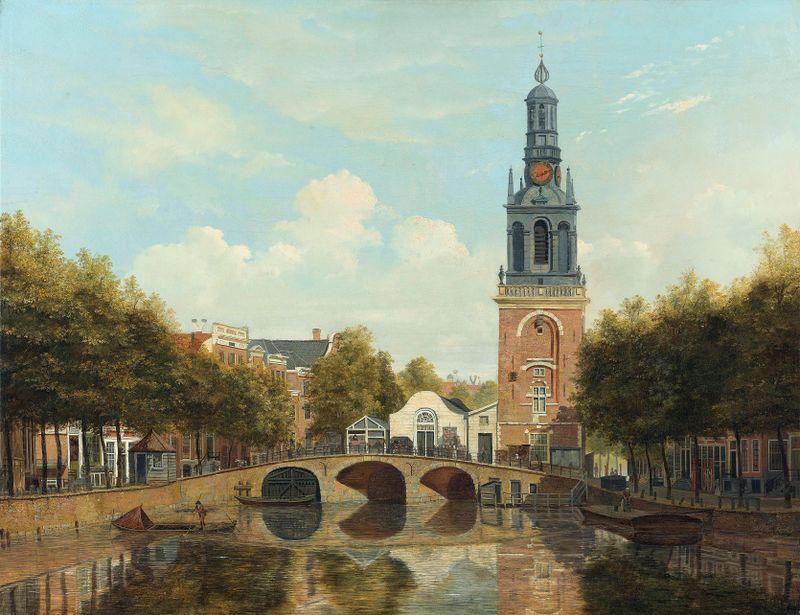
The Torensluis and the Jan Roodenpoortstoren in Amsterdam
Hendrik Gerrit ten Cate
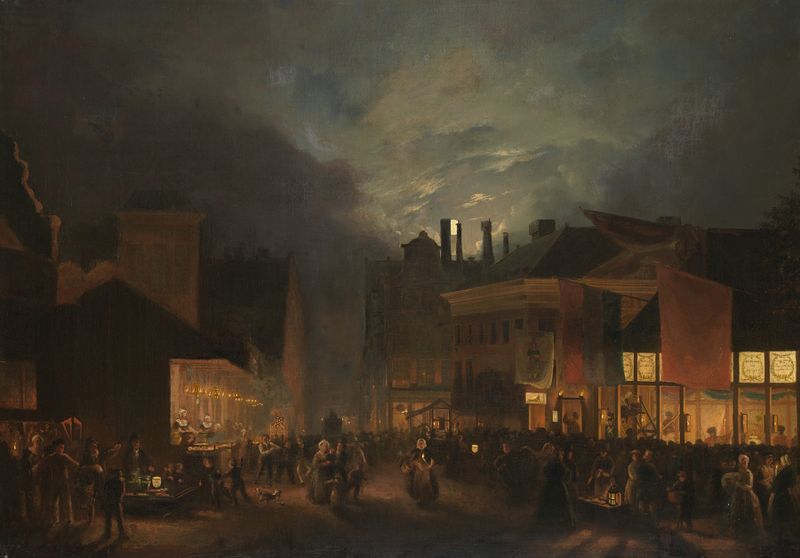
Kermis op de Botermarkt bij avond
Hendrik Gerrit ten Cate

Winterlandschap met poort tussen bomen
Hendrik Gerrit ten Cate
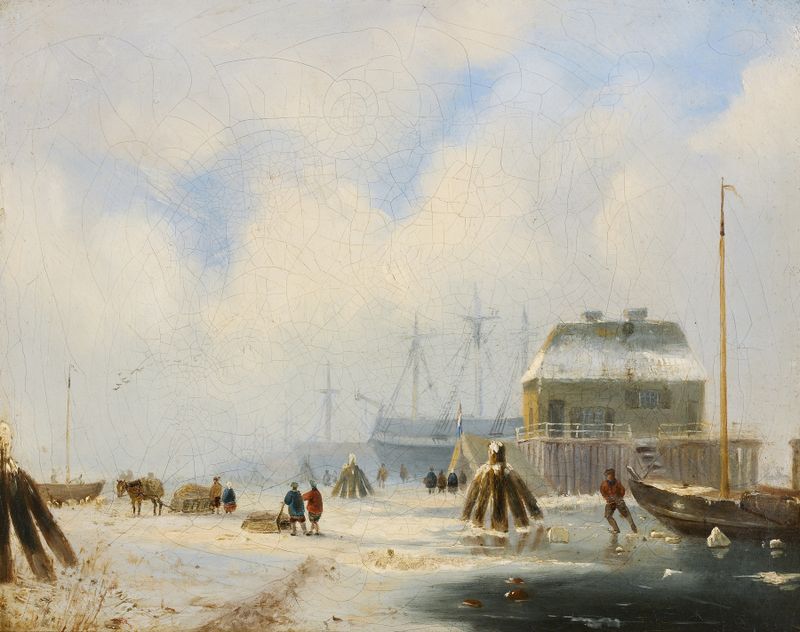
Wintergezicht op haven
Hendrik Gerrit ten Cate

Winterlandschap met houtsprokkelaar op bospad
Hendrik Gerrit ten Cate
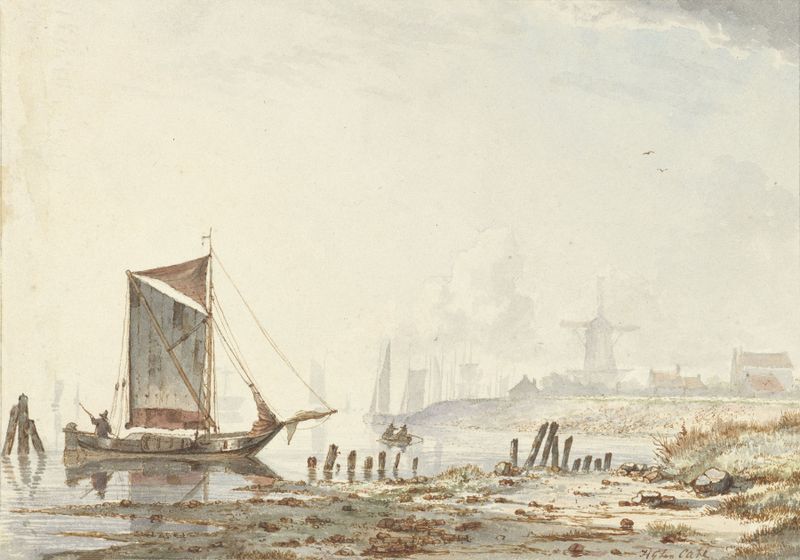
Schepen op een rivier, bij de oever
Hendrik Gerrit ten Cate
Deer under Beech Trees in Winter
Hendrik Gerrit ten Cate
Festival in de Haarlemmer hout
Hendrik Gerrit ten Cate

Stadsgezicht in de winter
Hendrik Gerrit ten Cate





