
Schepen op een rivier, bij de oever — History & Facts
This profound realization echoes through the gentle ripples of water and the stillness of boats resting on the river's edge. In Schepen op een rivier, bij de oever, a serene yet haunting reflection on mortality unfolds, inviting the viewer to ponder the fleeting nature of life amidst captivating beauty. Look to the left at the boats, their weathered hulls catching the soft light filtering through the clouds. The artists' brushstrokes delicately convey the texture of the water’s surface, shimmering with hues of blue and green.
Notice how the light plays upon the scene, enhancing the warm browns and grays of the vessels, while the distant trees frame the horizon, creating a sense of depth and tranquility. Each element is carefully arranged, allowing a moment of pause and contemplation. Amidst this calm, a subtle tension weaves through the canvas. The juxtaposition of the sturdy boats against the fragile water evokes a sense of vulnerability, reminding us that even the most robust structures are transient.
The stillness of the river could symbolize the passage of time, where life, much like the boats, is anchored yet subject to the inevitable currents of fate. The colors, warm yet faded, hint at the bittersweet nature of memory and loss. Hendrik Gerrit ten Cate painted this work between 1813 and 1856, a period marked by significant changes in Dutch society and art. While the Romantic movement flourished, emphasizing individual experience and nature’s beauty, the artist grappled with themes of existence and mortality.
In the context of a shifting world, his exploration of beauty and its inherent fragility resonated deeply, reflecting a universal human experience that endures.
More Artworks by Hendrik Gerrit ten Cate
Browse all →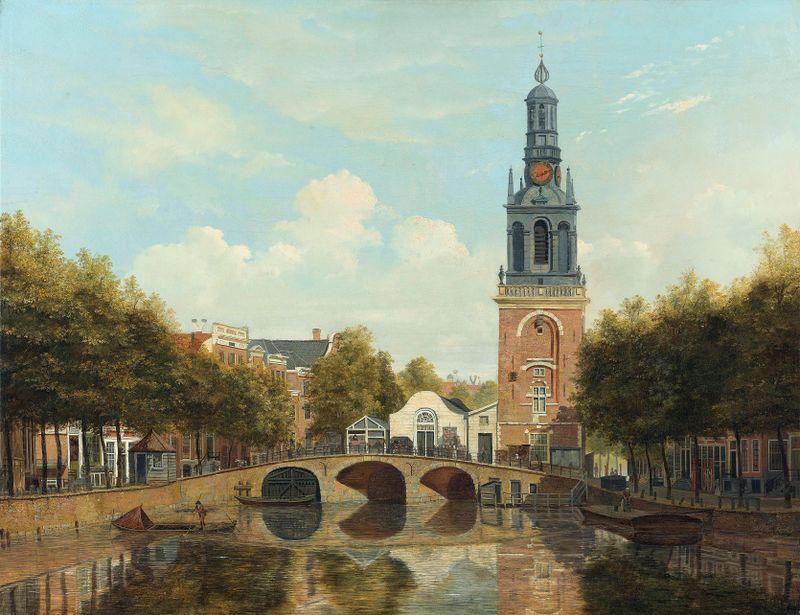
The Torensluis and the Jan Roodenpoortstoren in Amsterdam
Hendrik Gerrit ten Cate
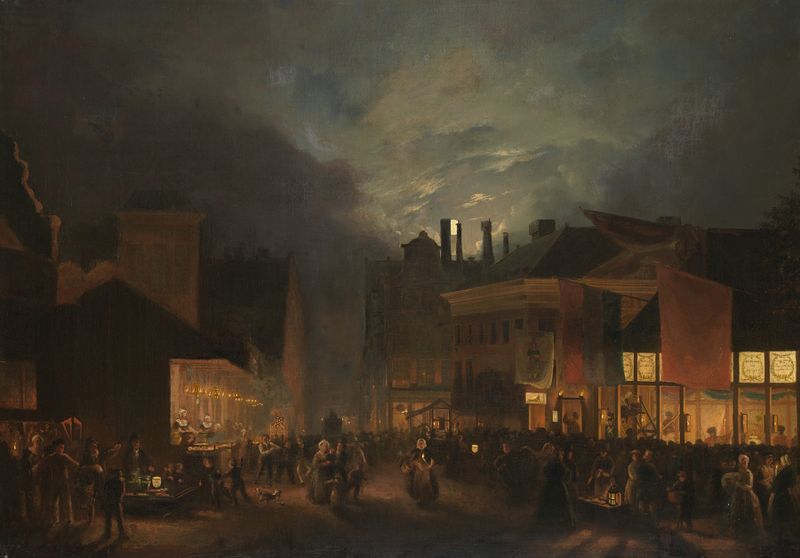
Kermis op de Botermarkt bij avond
Hendrik Gerrit ten Cate

Winterlandschap met poort tussen bomen
Hendrik Gerrit ten Cate
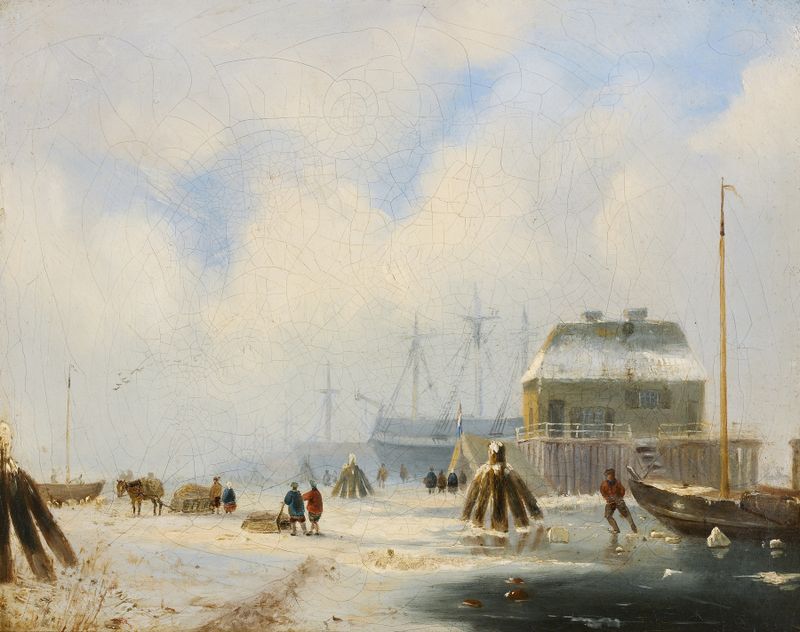
Wintergezicht op haven
Hendrik Gerrit ten Cate

Winterlandschap met houtsprokkelaar op bospad
Hendrik Gerrit ten Cate
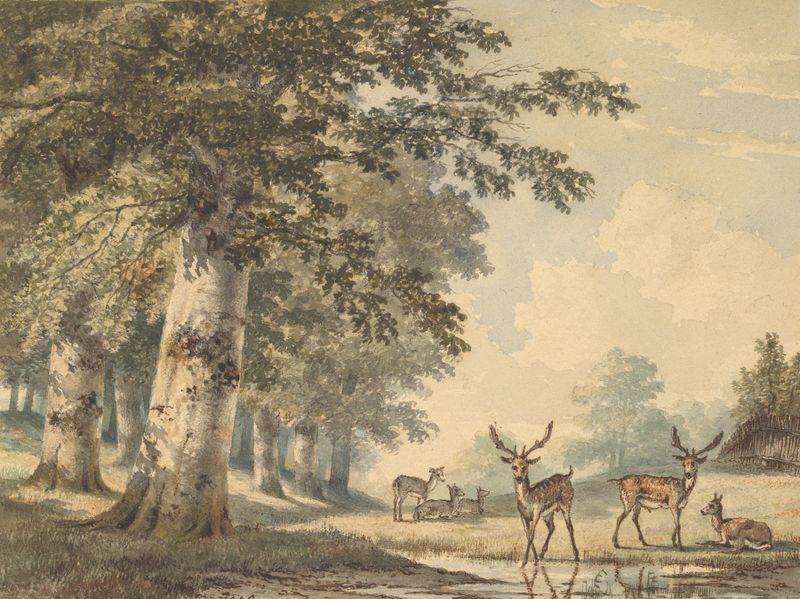
Deer under Beech Trees in Winter
Hendrik Gerrit ten Cate
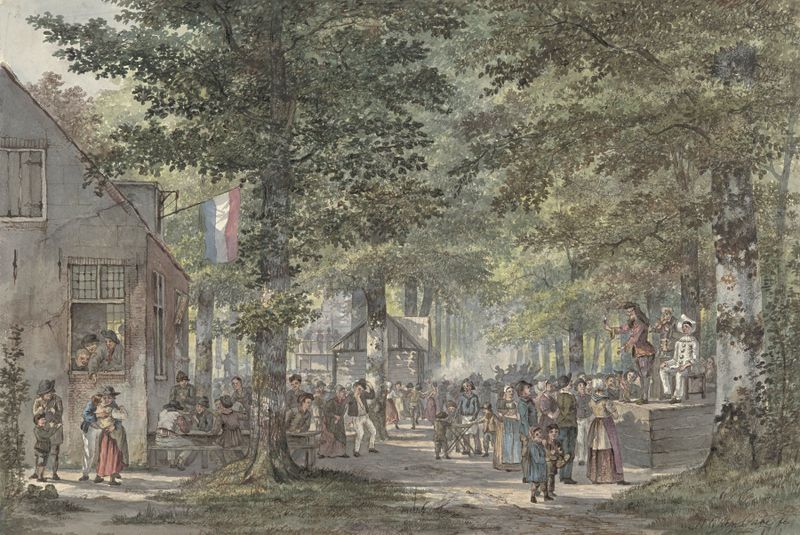
Festival in de Haarlemmer hout
Hendrik Gerrit ten Cate

Stadsgezicht in de winter
Hendrik Gerrit ten Cate

A landscape with figures on a frozen river
Hendrik Gerrit ten Cate





