
A Leeward Islands Carib family outside a Hut — History & Facts
What first catches the eye in A Leeward Islands Carib family outside a Hut is the sense of quiet, everyday intimacy, set against the lush, enveloping greenery of the Caribbean. The figures are arranged in a loose triangle, drawing the viewer’s gaze from the standing woman on the left, to the seated mother nursing her child, and finally to the man, half-turned, who anchors the group before their thatched hut. The bright red feathers and beads worn by each figure are not just decoration—they signal identity, status, and perhaps the occasion for gathering.
The light falls gently across their skin, picking out the sheen of muscle and the softness of the child’s form, while the open posture of the figures invites us into their world, rather than holding us at a distance. Painted around 1780, this work by Agostino Brunias belongs to a genre that flourished as European curiosity about the Caribbean reached its height. Artists like Brunias, often commissioned by colonial patrons, produced images that were meant to document and, in many cases, idealize the lives of Indigenous and African-descended peoples for audiences far away. The painting’s careful attention to costume and setting reflects the era’s hunger for “ethnographic” detail, while its gentle mood sidesteps the harsher realities of colonial rule.
Today, little is recorded about the specific journey of this painting, now viewable at high resolution through the Google Cultural Institute, but its quiet scene still prompts us to look closer—to consider what was seen, and what was left unsaid, in the art of its time.
More Artworks by Agostino Brunias
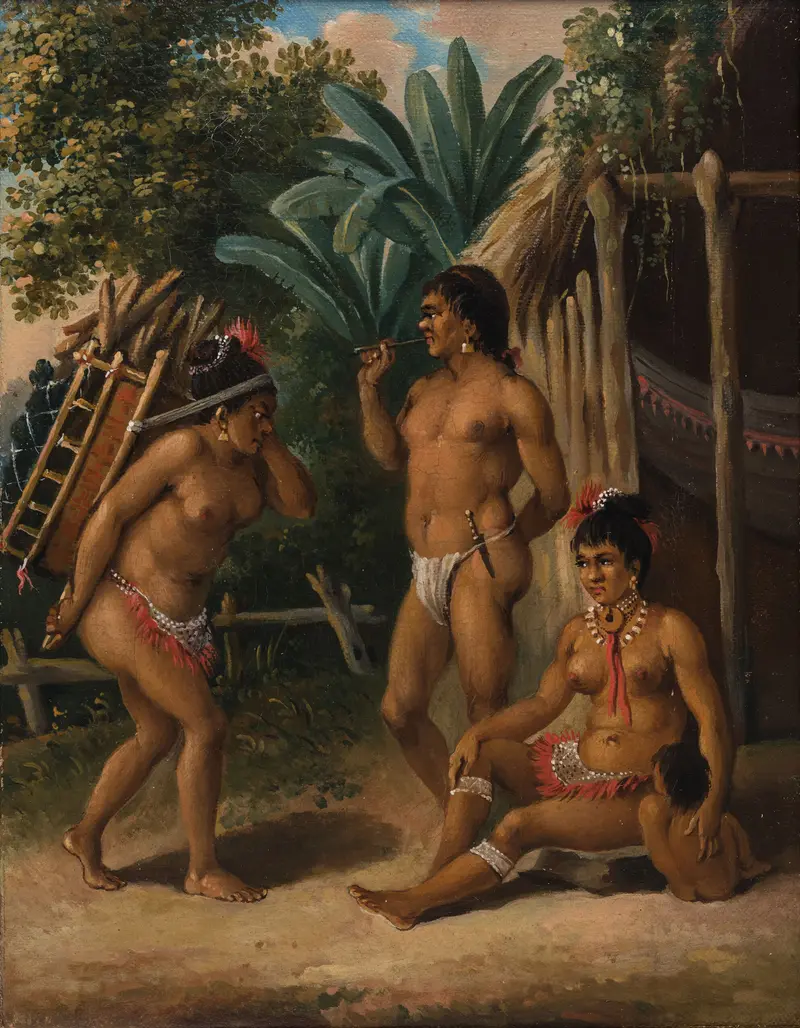
Indigenous Kalinago of St. Vincent [Aboriginal Caraibs of St. Vincents]
Agostino Brunias

View on the River Roseau, Dominica
Agostino Brunias
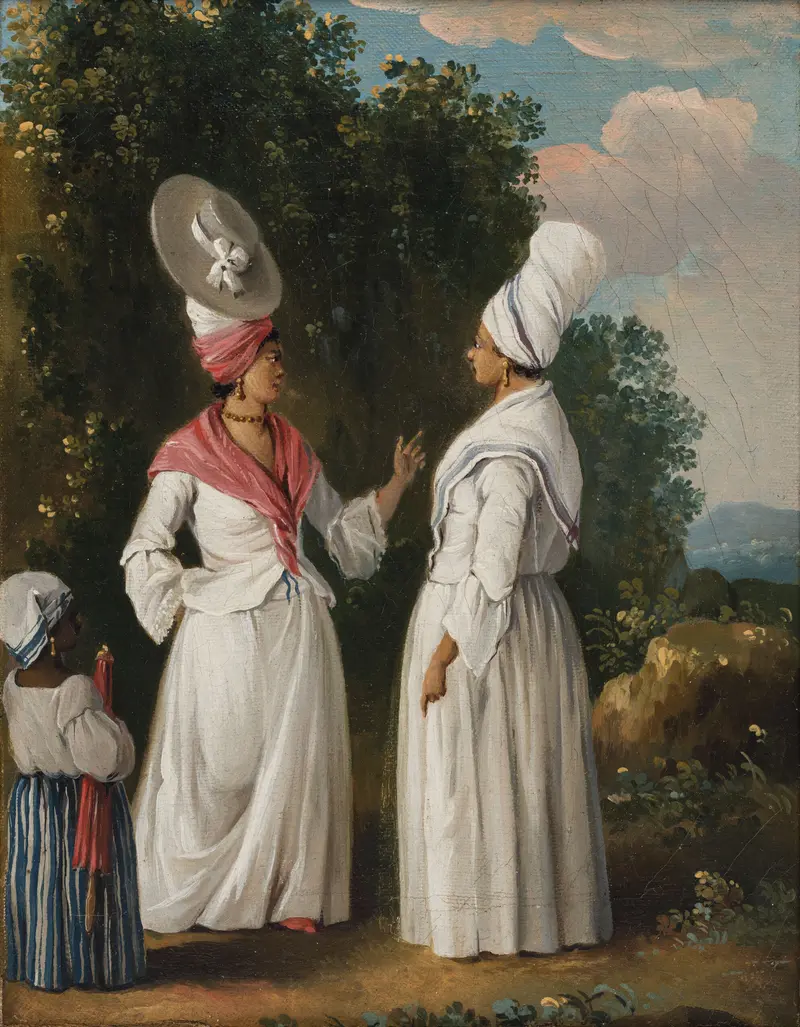
Francophone Women of Color and a Young Attendant, Dominica [French Mulatresses of Dominica in their Proper Dress]
Agostino Brunias

View on the River Roseau, Dominica
Agostino Brunias
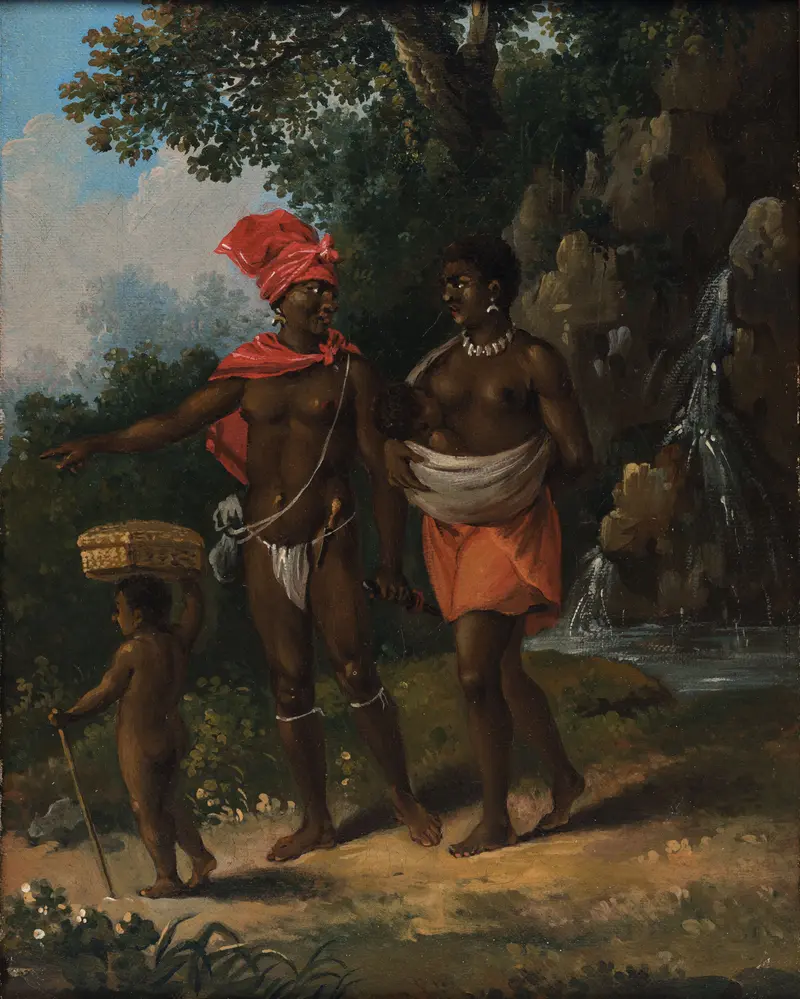
Garifuna Peoples of St. Vincent [Caraibs of St. Vincents]
Agostino Brunias
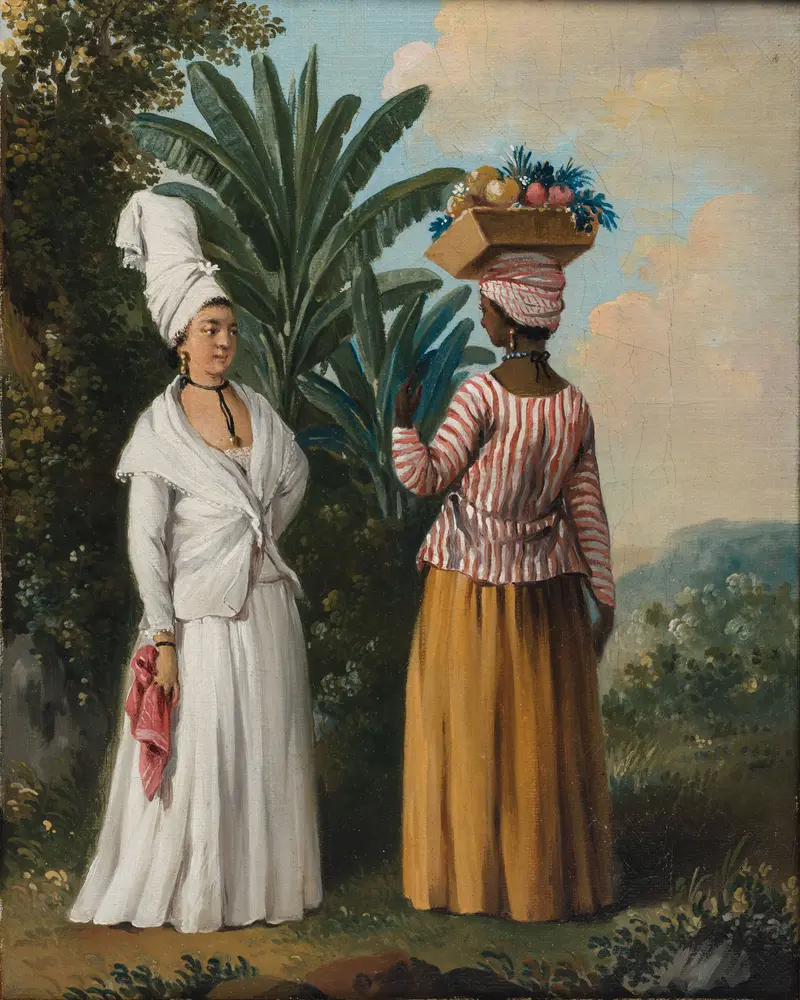
Two Women of Color, Dominica [French Mulatress of Dominica and a Negro Woman in their Proper Dress]
Agostino Brunias

Purchasing Fruit [A French Mulatress Purchasing Fruit from a Negro Wench]
Agostino Brunias

Women of Color Bathing and a Voyeur [Mulatresses and Negro Woman Bathing]
Agostino Brunias
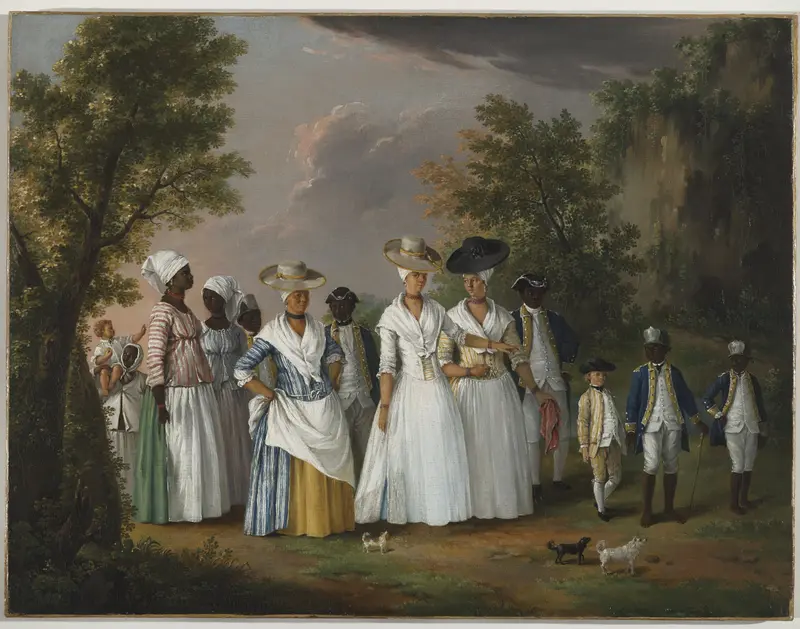
Free Women of Color with their Children and Servants in a Landscape
Agostino Brunias
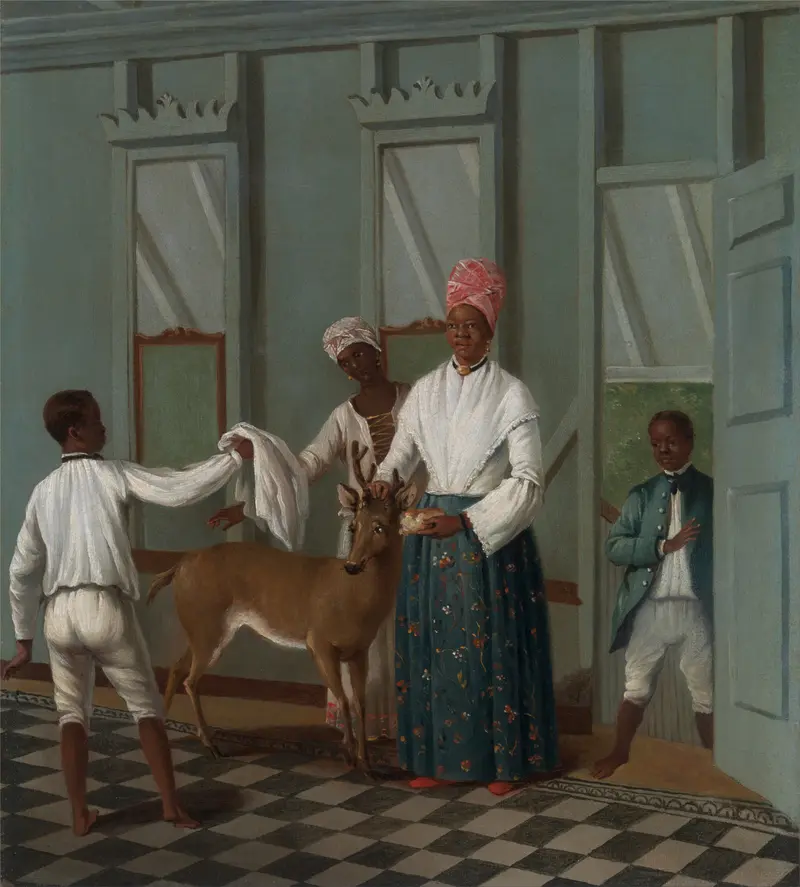
Servants Washing a Deer
Agostino Brunias
More Genre Scene Art

Banquet of the Officers of the St George Civic Guard
Frans Hals

Rembrandt and Saskia in the Scene of the Prodigal Son
Rembrandt van Rijn

Bal du moulin de la Galette
Pierre-Auguste Renoir

Quadrille at the Moulin Rouge
Henri de Toulouse-Lautrec

A Burial at Ornans
Gustave Courbet

When Will You Marry?
Paul Gauguin