
A Linen Market with a Linen-stall and Vegetable Seller in the West Indie — History & Facts
What first draws the eye in A Linen Market with a Linen-stall and Vegetable Seller in the West Indie is the vivid choreography of daily life, caught at a moment when commerce and conversation mingle beneath the Caribbean sun. The painter, Agostino Brunias, arranges his figures in a gentle arc, their crisp white garments and patterned headscarves glowing against the deep green foliage and the distant blue of the sea. At the center, two women stand in animated discussion, their confident posture and elaborate dress signaling status and self-possession.
Around them, the market bustles: a woman seated at the linen stall gestures with authority, while others negotiate over vegetables, their movements forming a counterpoint of labor and leisure. The palette, warm and clear, draws attention to the contrasts of fabric, skin, and landscape, inviting the viewer to linger over each exchange and gesture. Painted circa 1780, this work belongs to a genre that flourished in the colonial Caribbean, where artists like Brunias were often commissioned to document the complex societies that emerged from empire and trade. Such paintings were prized by colonial administrators and plantation owners eager to display the supposed order and prosperity of their holdings, even as the reality was shaped by slavery and stark inequality.
The linen and produce on display, the careful attention to costume, and the mingling of free and enslaved people all reflect the layered social hierarchies of the time. Today, housed in the digital collection of the Google Cultural Institute, this scene stands as both a record and a question—inviting us to look closer, to notice not only the market’s bustle but the histories woven through every fold of cloth and every meeting of eyes.
More Artworks by Agostino Brunias
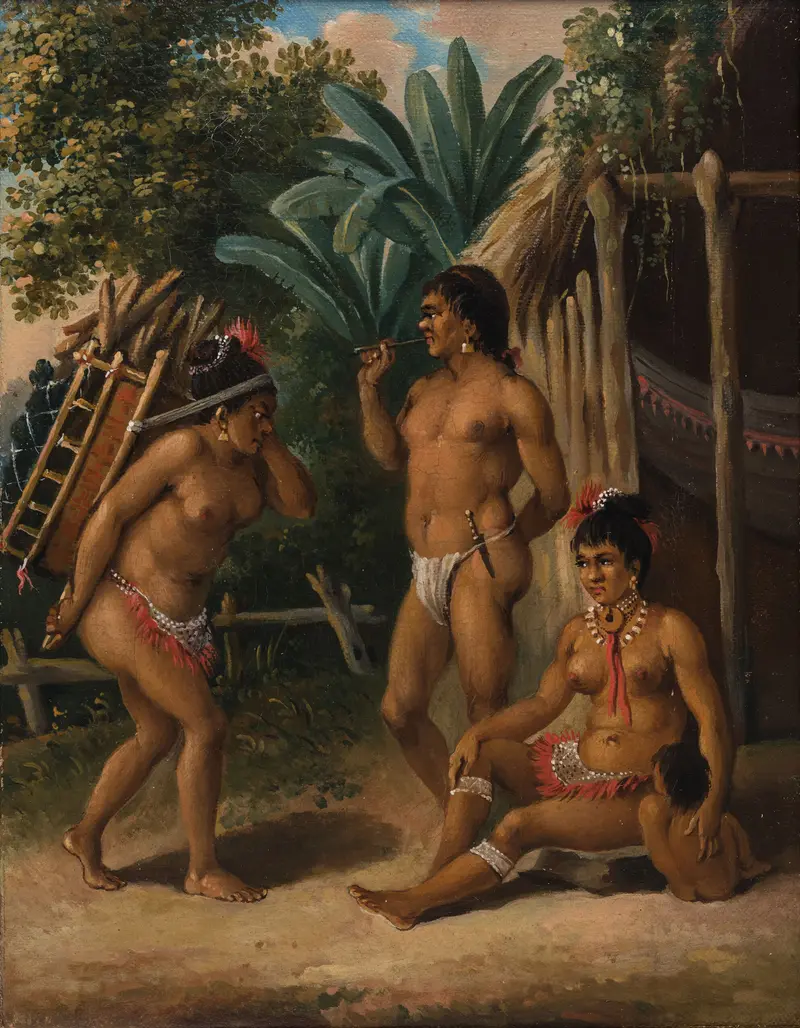
Indigenous Kalinago of St. Vincent [Aboriginal Caraibs of St. Vincents]
Agostino Brunias
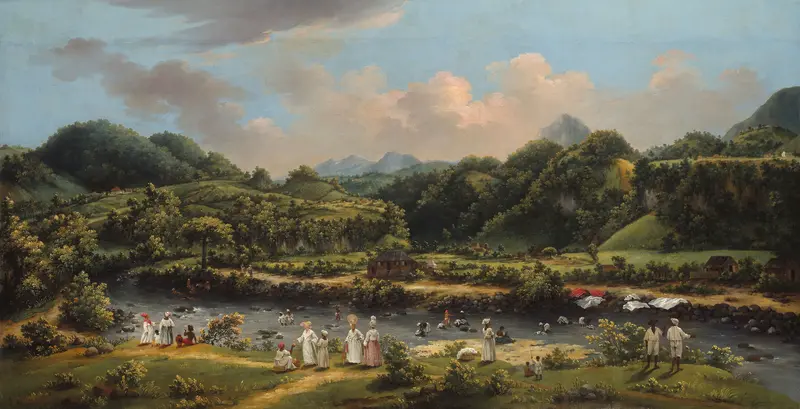
View on the River Roseau, Dominica
Agostino Brunias
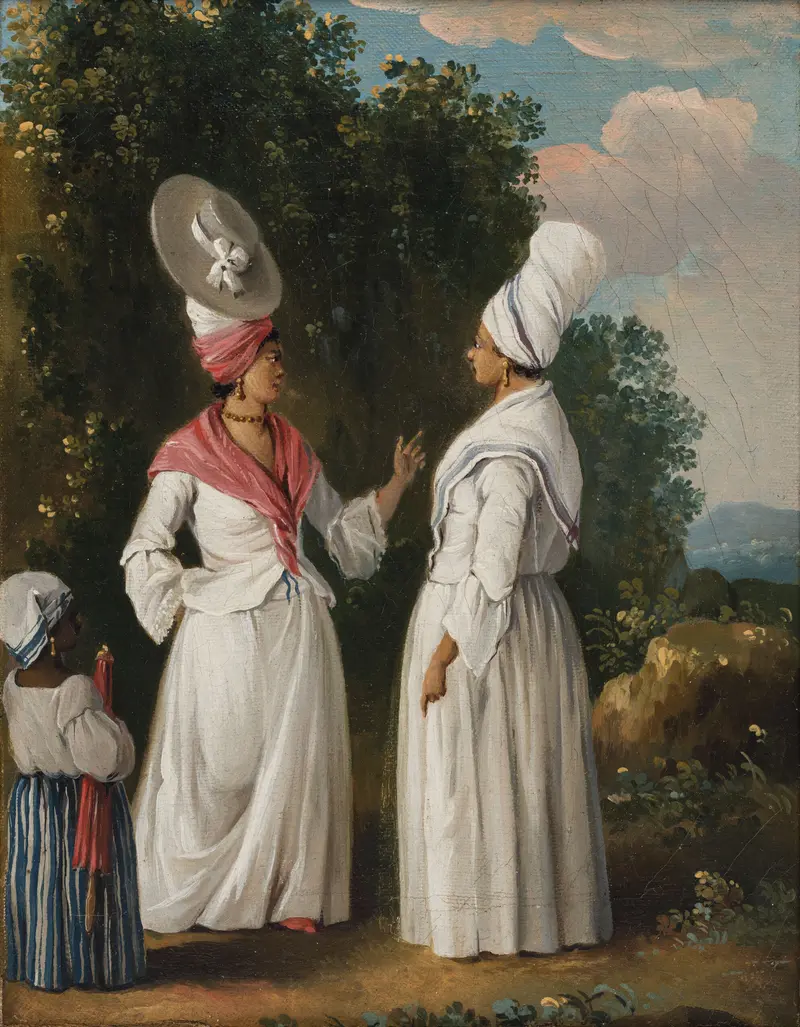
Francophone Women of Color and a Young Attendant, Dominica [French Mulatresses of Dominica in their Proper Dress]
Agostino Brunias
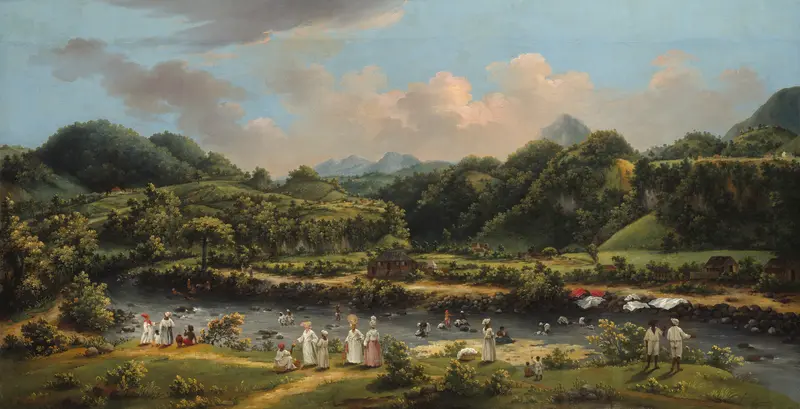
View on the River Roseau, Dominica
Agostino Brunias
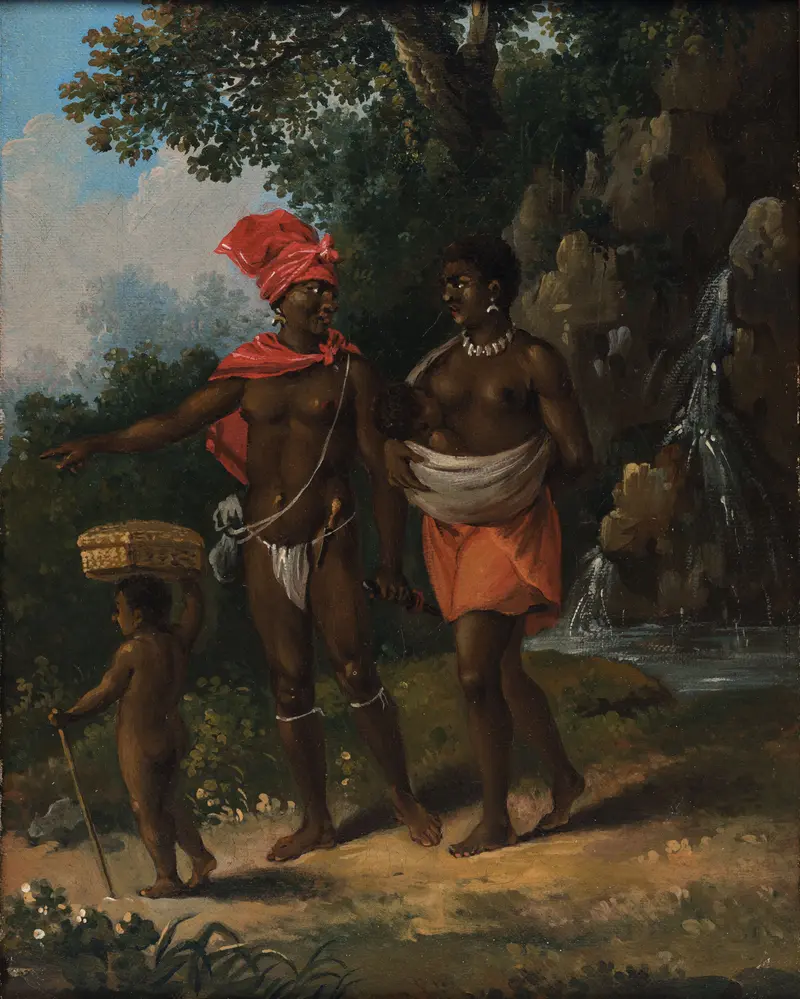
Garifuna Peoples of St. Vincent [Caraibs of St. Vincents]
Agostino Brunias
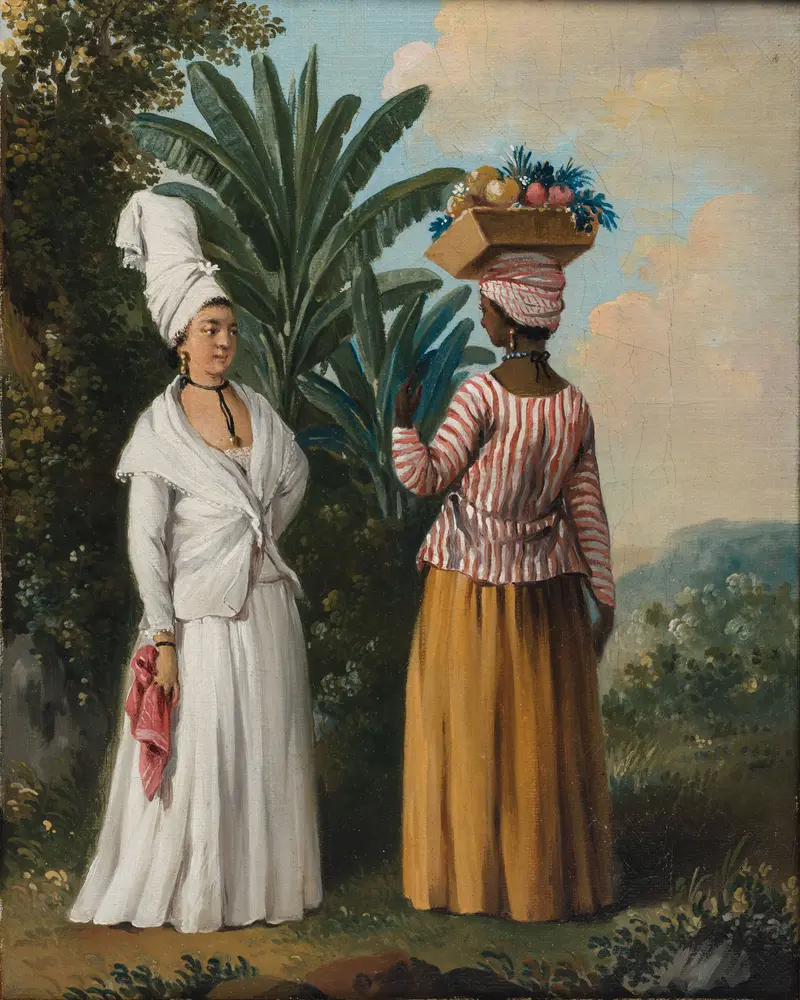
Two Women of Color, Dominica [French Mulatress of Dominica and a Negro Woman in their Proper Dress]
Agostino Brunias

Purchasing Fruit [A French Mulatress Purchasing Fruit from a Negro Wench]
Agostino Brunias

Women of Color Bathing and a Voyeur [Mulatresses and Negro Woman Bathing]
Agostino Brunias
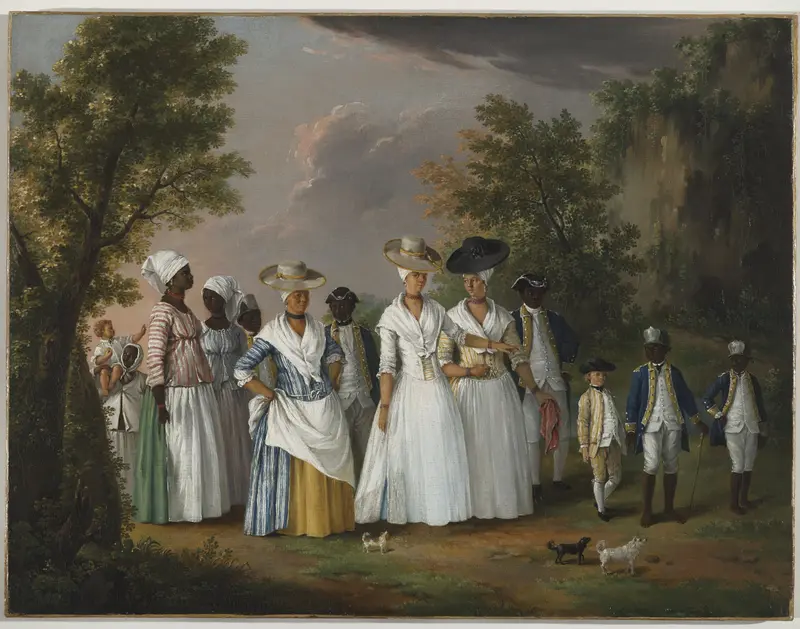
Free Women of Color with their Children and Servants in a Landscape
Agostino Brunias
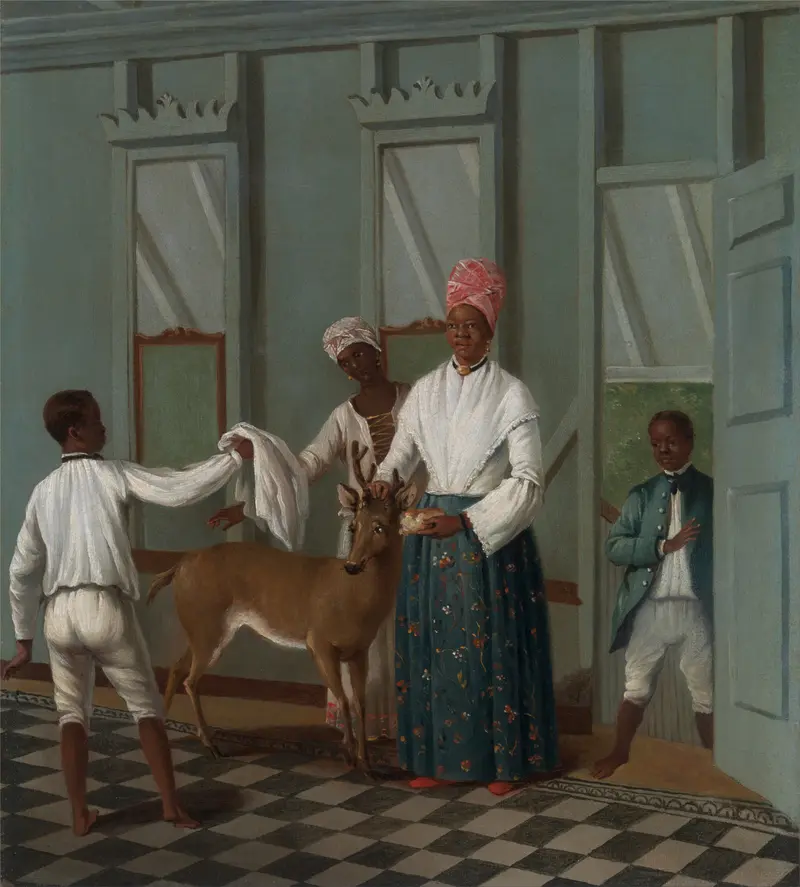
Servants Washing a Deer
Agostino Brunias
More Genre Scene Art

Banquet of the Officers of the St George Civic Guard
Frans Hals

Rembrandt and Saskia in the Scene of the Prodigal Son
Rembrandt van Rijn

Bal du moulin de la Galette
Pierre-Auguste Renoir

Quadrille at the Moulin Rouge
Henri de Toulouse-Lautrec

A Burial at Ornans
Gustave Courbet

When Will You Marry?
Paul Gauguin